Walking In Nature : Following & Leading
On the weekend of 16/17 May I was involved in two local nature walks. The first - on Saturday 16th was organised by the Friends of Queen Mary’s Park as part of the 100th birthday celebrations for Sir David Attenborough, and was led by David Warburton, Senior Biodiversity Officer for the London Borough of Sutton.
Following
It made a nice change to be there purely as a participant - no organisational responsibilities for me today. I enjoyed listening and learning about trees, grasses, and wildflowers - things I am interested in but don’t know so much about. As I listened - I kept an eye on the skies and was able to let people know when we were in the company of interesting birds, such as swallows and swifts, and the first sighting for me this year of a Small Copper butterfly.
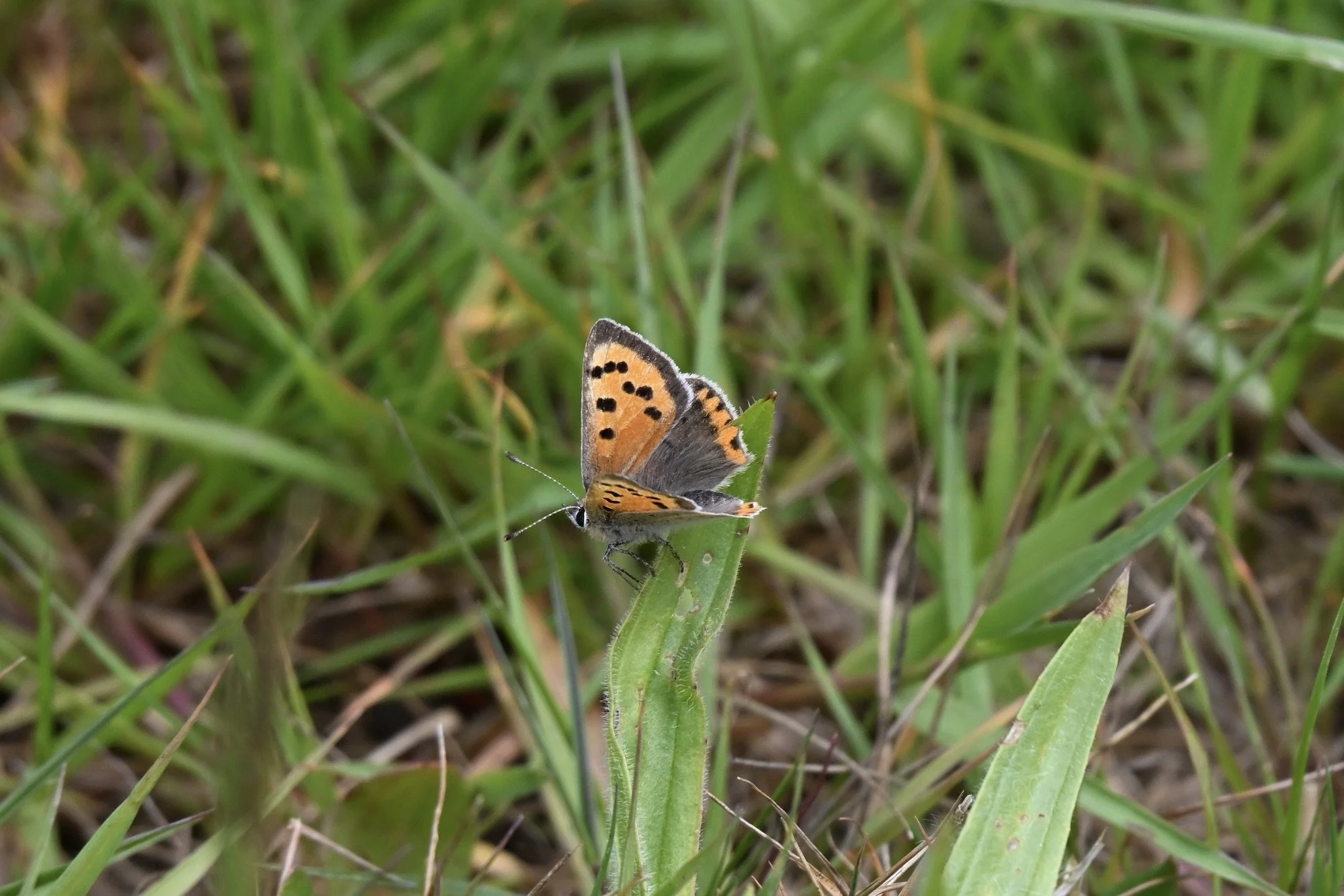
Small Copper in Queen Mary’s Park
Queen Mary’s Park is interesting for its mixed habitats of parkland and woods. It’s the site of an ancient monument, and it is close by to several other interesting habitats. Depending on which way the wind is blowing, it is often possible to hear skylarks singing in neighbouring farm fields, and the laughing call of the Green Woodpecker is often heard as the bird makes its way in and around the park.
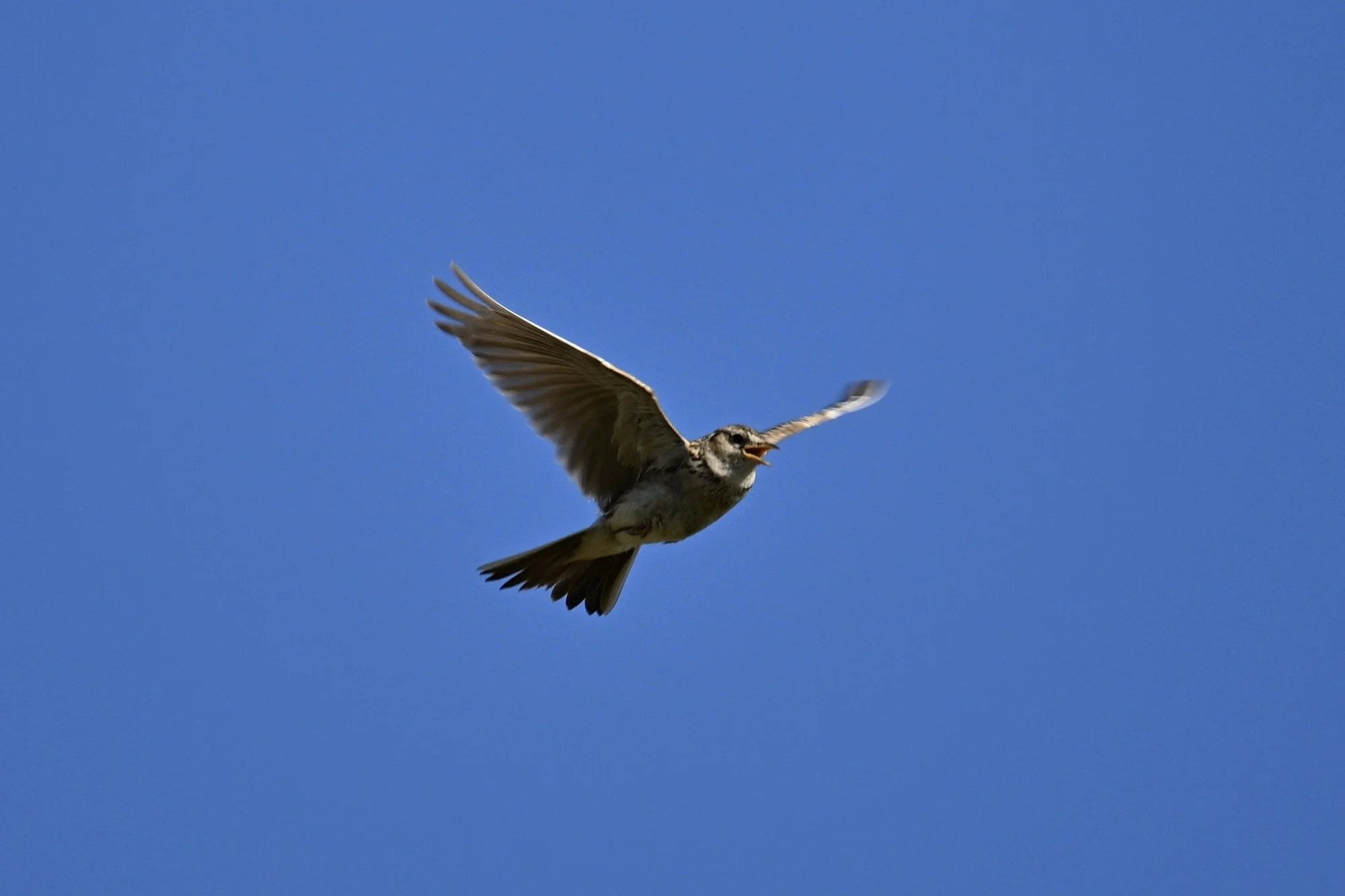
Skylark - please remember to keep dogs on a lead when these endangered, vulnerable birds are nesting.
Leading
The following day - Sunday May 17th, I led a nature walk titled Nature’s Stepping Stones, as part of the London National Park City 2026 Walking Festival. We began this 4.5mile circular walk from my art studio in Oaks Park, moving through woodland paths, wildflower plantations, woodland, parkland and farmland, ending up back at the studio door. As the walk began - I set the scene by positioning myself as an enthusiast, always willing to learn. Some folks reference me as an expert. I don’t personally enjoy the term as I feel it puts unnecessary distance between myself and other participants. I prefer to run walks in a spirit of cooperation between us, I like anyone to feel comfortable to offer information as well as to ask questions. Setting the scene like this also invites people to pay attention and be on the lookout themselves, as was almost immediately the case when someone in the group spotted a buzzard in the woods right at the start of the walk.
We wandered on - talking - noticing various plants, fungi, and listening out for bird calls. Knowledge was shared - and someone else in the group spotted a roe deer. I’ve only seen one once before in the neighbourhood.
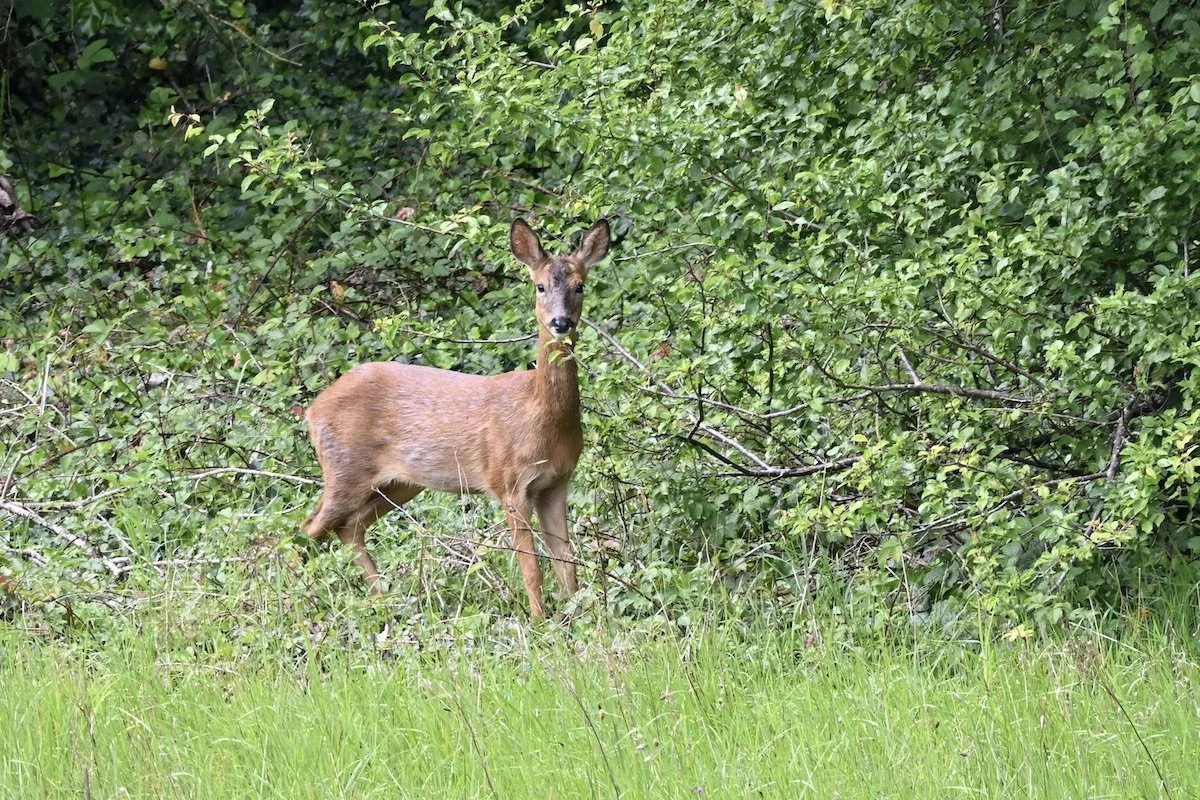
Roe Deer near Oaks Park
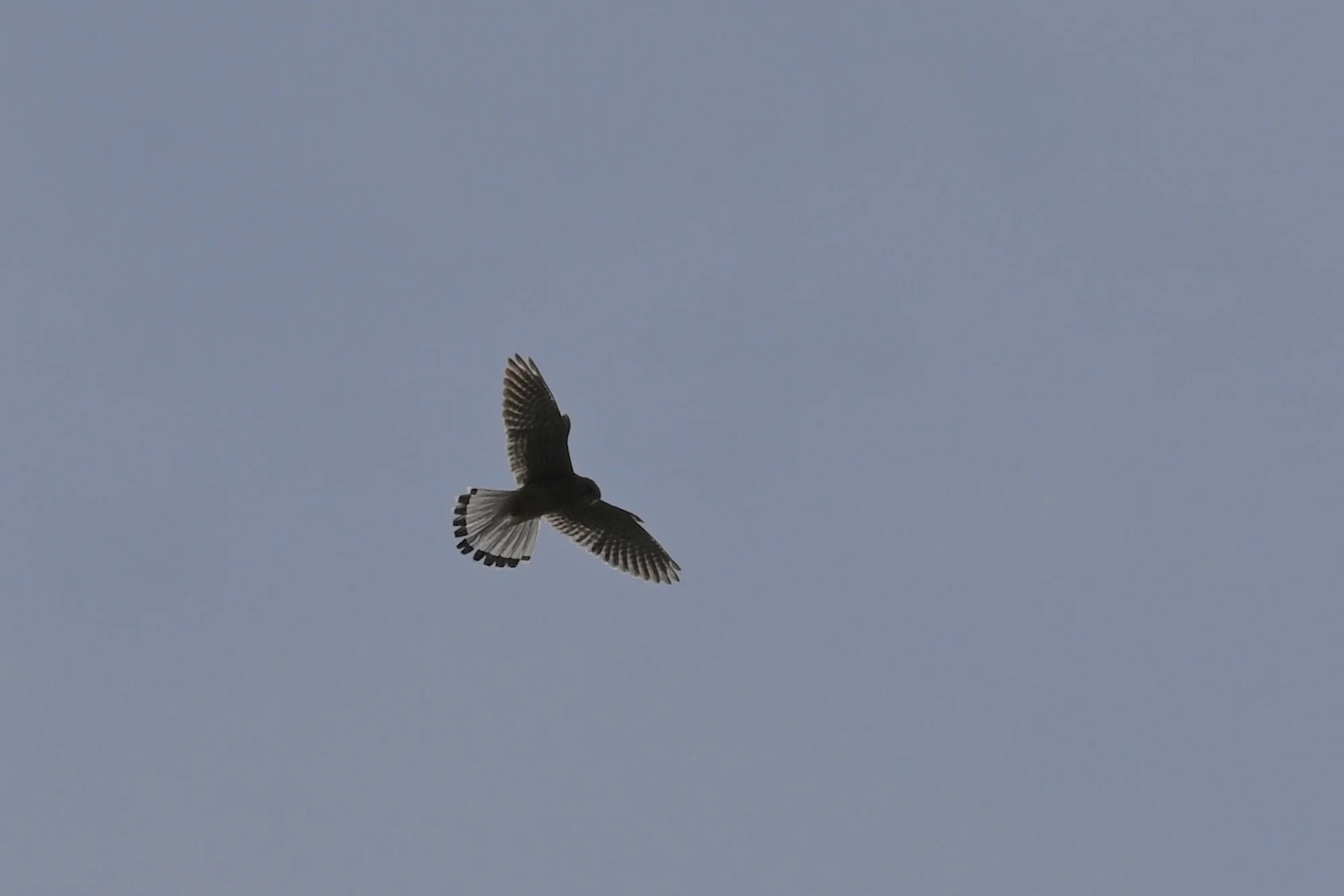
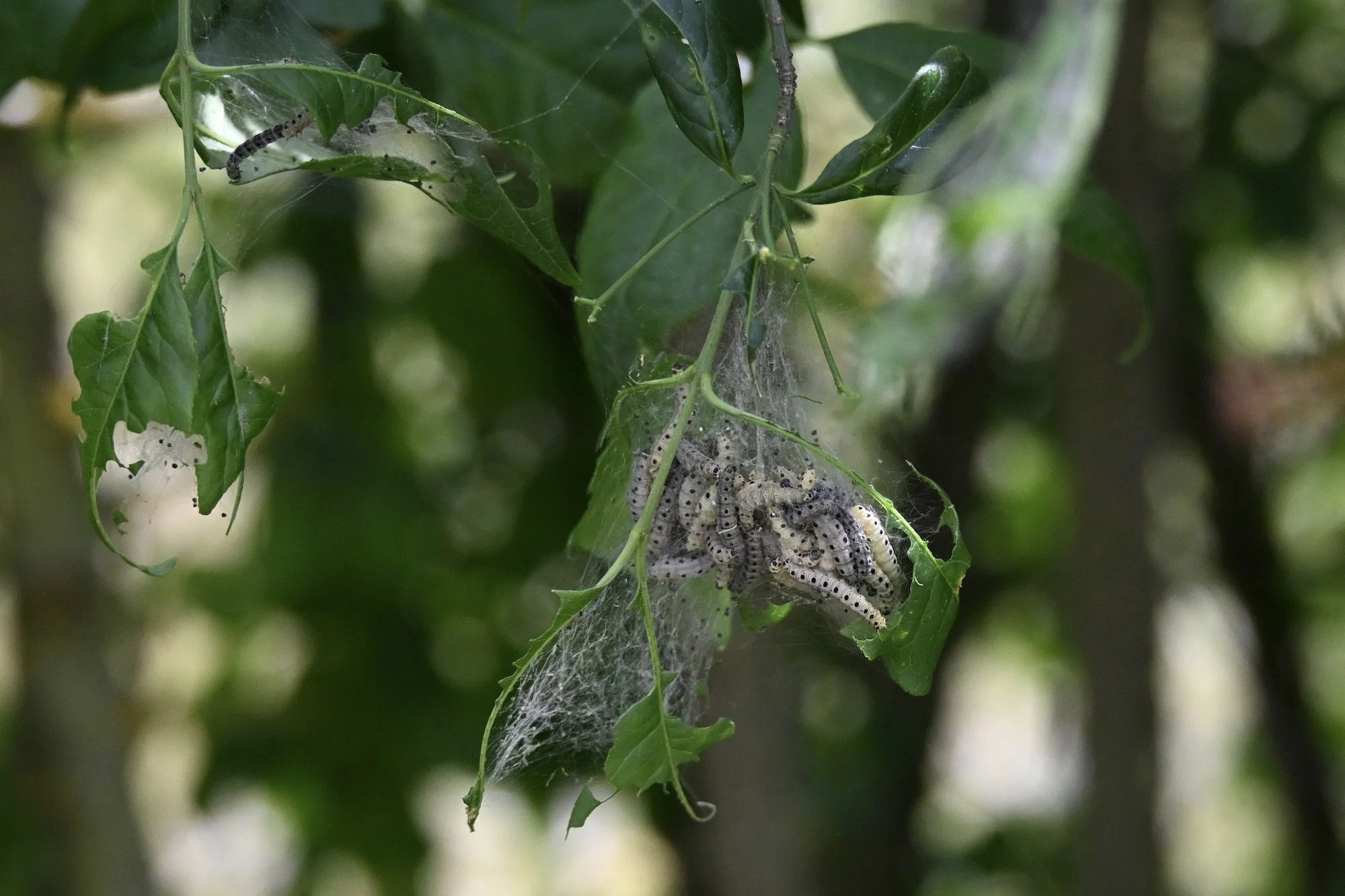
As we walked and talked we saw a variety of butterflies, birds, insects and plants. Pictured here are a kestrel, a Holly Blue, a Green Veined White, a Cardinal Beetle, a Bumblebee on Sainfoin, and a bunch of Spindle Ermine Moth caterpillars.
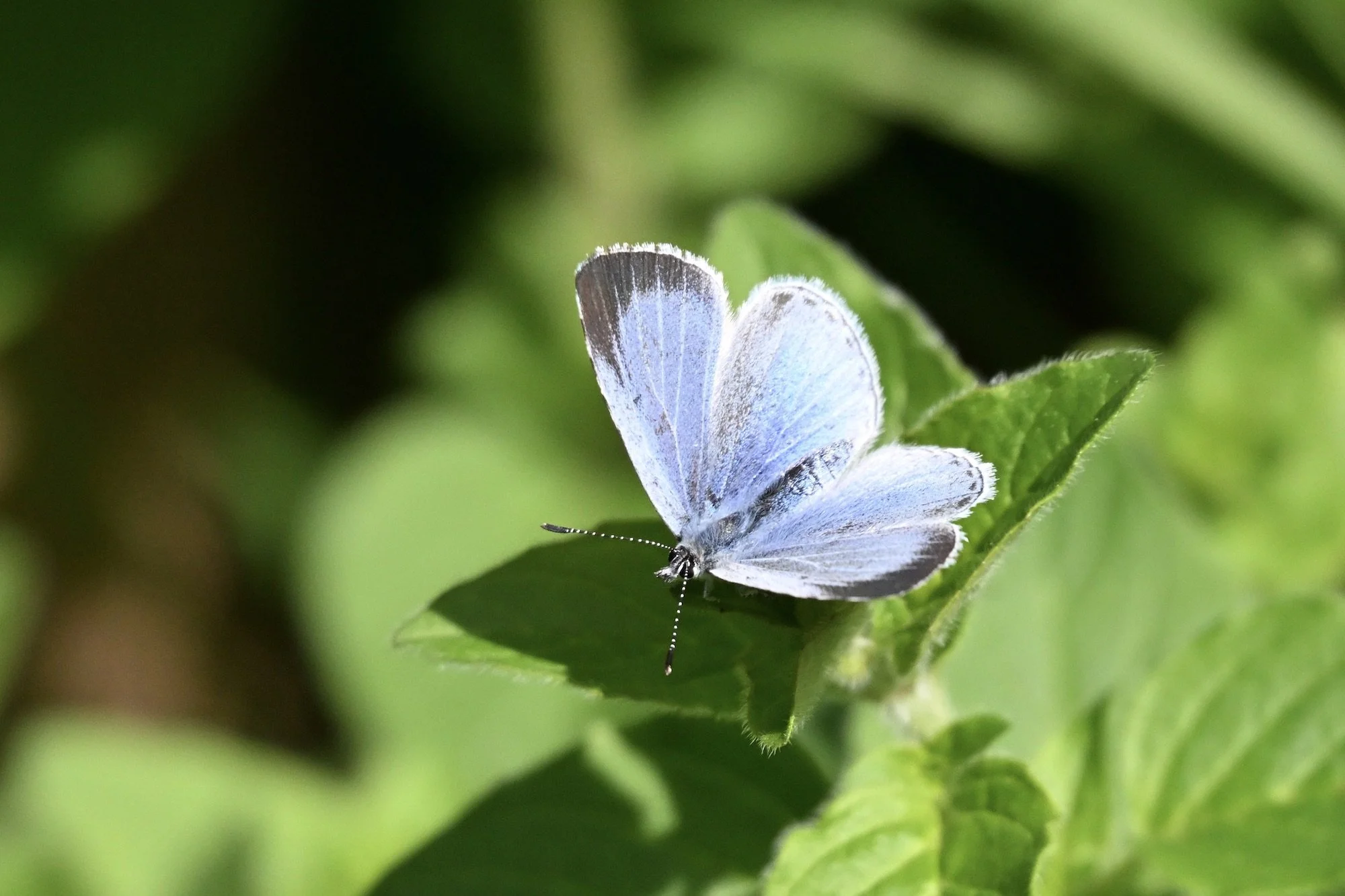
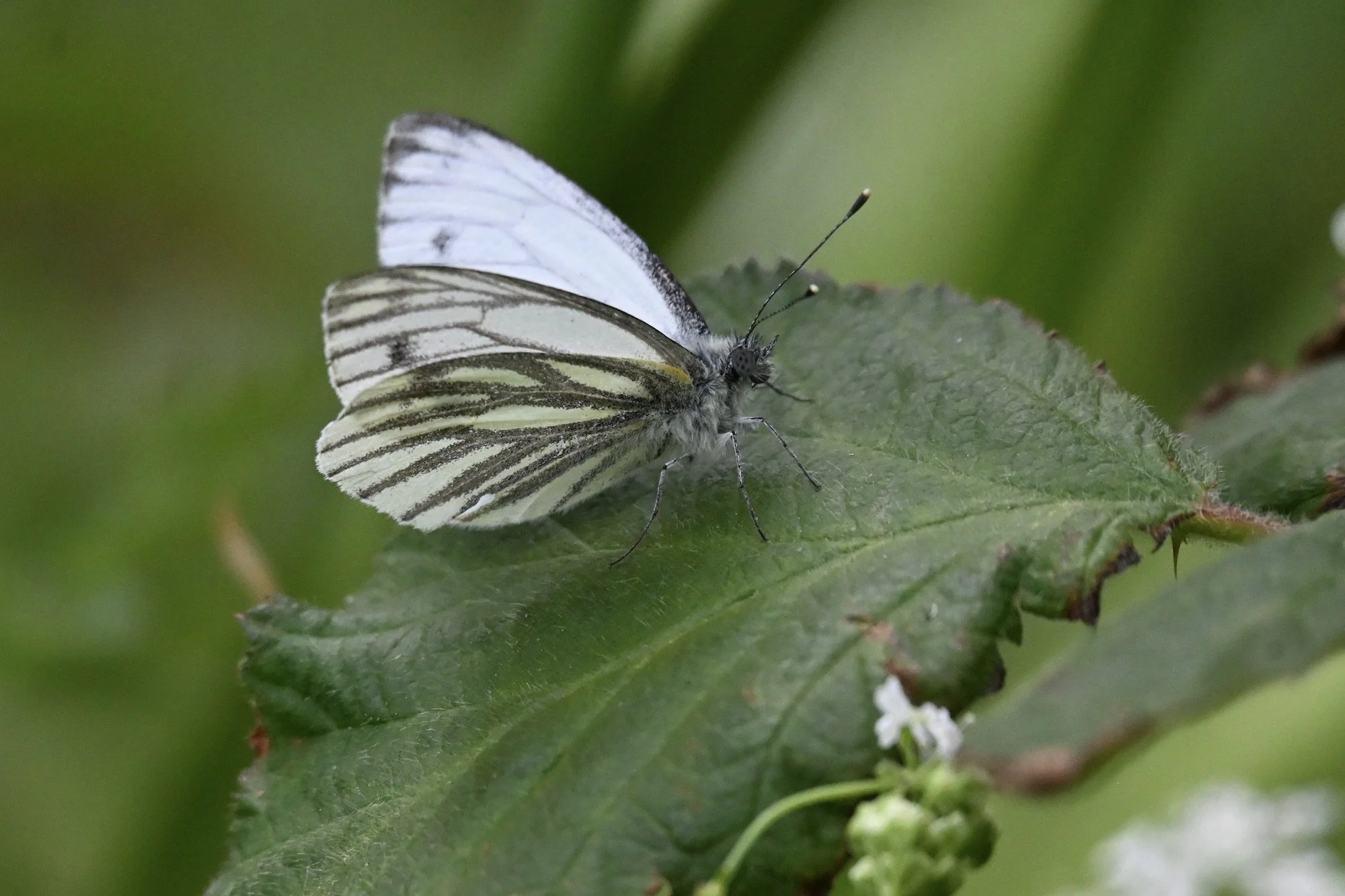
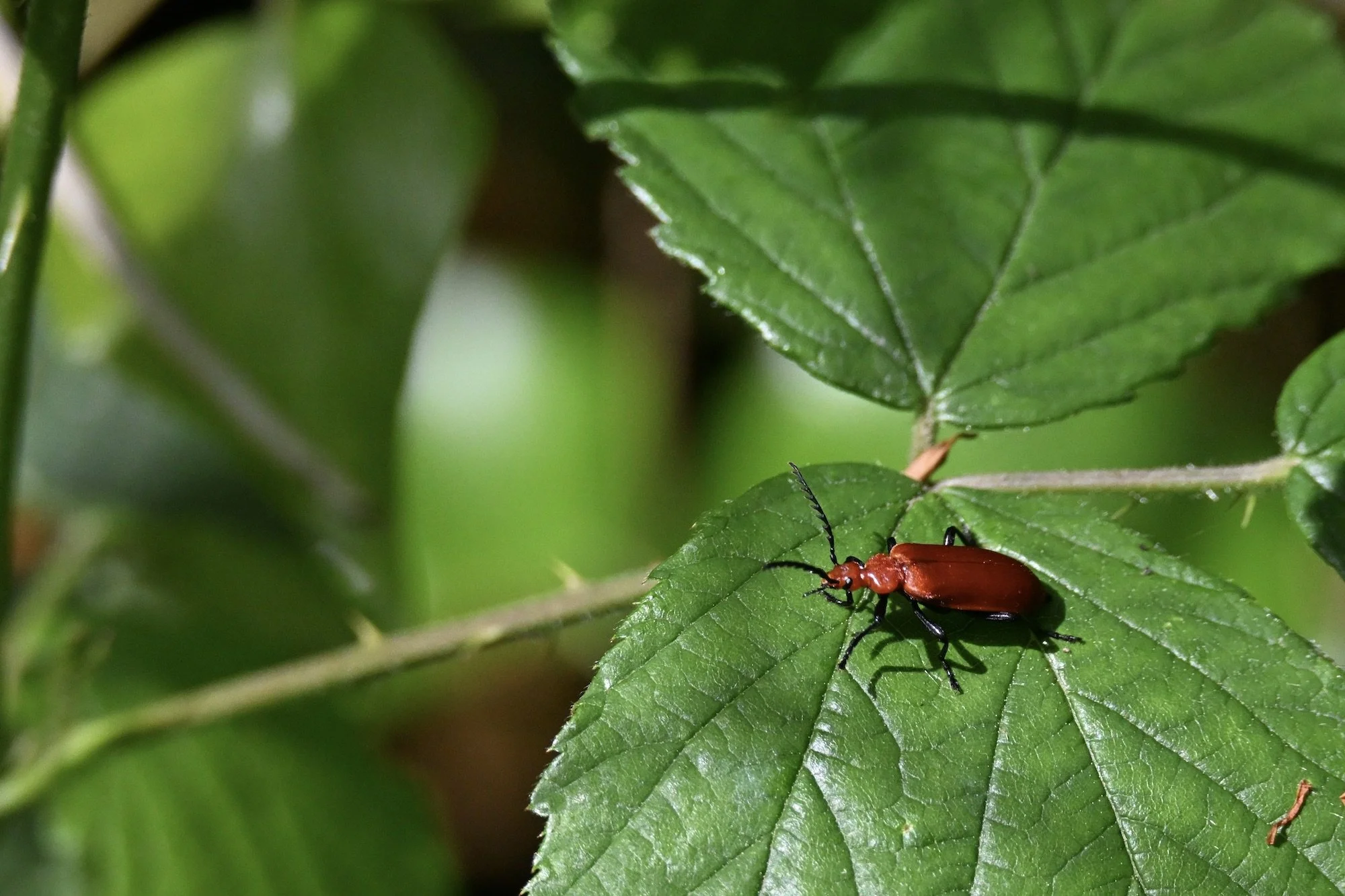
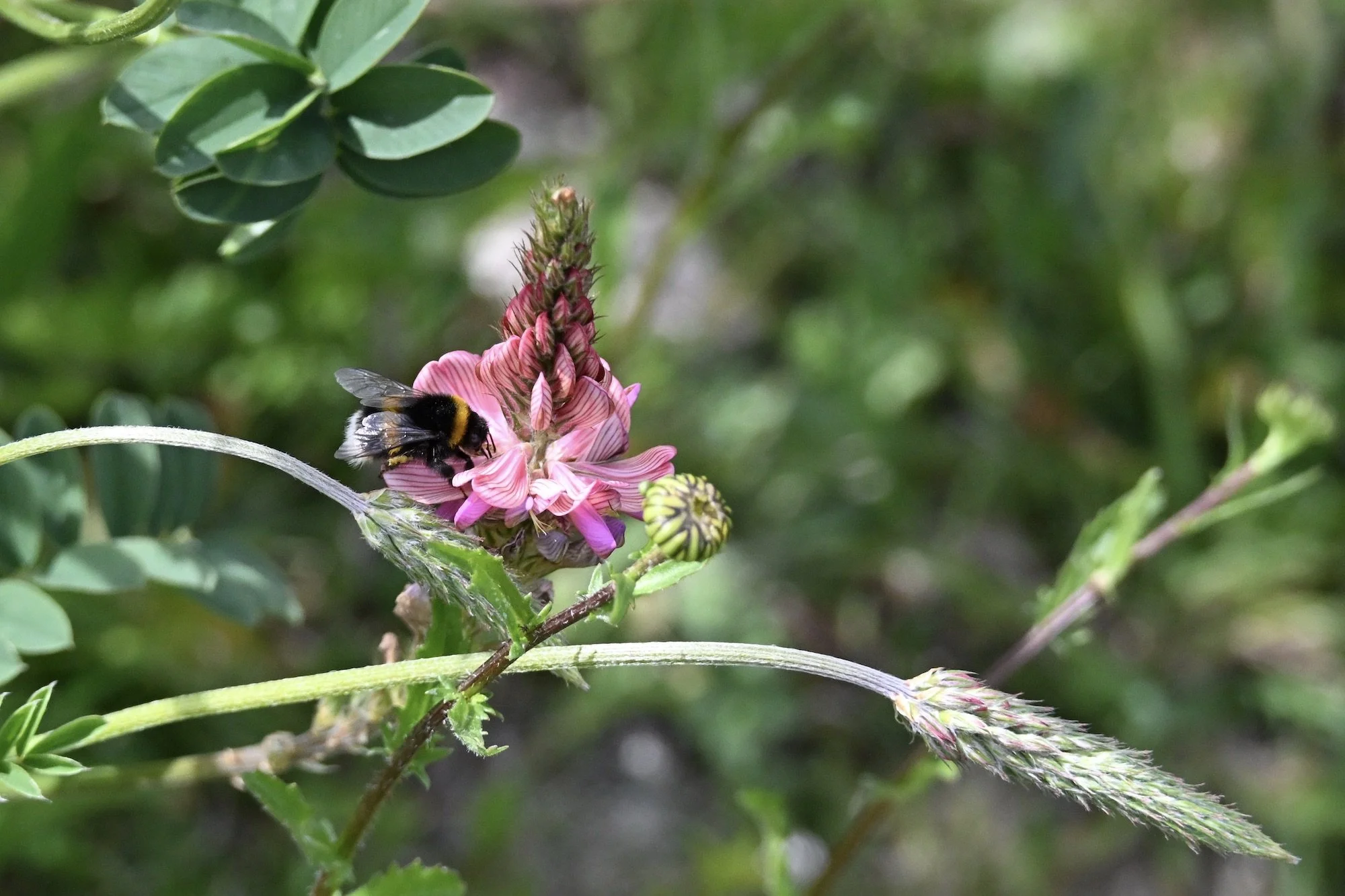
The walk ended with a brief refreshment stop and a chat, then we disbanded. Afterwards - I received some useful feedback:
Thoughts from the walk:
Listening to the bird song was particularly good, detecting the pitch and frequency with phrasing all confirmed by the app helped me distinguish different calls.
Plenty to see with a few surprises. A deer, a buzzard at close quarters were notable while between these sightings the flowers and plants, invertebrates and even geology and social history were discussions which kept the day informative.
We walked about ten miles in total (including getting to and from the start and finish) with the weather proving forecasts can draw unnecessary pessimism!
The conversations were good, lots of ideas fizzing around. Whether it be nature streets where planting to provide not just habitat but stepping stones between the parks and green spaces, why parakeets were so populous around Oaks Park and the Little Woodcote estate. Even a green ideas night at the Sound Lounge!
Thanks Doug, it was a great experience!
The walk was a great way to showcase wildlife on our doorstep, and to educate our community regarding the threat to many species. Such as highlighting the importance of the butterfly banks for the survival of the small blue butterfly and protection of the skylarks in our local farmlands. Perhaps we can even encourage the community to do something small in their own gardens to help wildlife to survive. Overall, an excellent event to promote wellness while educating.
I’m doing more and more of this kind of work - it feels like a great way to connect people with nature and wellbeing - so my plan is to seek out funding so I can provide future sessions on a more sustainable basis. Watch this space!