Walking In Nature : Following & Leading
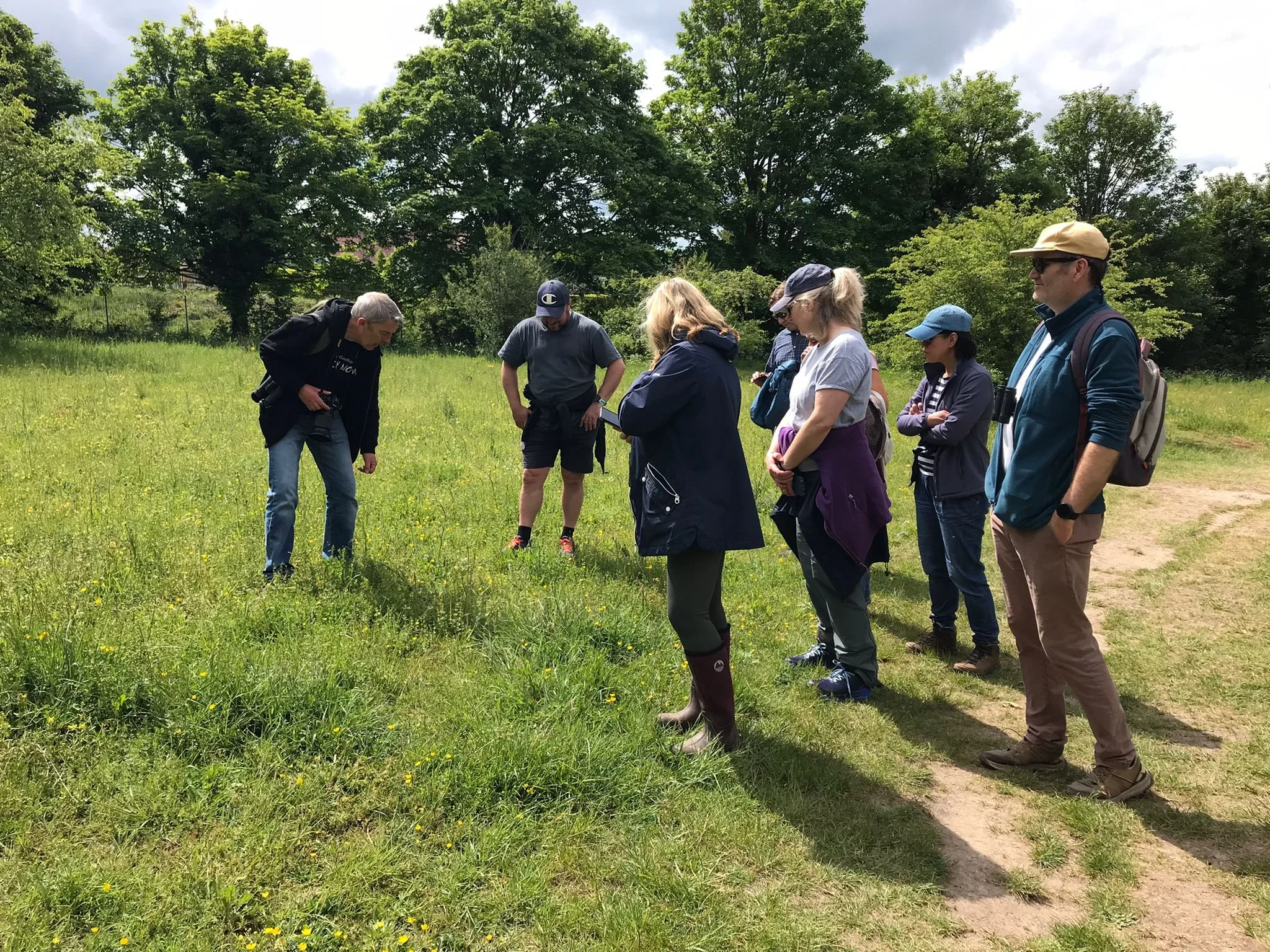
On the weekend of 16/17 May I was involved in two local nature walks. The first - on Saturday 16th was organised by the Friends of Queen Mary’s Park as part of the 100th birthday celebrations for Sir David Attenborough, and was led by David Warburton, Senior Biodiversity Officer for the London Borough of Sutton.
Following
It made a nice change to be there purely as a participant - no organisational responsibilities for me today. I enjoyed listening and learning about trees, grasses, and wildflowers - things I am interested in but don’t know so much about. As I listened - I kept an eye on the skies and was able to let people know when we were in the company of interesting birds, such as swallows and swifts, and the first sighting for me this year of a Small Copper butterfly.
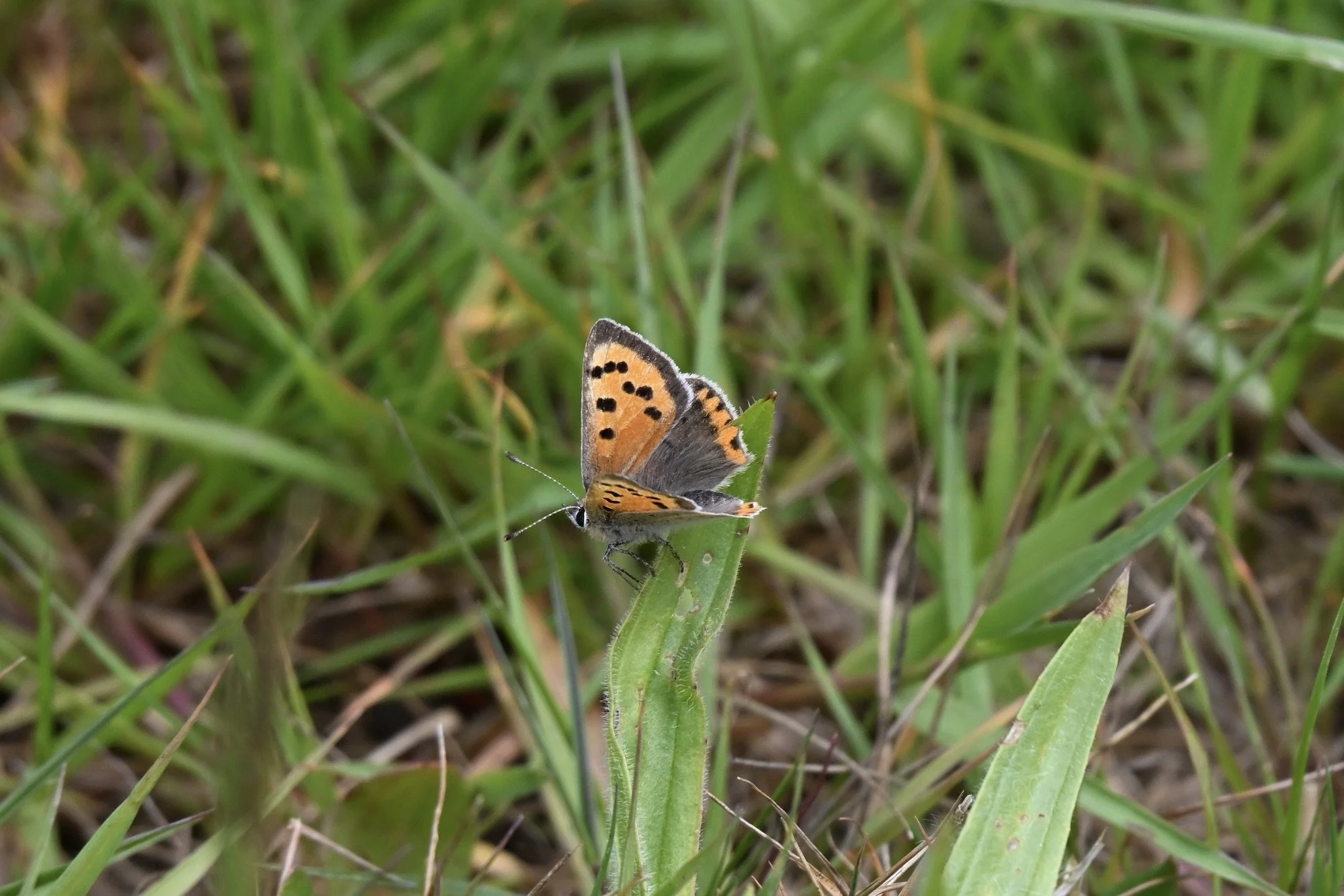
Small Copper in Queen Mary’s Park
Queen Mary’s Park is interesting for its mixed habitats of parkland and woods. It’s the site of an ancient monument, and it is close by to several other interesting habitats. Depending on which way the wind is blowing, it is often possible to hear skylarks singing in neighbouring farm fields, and the laughing call of the Green Woodpecker is often heard as the bird makes its way in and around the park.
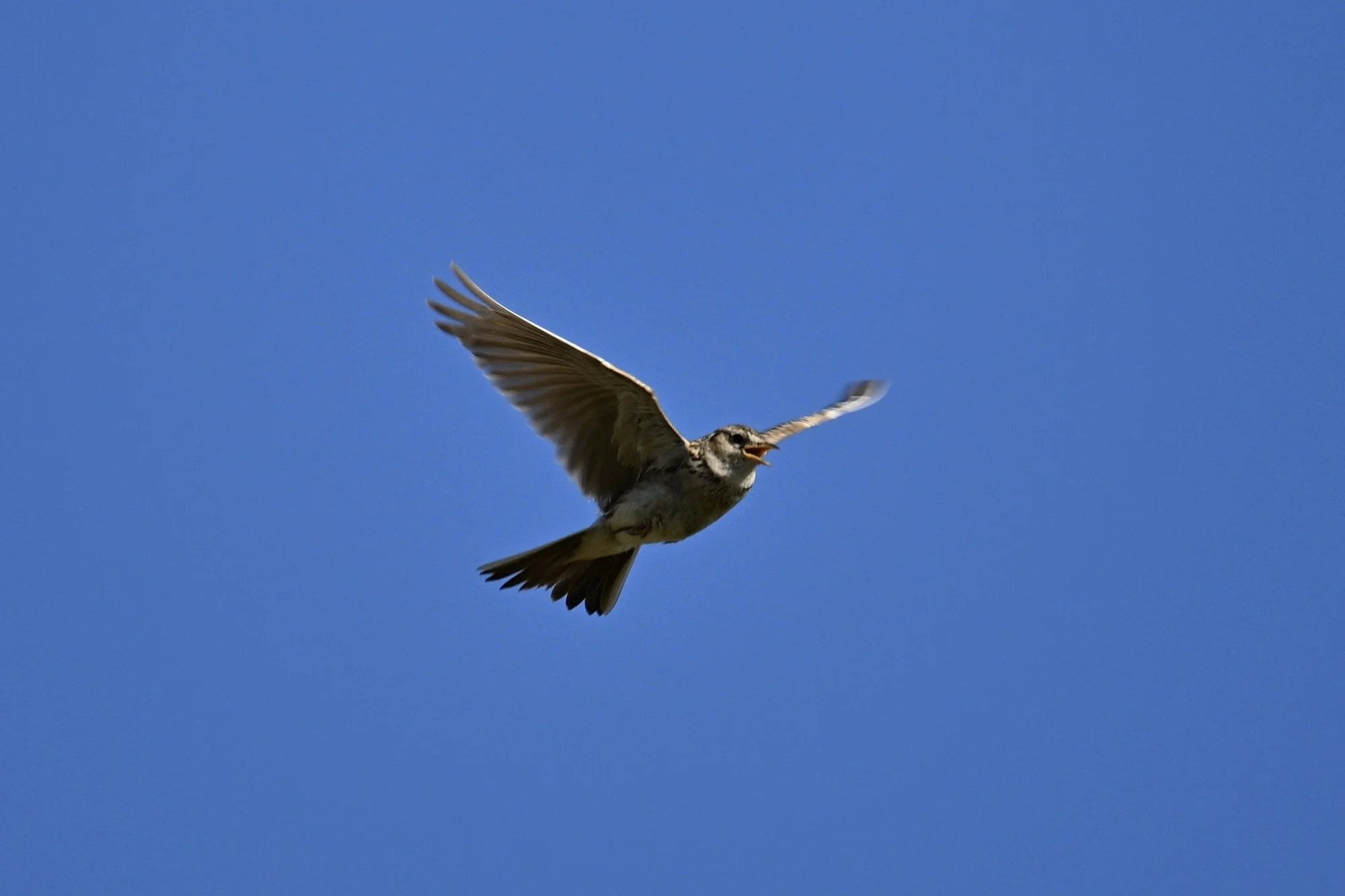
Skylark - please remember to keep dogs on a lead when these endangered, vulnerable birds are nesting.
Leading
The following day - Sunday May 17th, I led a nature walk titled Nature’s Stepping Stones, as part of the London National Park City 2026 Walking Festival. We began this 4.5mile circular walk from my art studio in Oaks Park, moving through woodland paths, wildflower plantations, woodland, parkland and farmland, ending up back at the studio door. As the walk began - I set the scene by positioning myself as an enthusiast, always willing to learn. Some folks reference me as an expert. I don’t personally enjoy the term as I feel it puts unnecessary distance between myself and other participants. I prefer to run walks in a spirit of cooperation between us, I like anyone to feel comfortable to offer information as well as to ask questions. Setting the scene like this also invites people to pay attention and be on the lookout themselves, as was almost immediately the case when someone in the group spotted a buzzard in the woods right at the start of the walk.
We wandered on - talking - noticing various plants, fungi, and listening out for bird calls. Knowledge was shared - and someone else in the group spotted a roe deer. I’ve only seen one once before in the neighbourhood.
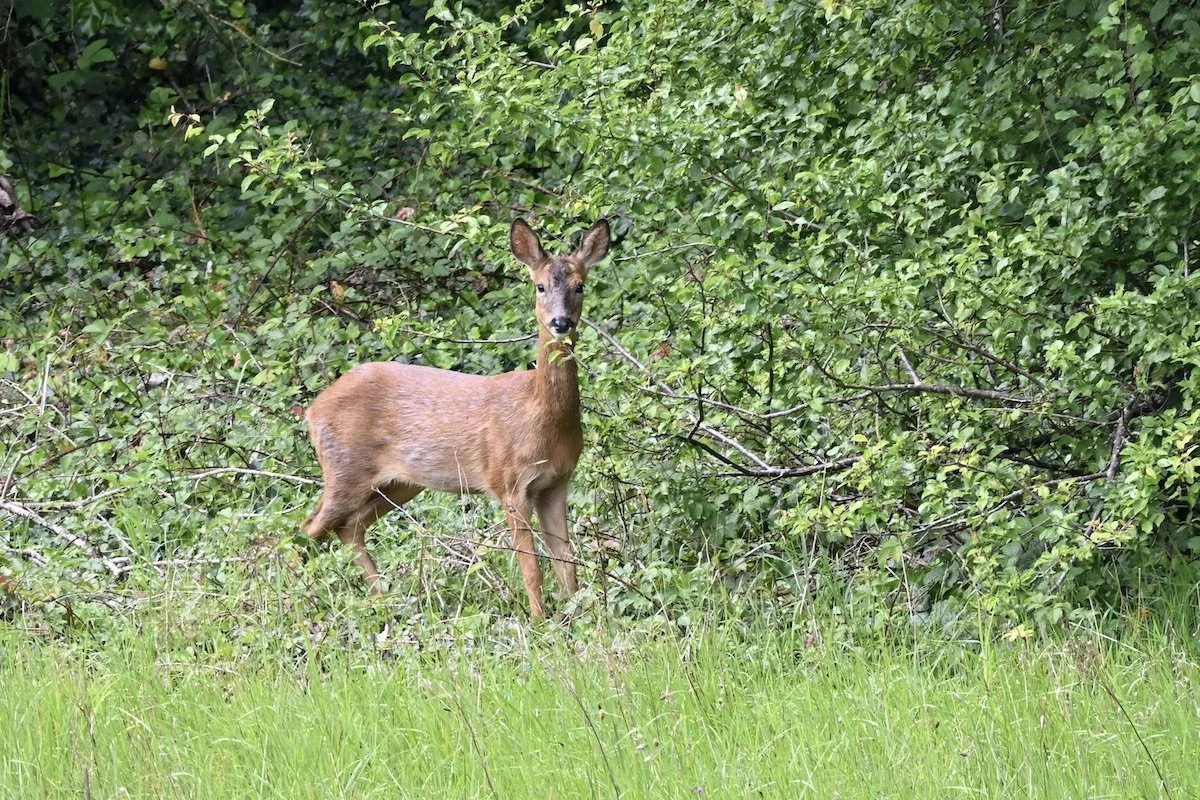
Roe Deer near Oaks Park
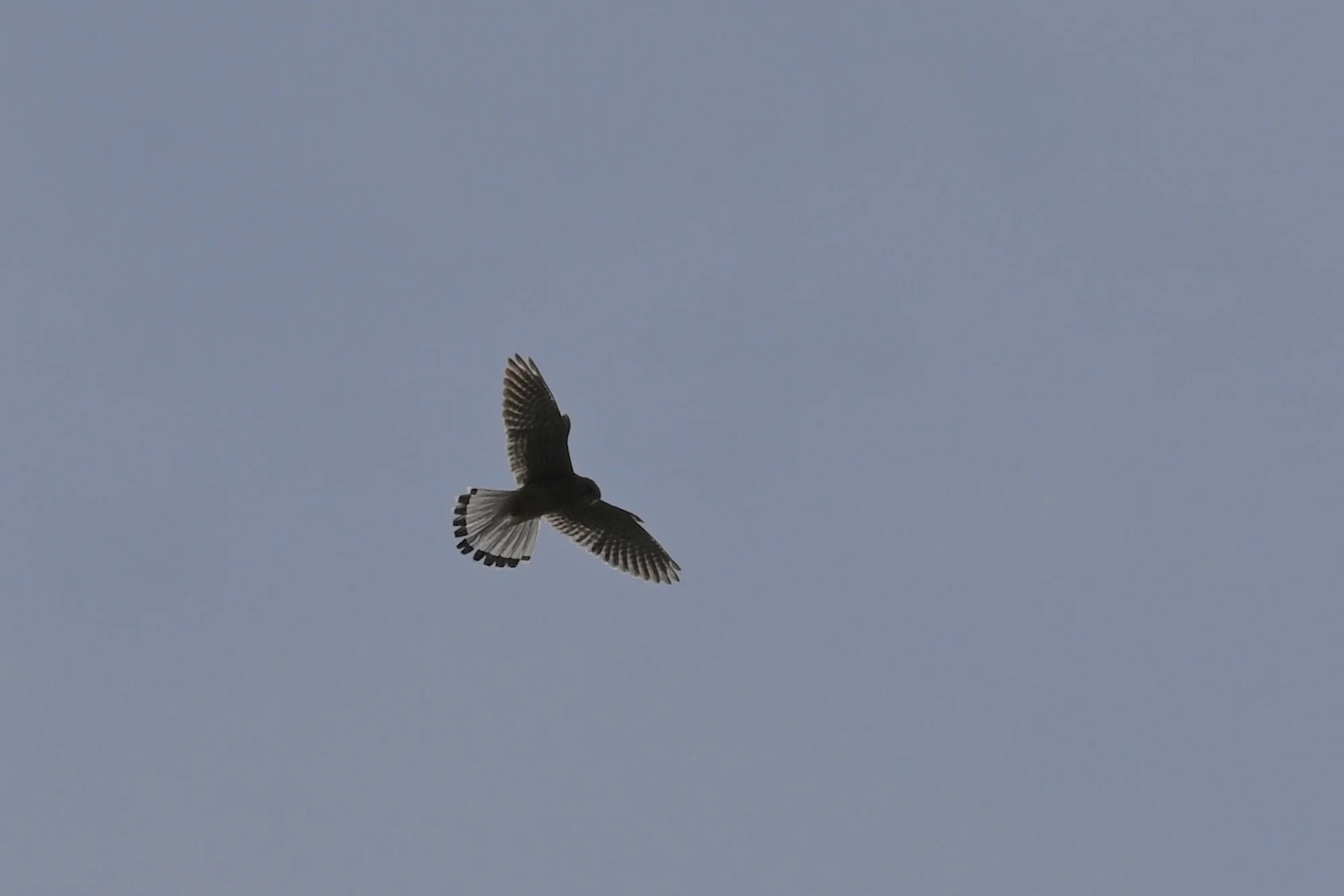
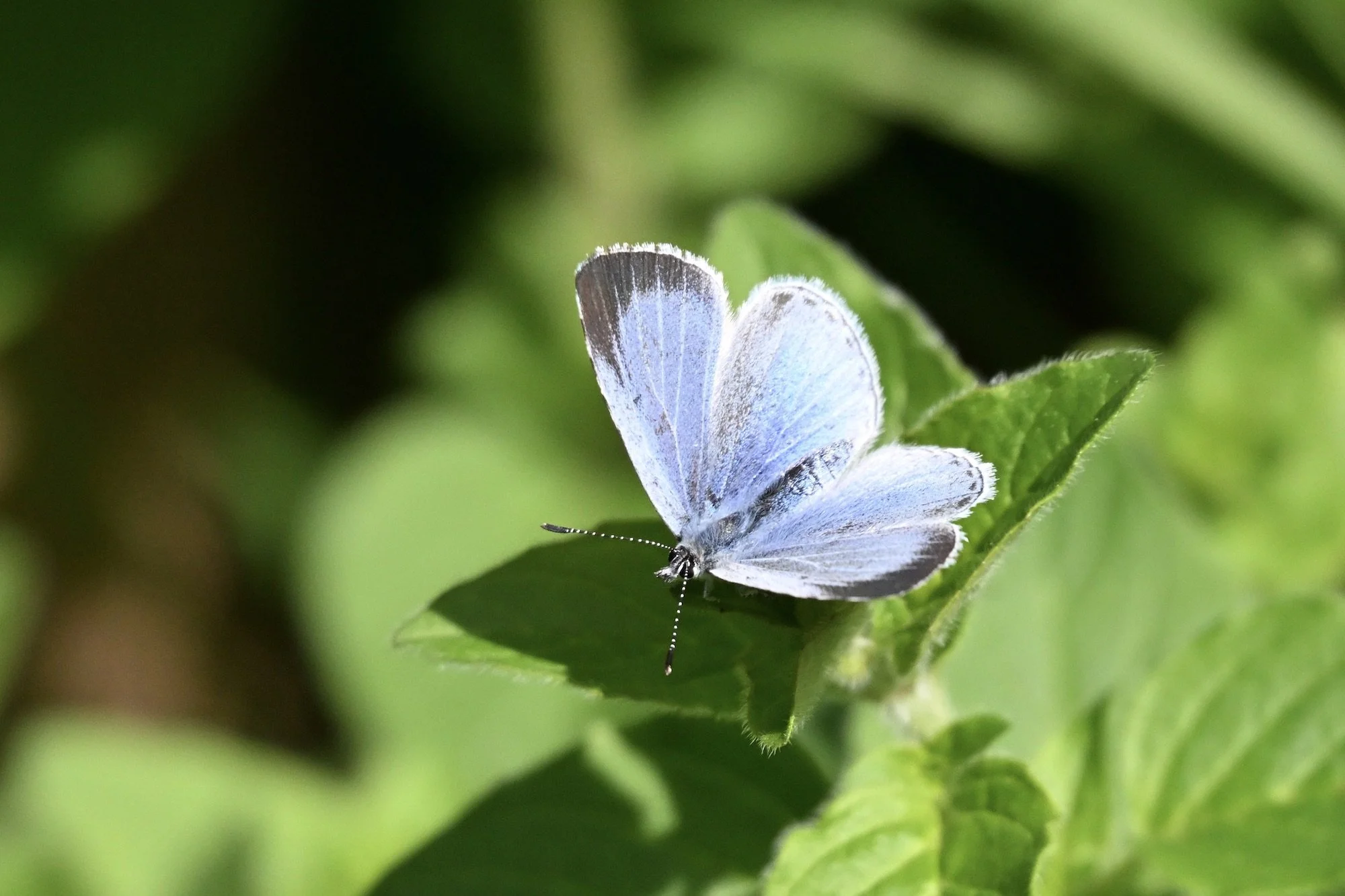
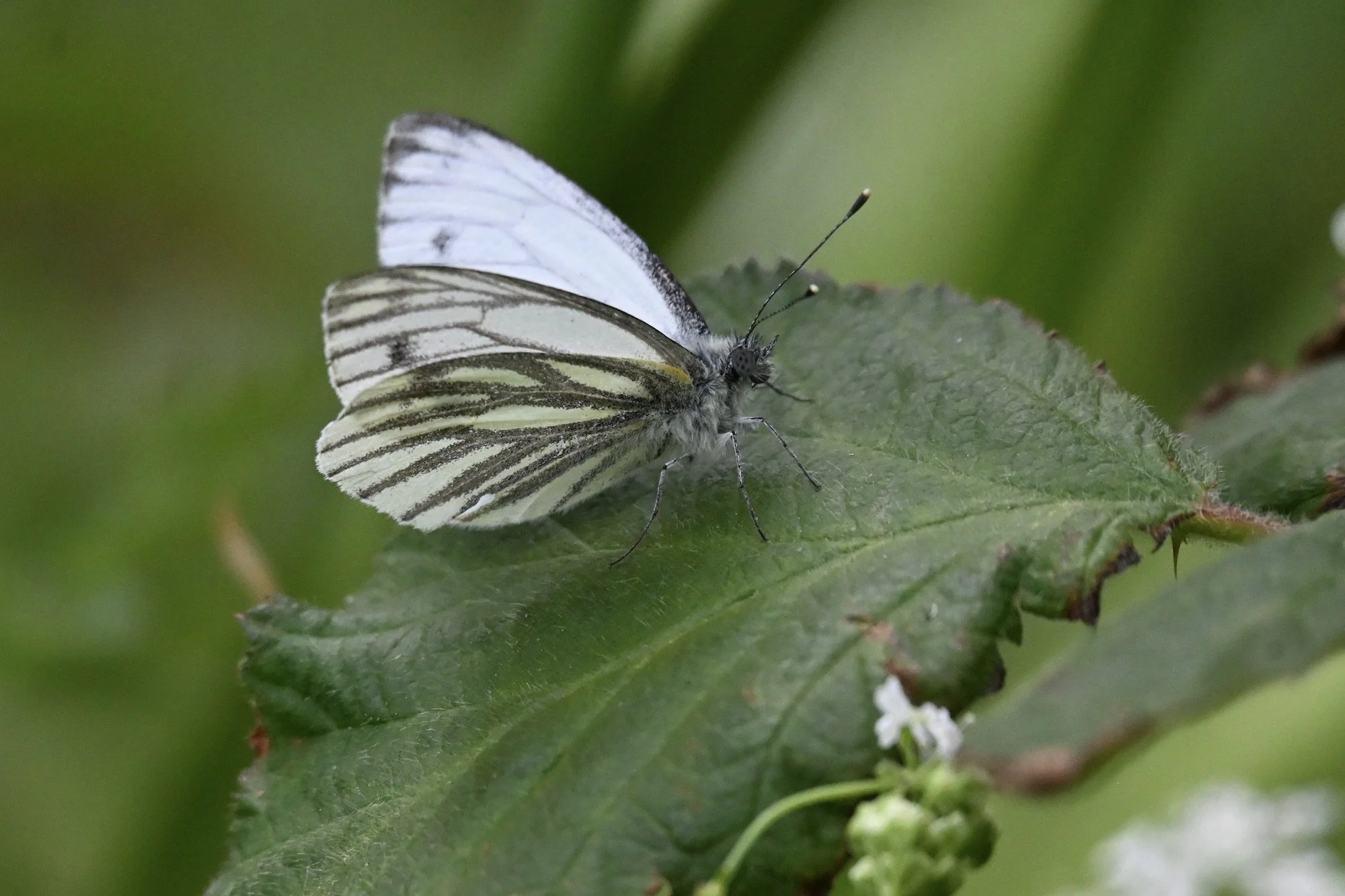
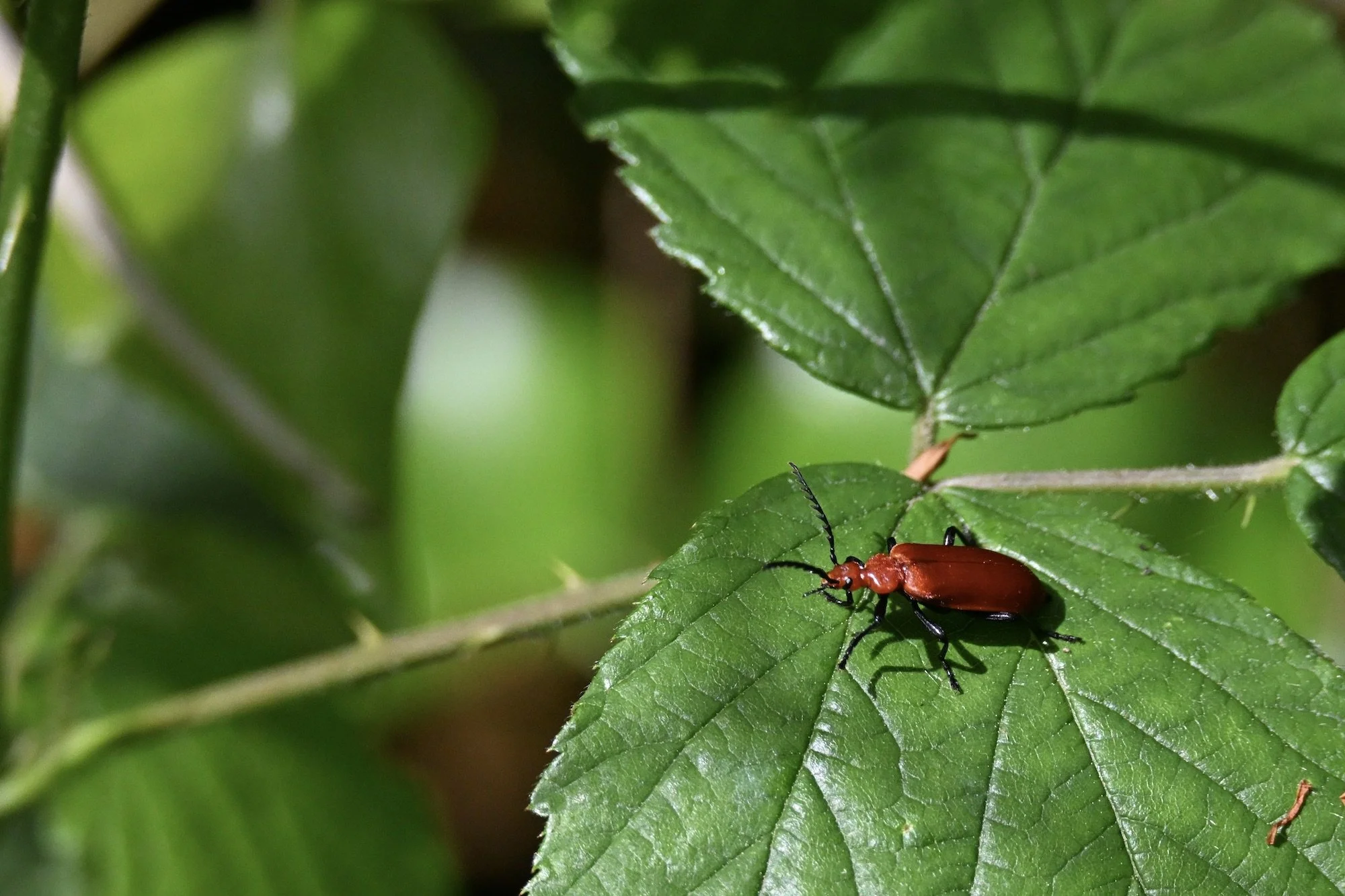
As we walked and talked we saw a variety of butterflies, birds, insects and plants. Pictured here are a kestrel, a Holly Blue, a Green Veined White, a Cardinal Beetle, a Bumblebee on Sainfoin, and a bunch of Spindle Ermine Moth caterpillars.
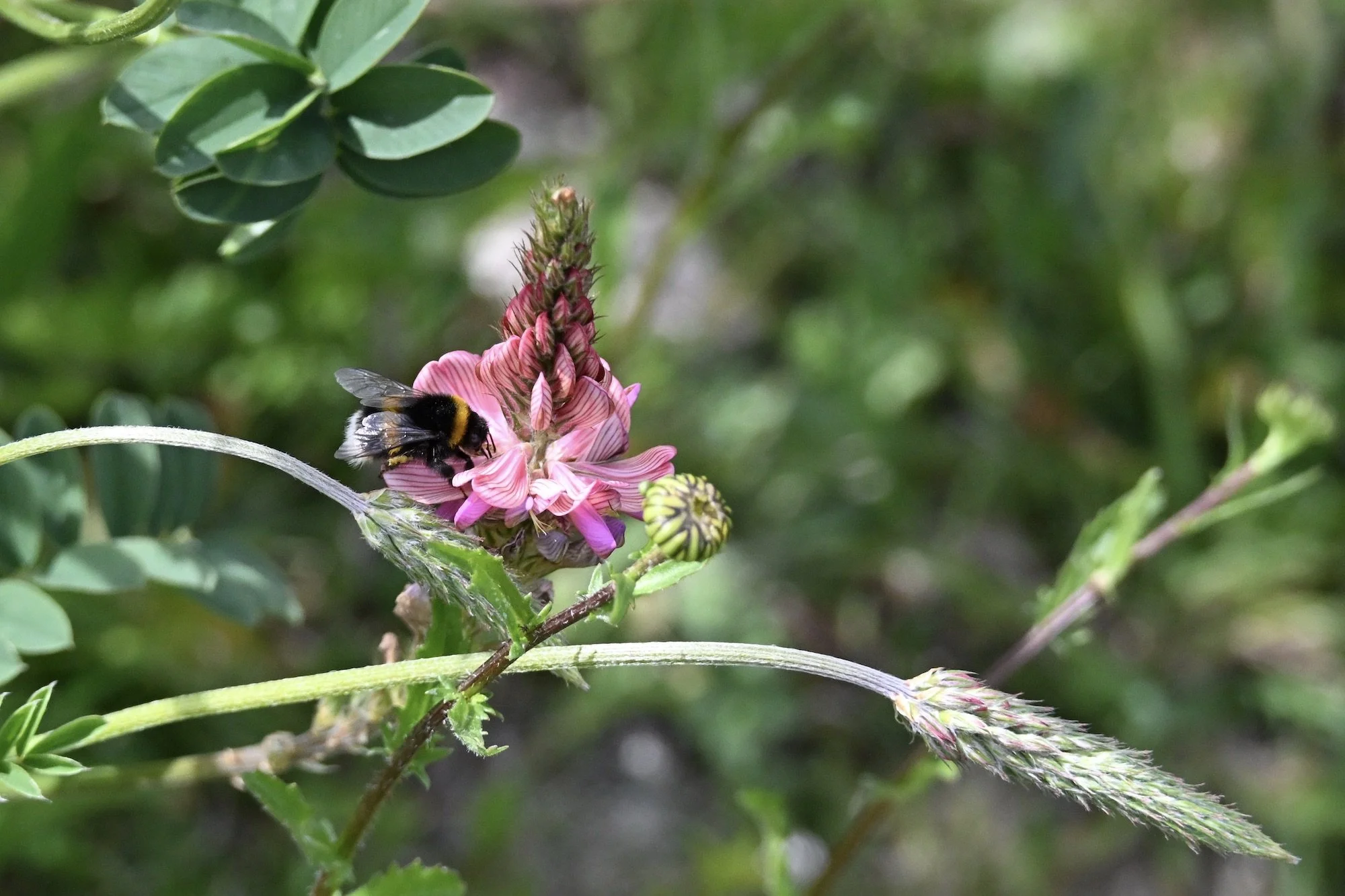
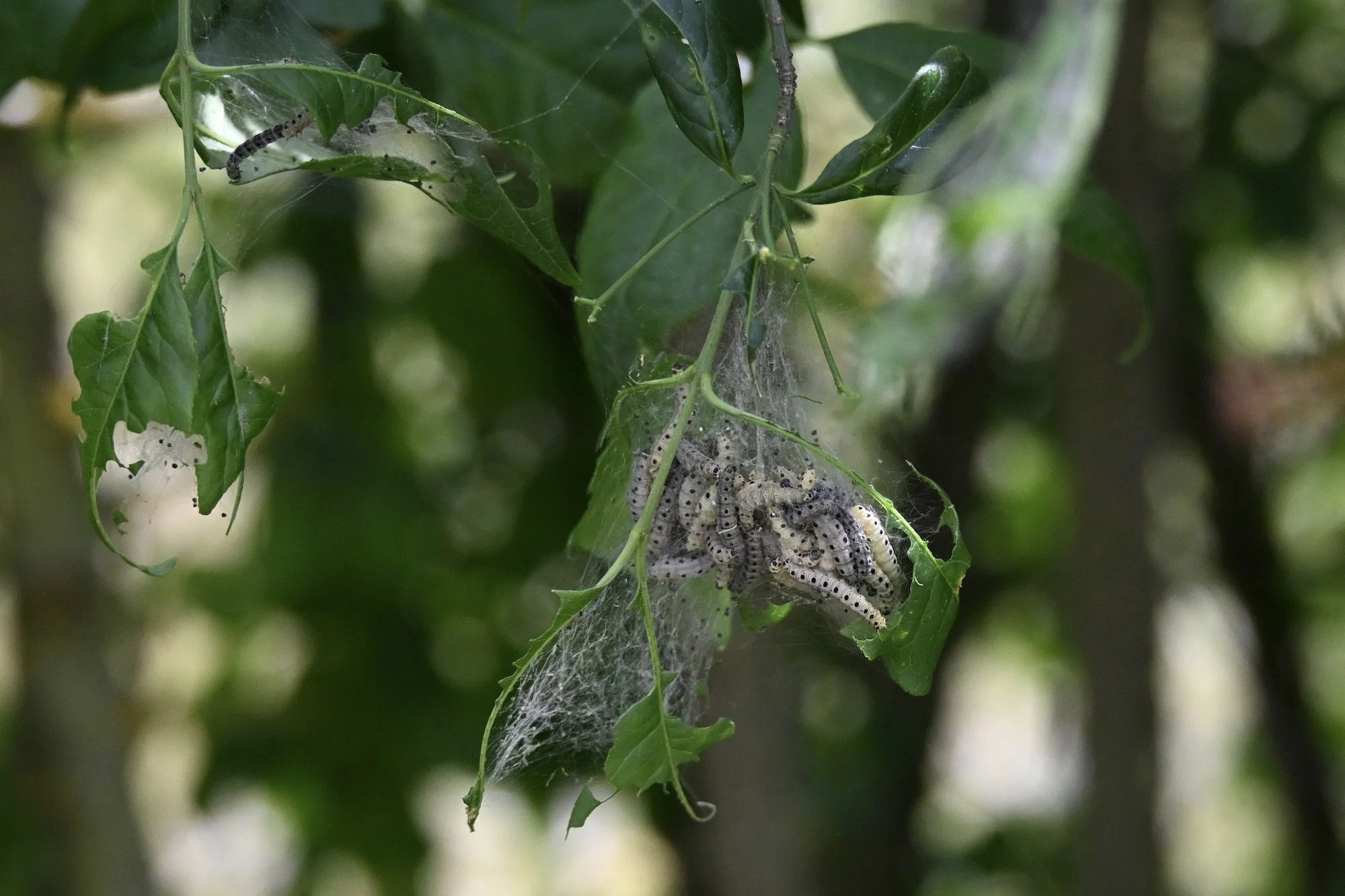
The walk ended with a brief refreshment stop and a chat, then we disbanded. Afterwards - I received some useful feedback:
Thoughts from the walk:
Listening to the bird song was particularly good, detecting the pitch and frequency with phrasing all confirmed by the app helped me distinguish different calls.
Plenty to see with a few surprises. A deer, a buzzard at close quarters were notable while between these sightings the flowers and plants, invertebrates and even geology and social history were discussions which kept the day informative.
We walked about ten miles in total (including getting to and from the start and finish) with the weather proving forecasts can draw unnecessary pessimism!
The conversations were good, lots of ideas fizzing around. Whether it be nature streets where planting to provide not just habitat but stepping stones between the parks and green spaces, why parakeets were so populous around Oaks Park and the Little Woodcote estate. Even a green ideas night at the Sound Lounge!
Thanks Doug, it was a great experience!
The walk was a great way to showcase wildlife on our doorstep, and to educate our community regarding the threat to many species. Such as highlighting the importance of the butterfly banks for the survival of the small blue butterfly and protection of the skylarks in our local farmlands. Perhaps we can even encourage the community to do something small in their own gardens to help wildlife to survive. Overall, an excellent event to promote wellness while educating.
I’m doing more and more of this kind of work - it feels like a great way to connect people with nature and wellbeing - so my plan is to seek out funding so I can provide future sessions on a more sustainable basis. Watch this space!
Sometimes Slowtimes Soundtimes
Spring butterflies haven't been showing up for me much lately in my local park. After an early March flurry, things have slowed down, maybe its the weather? It’s certainly been a bit more overcast and windier lately.
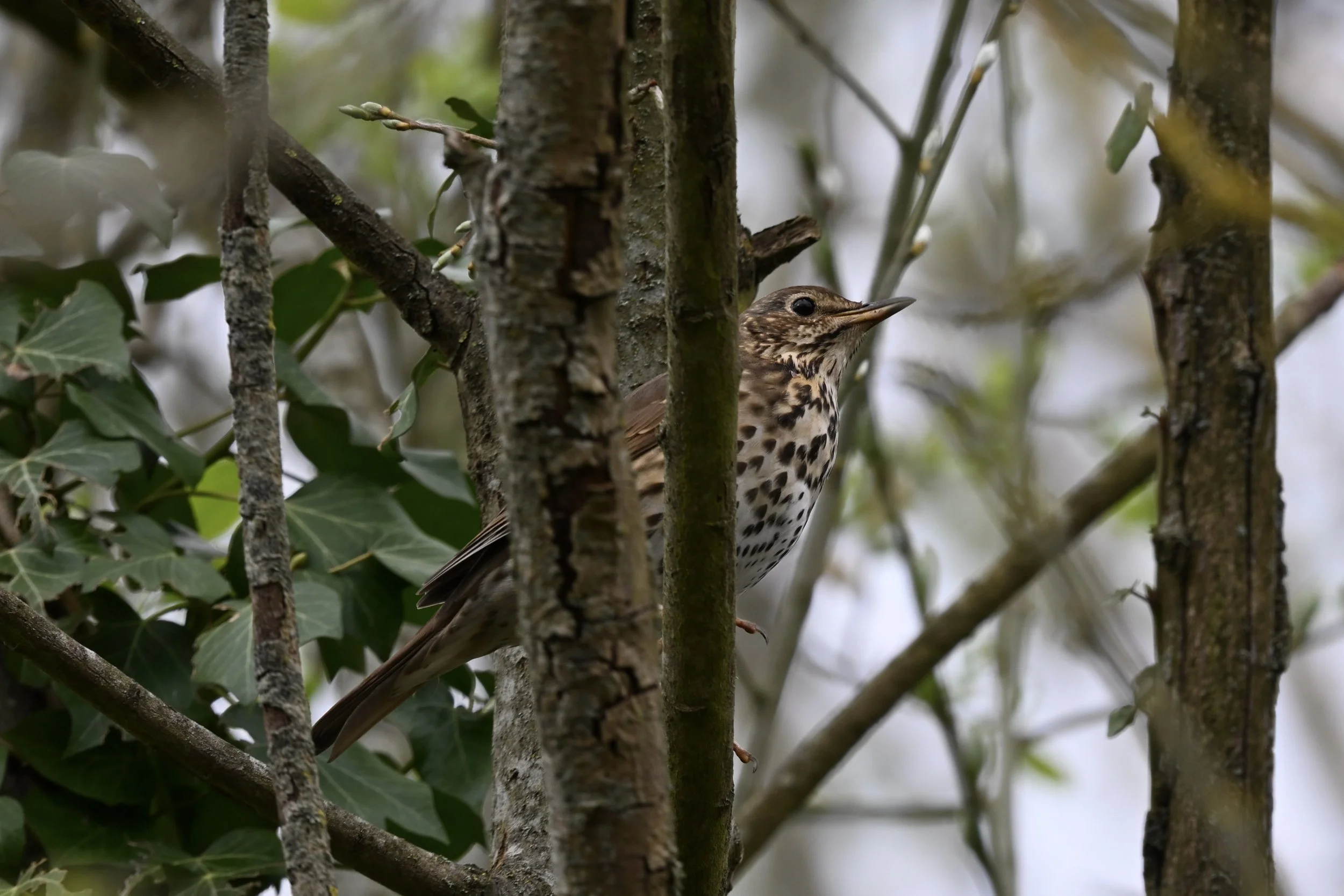
As I walked around the park today - things were quiet again - and tucked away in the silence I spied a Song Thrush, watching over the park. Noiselessly hidden among the branches, so as not to give its location away.
I wandered on - and then I heard the buzzing of a bee, and spotted this Tawny Mining Bee near my feet.
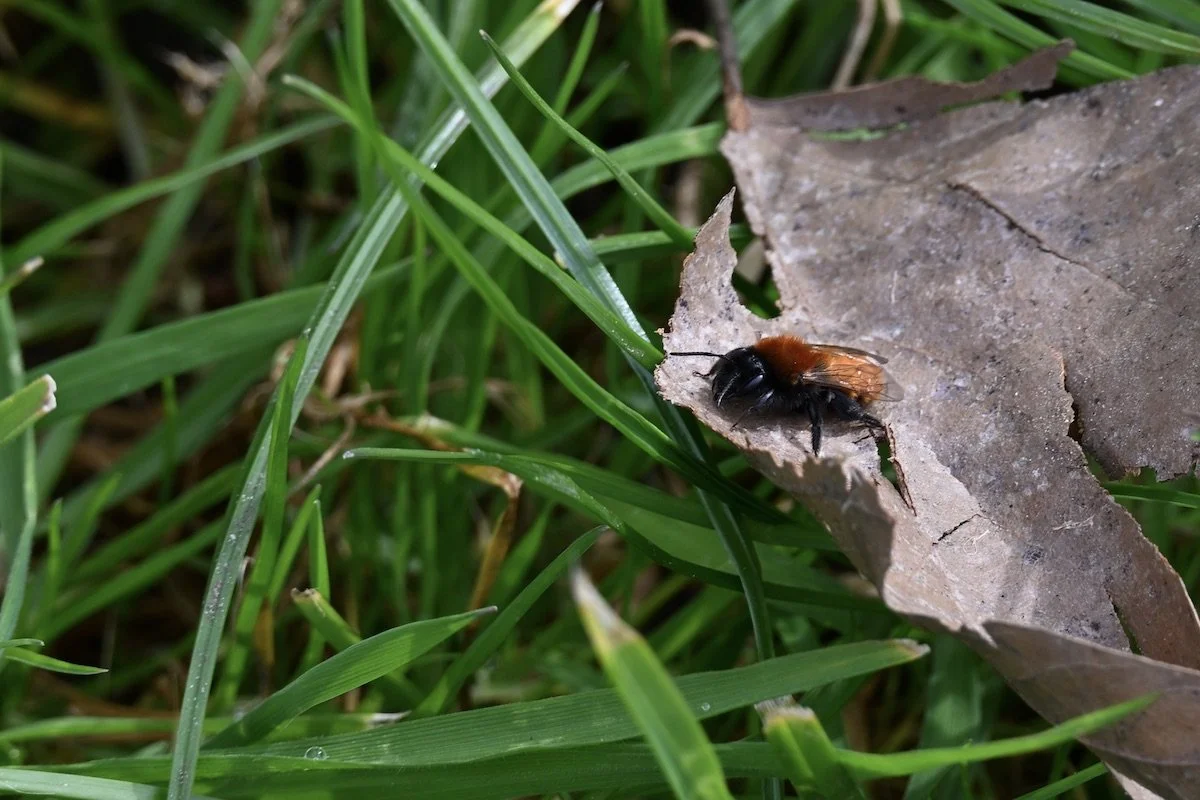
Female Tawny Mining Bee
As my walk continued, inspired by the buzzing of the bee, I turned my attention to the soundscape. I heard robins, wrens, dunnocks, great tits, blue tits, a blackbird, parakeets, and magpies. In the distance from across the fields, the song of the skylark carried on the breeze, and elusive as ever - the Green Woodpecker kept out of sight, laughing.
In the absence of sights, I need to remember, the sounds are just as fascinating.
I Wander & I Wonder
March 31st 2026. Here we stand on the precipice of April, and I find myself, for the first time in my 60 years, having walked in excess of 400km in a single calendar month. I enjoy my walking, to knock on the door of 300km in any month is not uncommon, but March 2026 has seen me cover some distance. Why? I expect it may have something to do with my recent decision to stand as a Green Party candidate in the coming local elections, and I know, for sure, that nature has a lot to do with it too.
Take a look at this video of the song 'Before September', taken from Danny George Wilson's new LP, 'Arcade'. Danny describes the song as being 'about some of the fleeting random moments of pure joy that have stayed with me my whole life.' Danny wanted the River Wandle to feature prominently - and knowing my love for this beautiful rare stretch of water, he commissioned me to shoot some footage, showing the beauty of nature, mixed with the urban grind a river in London can experience. This wander was indeed full of wonder, and for sure it helped nudge me over that 400km total.
The video includes a guitar, hand painted by my friend Sean Bright. This work is a true local collaboration, and one of a few nature fuelled adventures I plan to be involved with this year. Please enjoy 'Before September'.
The Wandle Telegraph
Notes from a walk along a section of The Wandle Trail, from Carshalton, to Morden Hall Park.
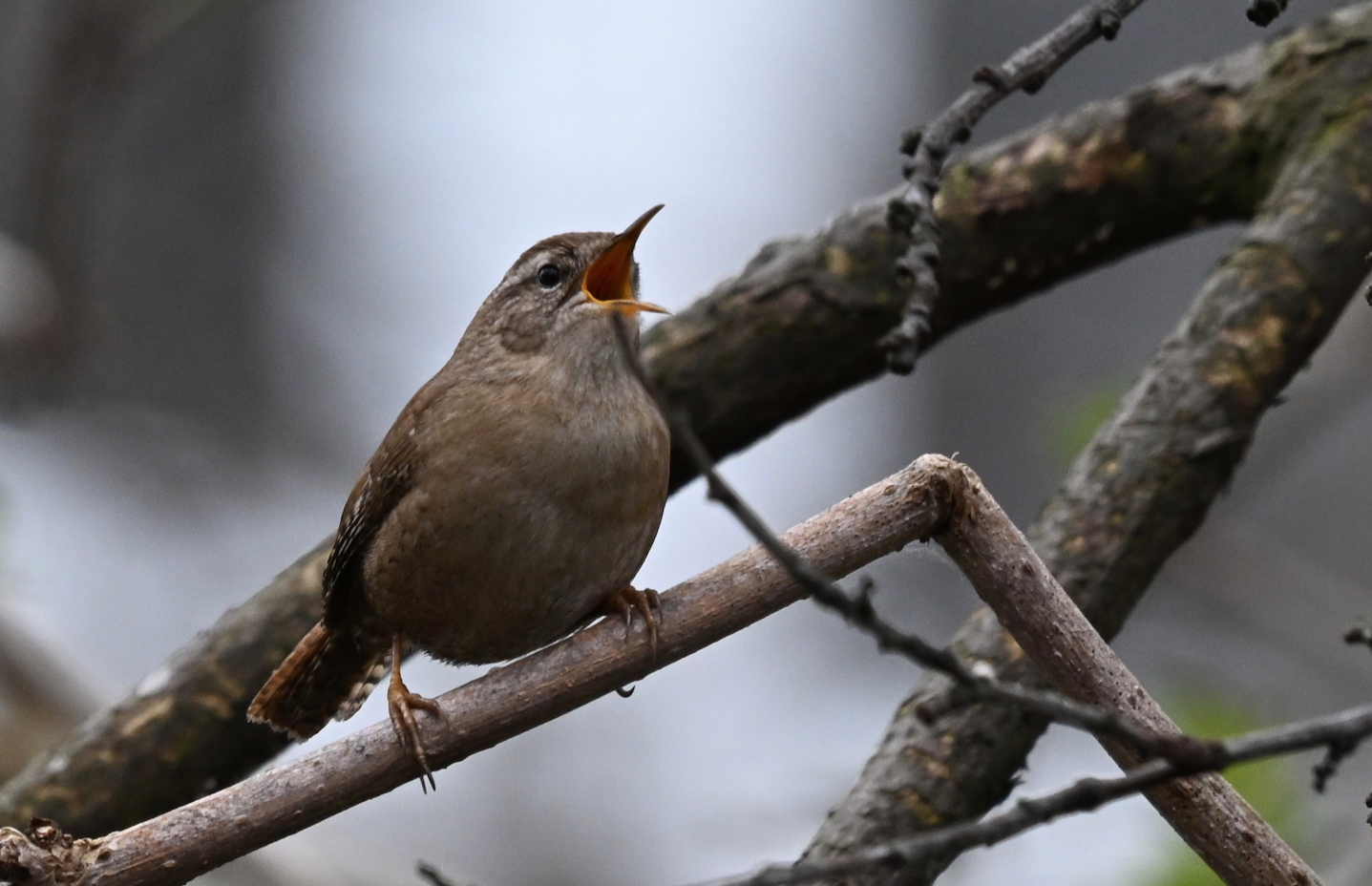
A Wren - one of many - singing loud and proud along The River Wandle
The Wandle Telegraph
Leaving the house at 10am. 11 degrees. Light breeze. Sunny intervals threatened. As the front door closes behind me, I hear a Great Spotted Woodpecker hammering, somewhere over the farm tracks.
Heading down the road, a Song Thrush sings, then I see
House Sparrows
Robin
Jackdaw
3 Parakeets
4 Redwings
Wood Pigeon
Magpie
Great tit
Starling
A Goldfinch flashes by, red and golden yellow less than a metre away.
Black Headed Gull
I pick up the Wandle Trail in The Grove
Feral Pigeons
Mallard
Robin
Crow
Camera and binoculars out
The river rushes, fast flowing down Mill Lane
Dunnock
Great Tit
Wrens out in force
Redwing
Blue Tit
Moorhen
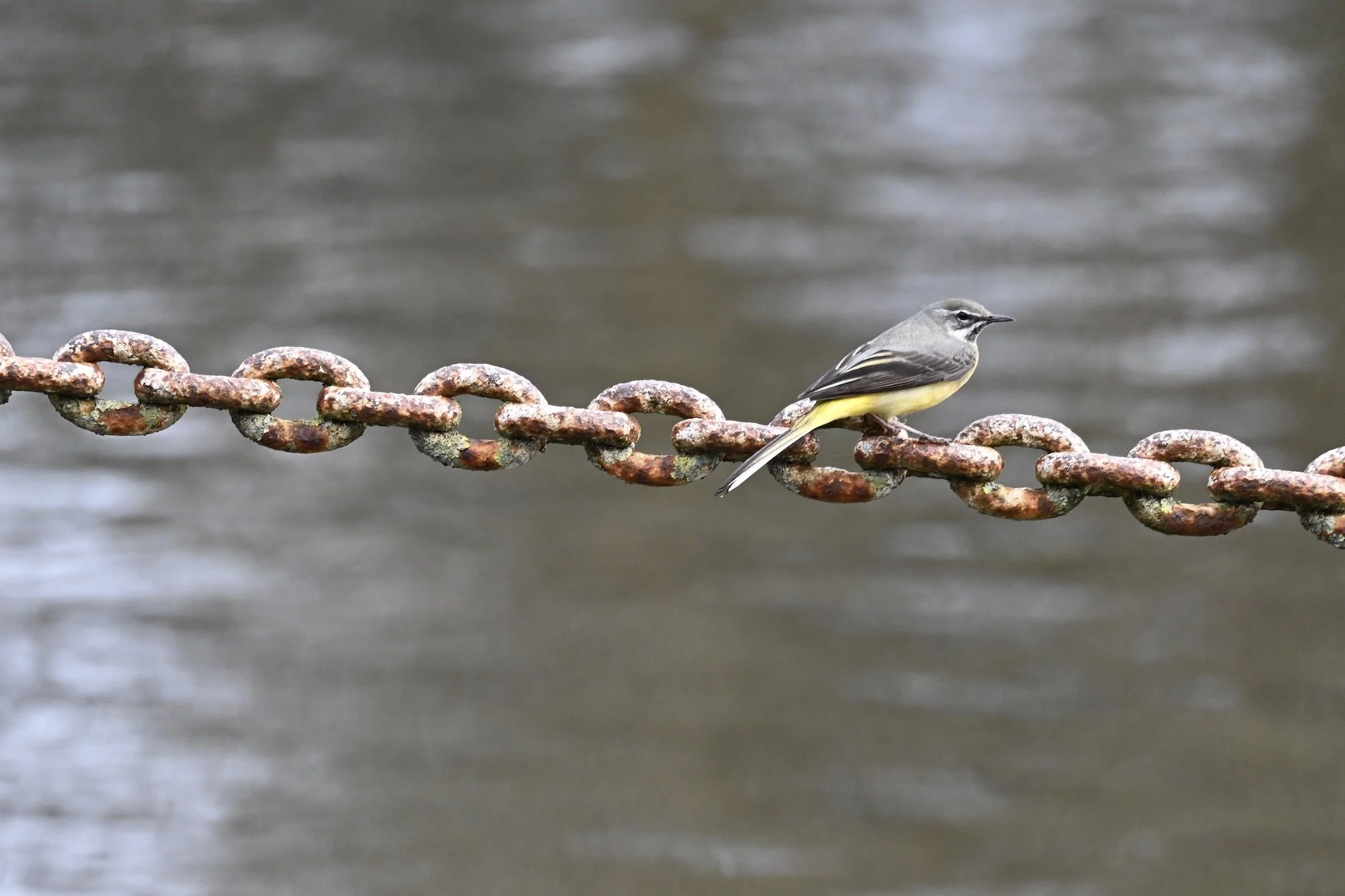
Kingfisher at Hackbridge! Flashes of blue as the bird darts around - hitting the water in search of a meal. I briefly have it in my camera sights, just as an approaching dog walker and his two loudly barking accomplices arrive on the scene. As quickly as it appears - the bird is gone. Meanwhile the Grey Wagtail lives up to its name, and a friendly conversation with a passer by ensues.
Chaffinch
Watermead Way towards Bennett’s Hole - the water rushes on, and I stop for another chat. ‘Seen anything interesting?’
Continuing. Wrens telegraphing news of my walk along the trail. I don’t recall seeing and hearing this many in one day before now.
Blackbird
Dunnock
Goldcrest - incessant clockwork movements
Coot
Chiffchaffs on Watermeads Nature Reserve - and a third conversation about this enchanting green and blue trail, snaking its way gradually towards Old Father Thames.
Arriving into Morden Hall Park
Coal Tit
Egyptian Goose
Canada Goose
And finally, on the water, a Cormorant. The bird turns away and with a mighty thrash of its statuesque wings, it’s up, out of the water, and gone.
Brief Encounters
The farm tracks are wet from last night’s rain
Fallen leaves wearing their raindrop glossy coats
It’s gloomy – mild for the time of year
The clouds push in, and I see Autumn shades smudging into the grey landscape
Aside from an occasional whirr and chat from the hedgerow sparrows
And the high distant silhouette of a gull and a pigeon, the birds are absent
I pass two people talking, one out walking his dog
And I wander on towards work
Leaving the tracks I turn onto the main road, and as always, the mood shifts
From peace and quiet, to fast moving traffic, and noise
I don’t usually care for this stretch of the walk
But today I’m reminded possibilities can appear anywhere
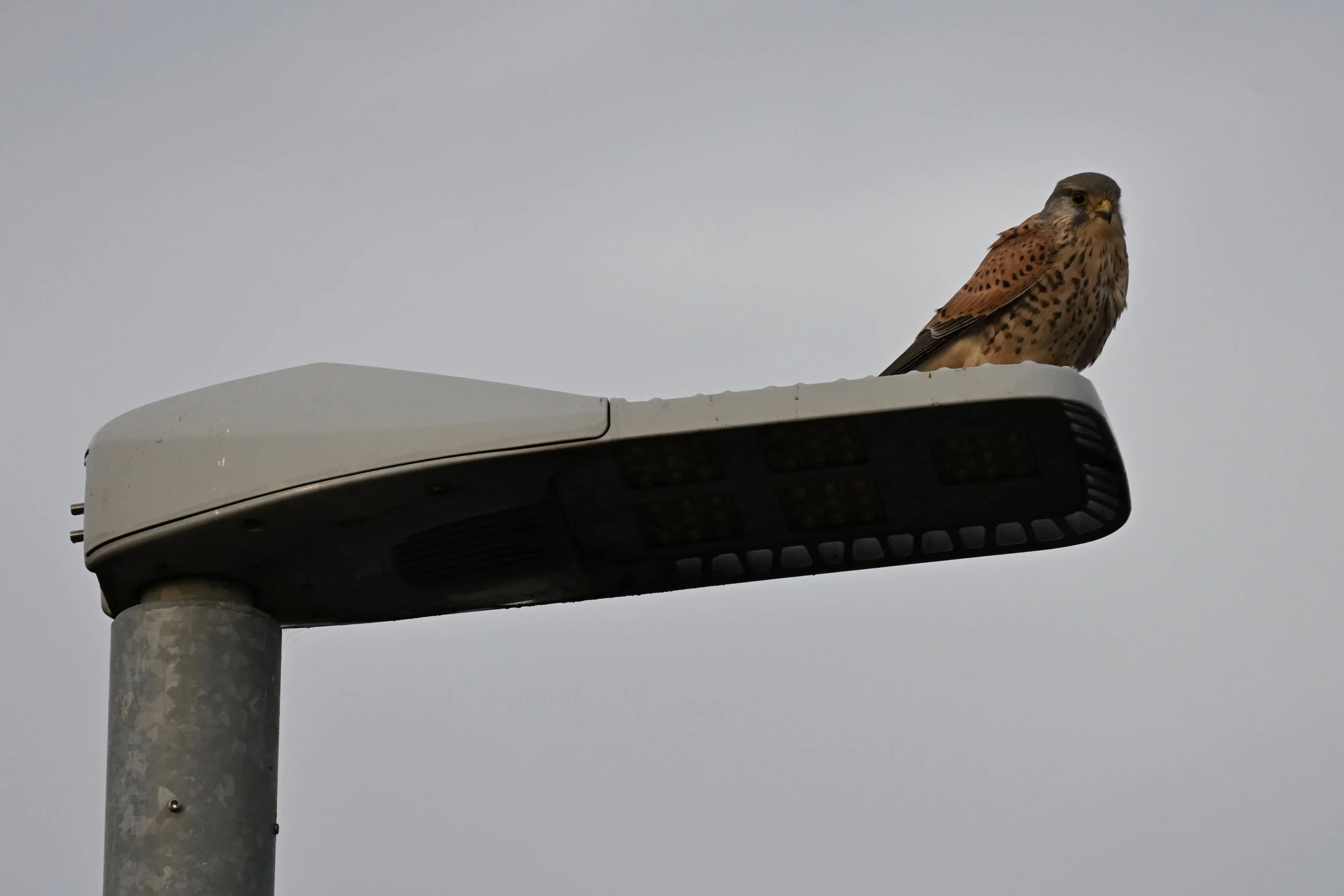
There’s a kestrel sitting on top of the nearest lamppost
I approach – we size each other up, and the bird takes flight
Settling on the next lamp post
The game is afoot – and we continue
I advance slowly, then the bird takes flight,
Gliding across the road, then back to settle, one stop further down the line
Our walk towards my work continues, until after several hellos and goodbyes
The bird spots something and is away, over the hedge and across the field
Arriving at work, I turn off the main road and as always, the mood shifts
From fast moving traffic, and noise, to something calmer, more focused
I don’t usually care for that previous stretch of the walk
But today I’m reminded possibilities can appear anywhere
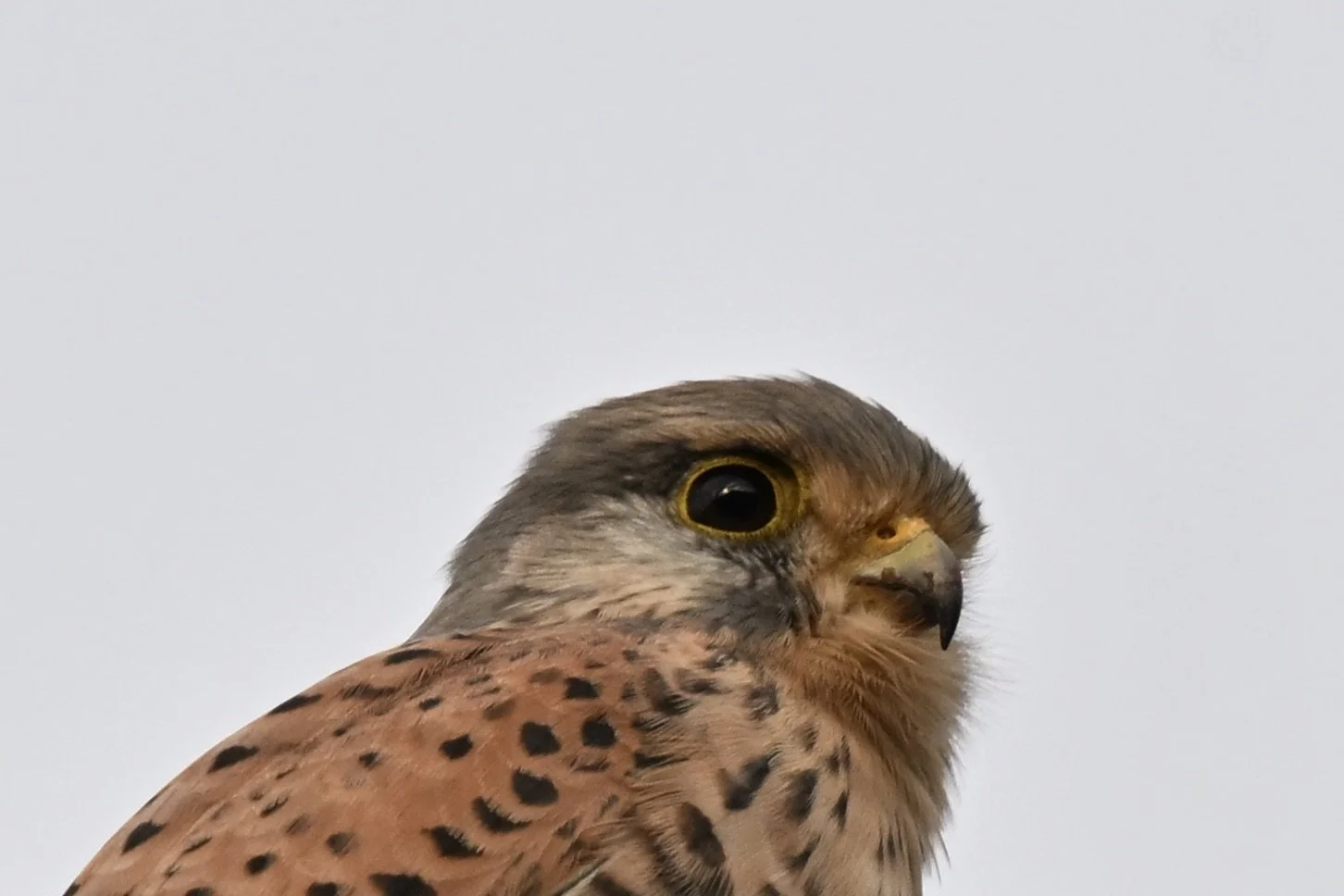
Strangely - or maybe not - I’ve traced this short walk six times recently, starting with the one that sparked the above poem. On four of those six occasions, the kestrel and I have encountered one another. The bird on the lamp post, me down below.
Curiosity, Patience, Persistence, Kindness
The weather is currently playing with us. Much missed downpours interspersed with long periods of warm sun. Is Autumn here yet? It’s certainly knocking on the door, and before we let it in - there’s some field work wrapped in an adventure that we need to undertake.
And so it was that last Friday, Carole and I took a pair of binoculars, a camera, a packed lunch and headed to Barnes to spend much of the day at The London Wetland Centre. Even before we arrived, a heron was on hand to signpost the way. This was our first visit to the centre - I love that sense of newness, not knowing what you might find - and just being curious and open to the possibilities.
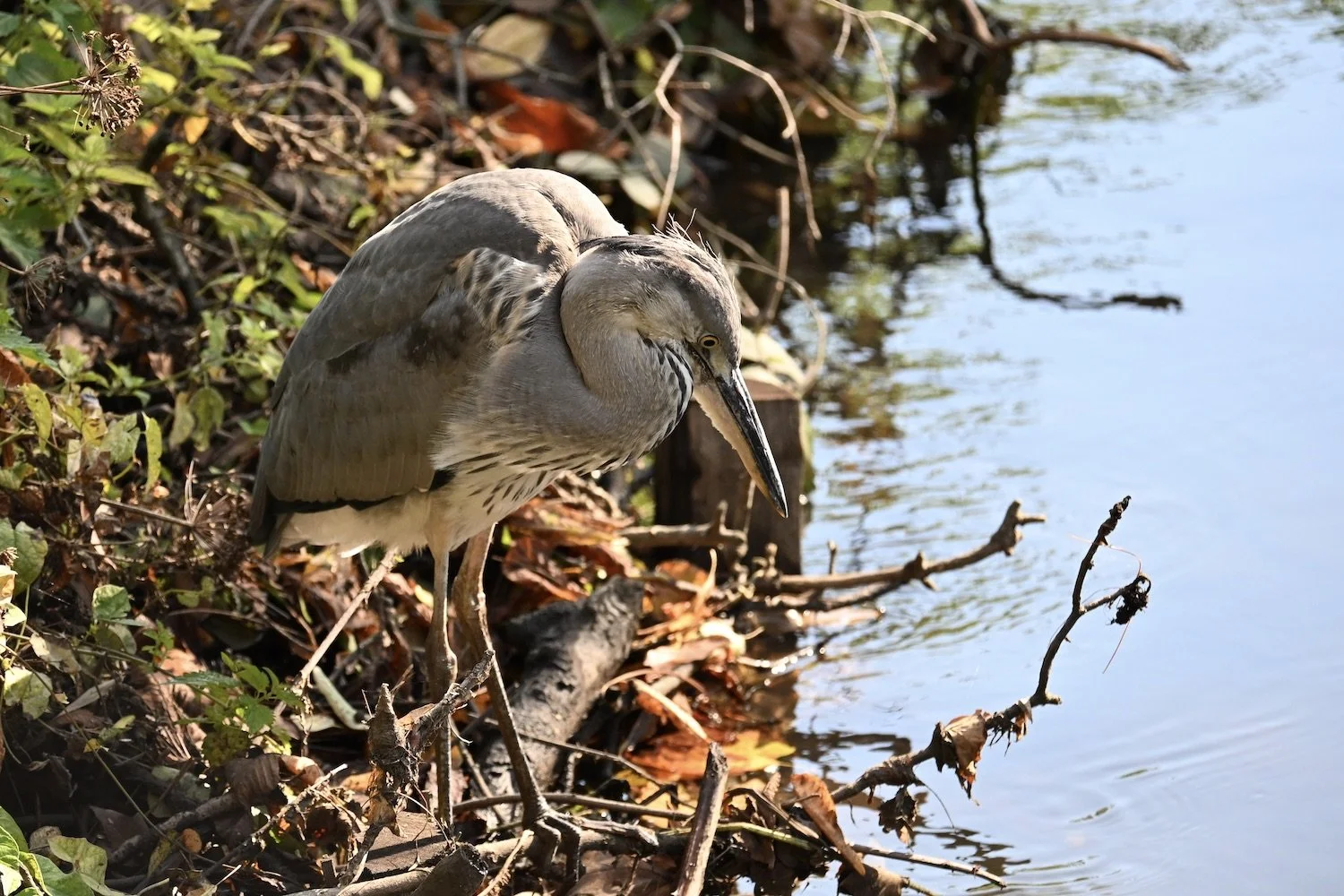
Heron on Barnes Pond
On arrival we learned there are, somewhat aptly, two wings to the centre. We headed out along the South Route, after it was described to us as slightly…wilder? As we head off, a quick note on accessibility. The centre is largely flat, and while there are some pathways which require careful navigation - we noticed accessible alternatives pretty much right across the centre. Even one of the taller hides has a lift - and we concluded this felt like a well designed wheelchair friendly space (I don’t have any special mobility needs myself so this is just a lay person’s observation).

London Wetland Centre Accessible Map
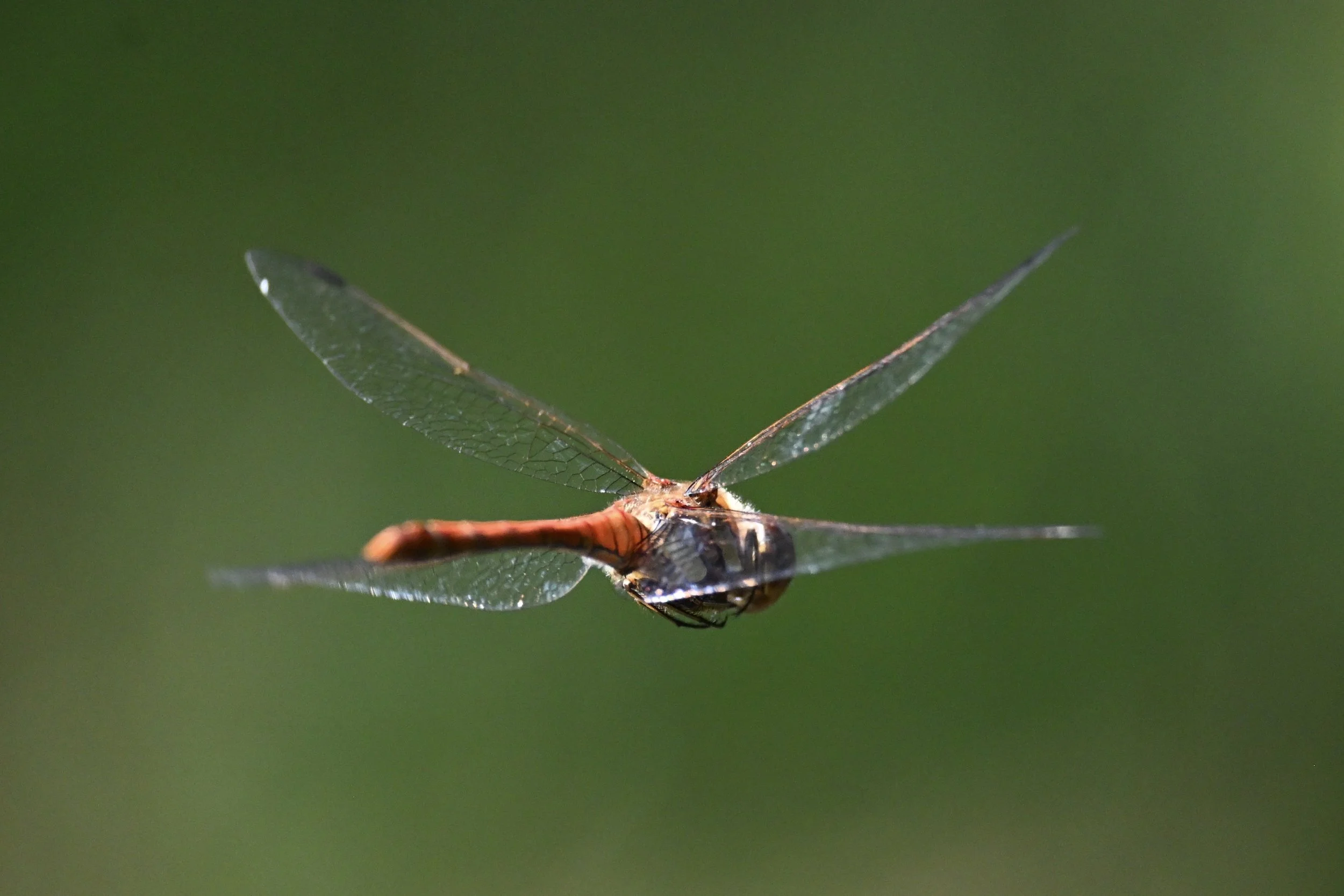
It was a fine sunny, warm day, and immediately we became aware there are dragonflies and damselflies everywhere - neither of us can recall seeing so many in one place before now. Apart from the one Common Darter which settled briefly at our feet, and a Migrant Southern Hawker which Carole spotted - most of the dragonflies we saw were airborne - impossible to track for any length of time - let alone photograph. We wandered on, fascinated by how much more diverse the insect population becomes when you add water into the mix.
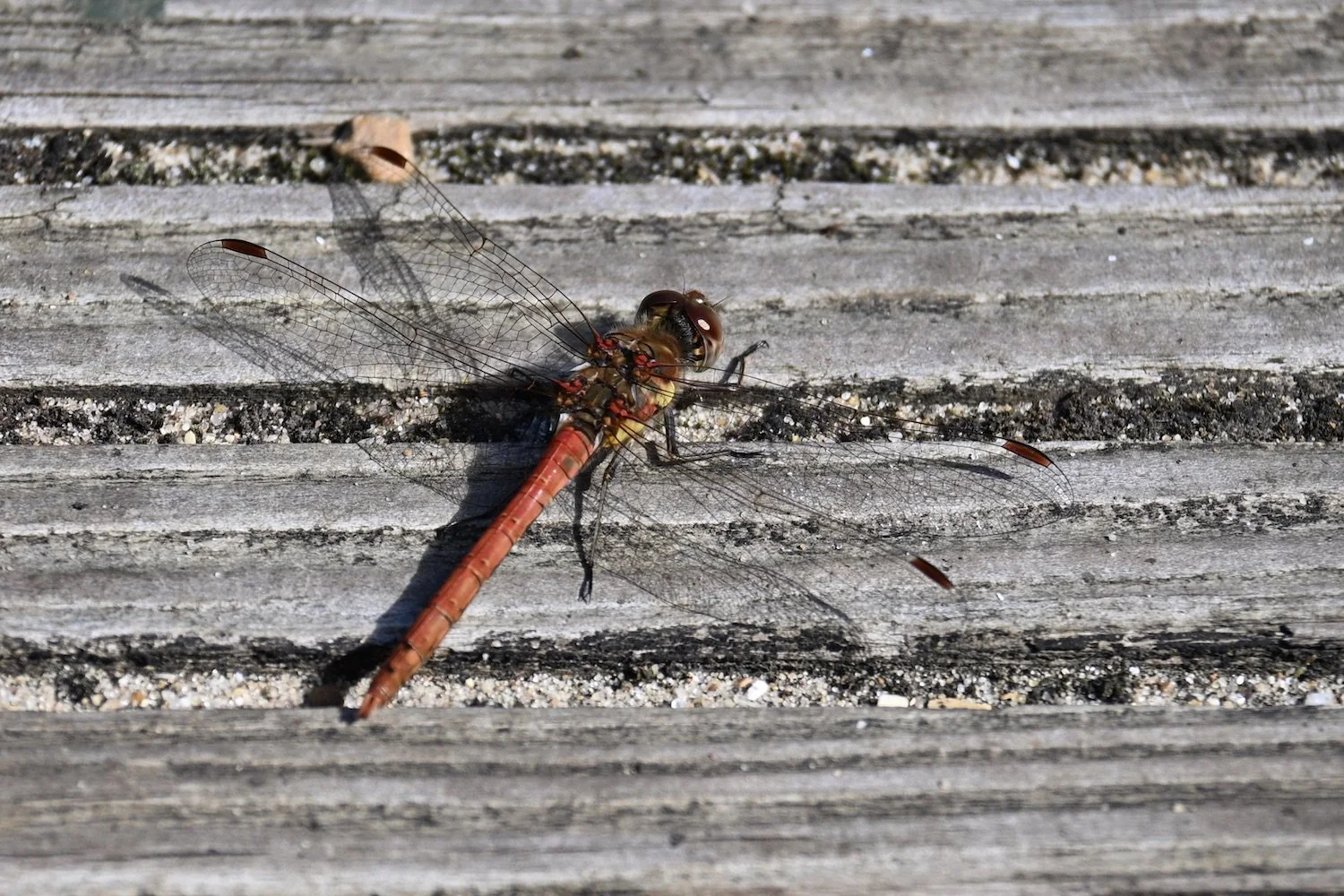
Common Darter on the boardwalk
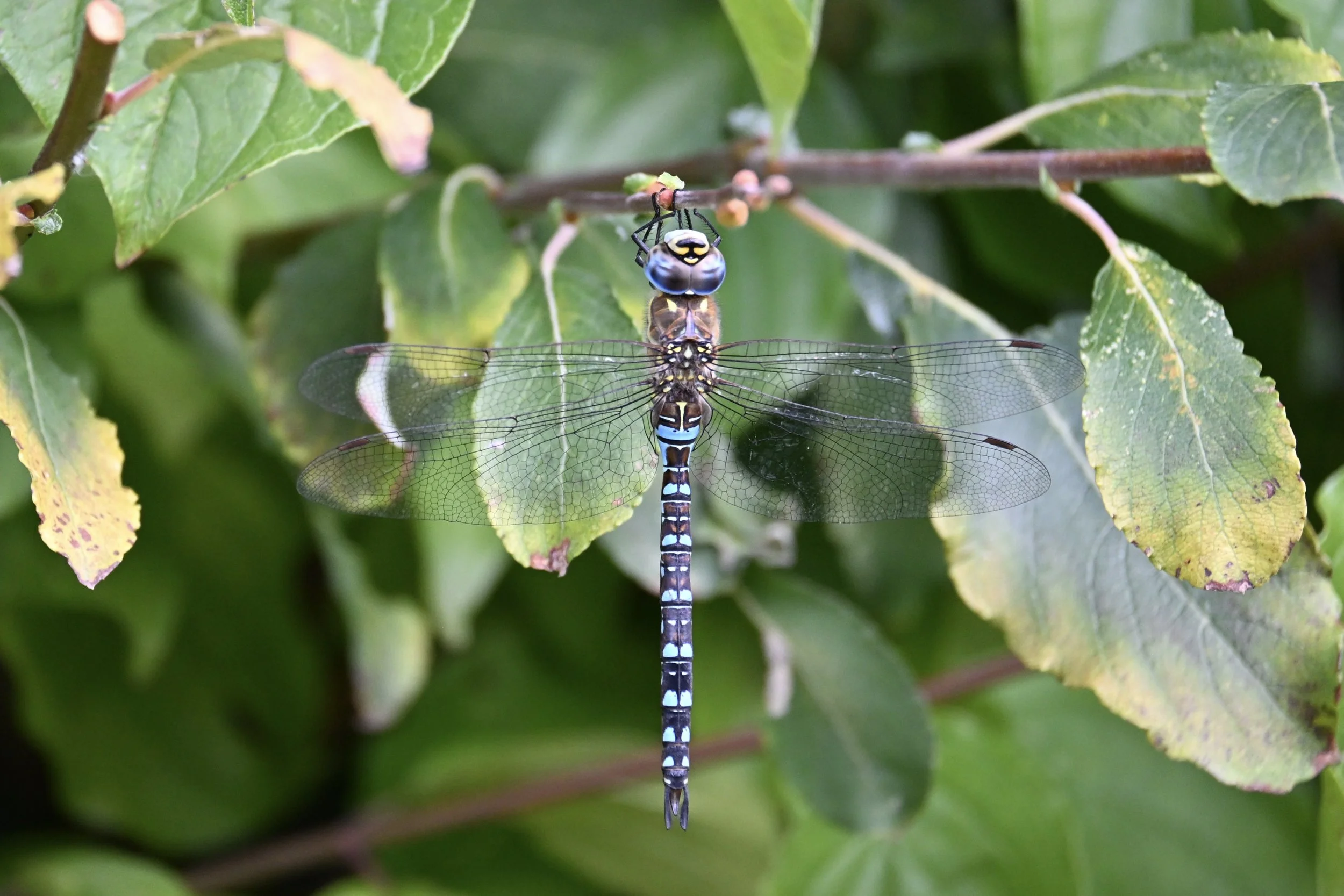
Migrant Southern Hawker
We stopped at a hide to look out over the main lake. I love how much less visible we become in these places. The wildlife is familiar with the hide and with care, windows can be silently opened and closed without disturbing the birds.
As we looked over the water - someone else arrived into the space - we said hello, admired their huge camera and chatted a while. I explained that my current camera is new to me - and that I’ve more or less taken it out of the box and started shooting. I’m happy enough with the results and conscious I need to learn much more about how to operate this technology. The person offered to give me a couple of immediate tips, and after some quick settings adjustments - a hobby sped past the hide. These birds can move, and it was a fair distance away - but I managed to get a passable shot.
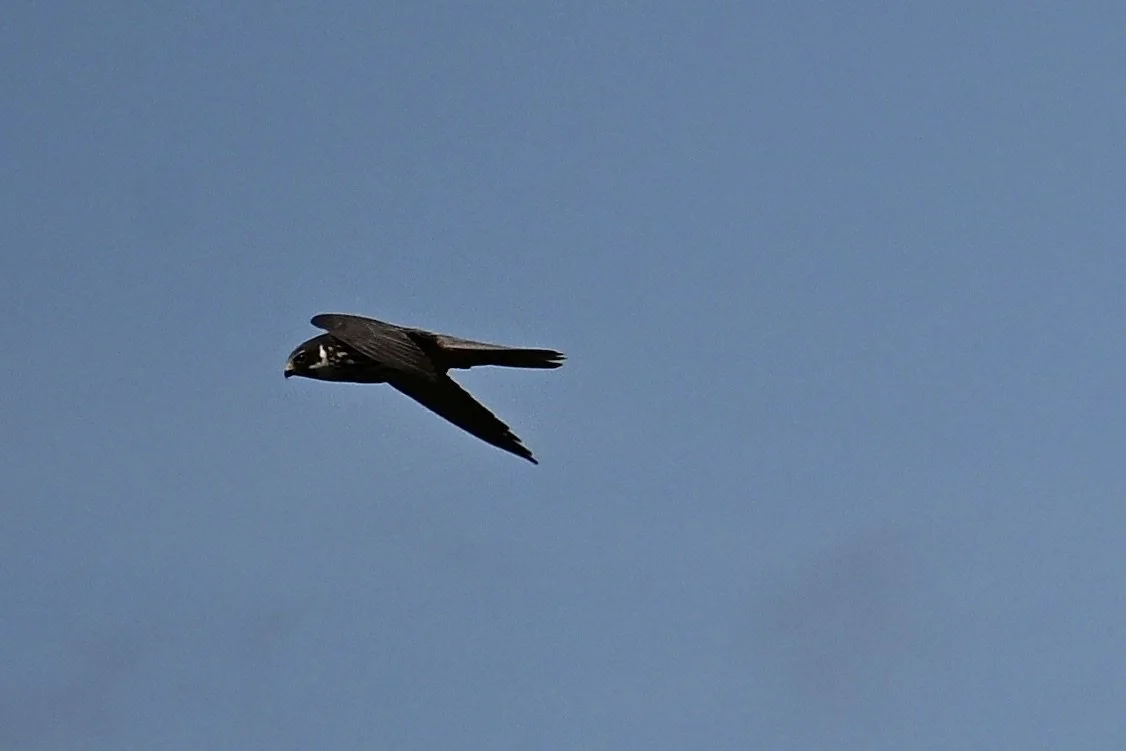
Hobby in flight
As we chatted - the hobby returned and this time, a gull pursued it. This aerial battle took place right at the very limits of where my camera lens can reach - and while none of my hobby v gull pics are award winners, once again I was pleased enough with what I captured. We said thanks for this brief yet extremely useful piece of tuition and went our separate ways.

Hobby and Gull aerial battle
The rest of our visit was enjoyable - so much so that we joined the Wildfowl and Wetlands Trust, who run this and several other centres. Not long before we left - we spotted another Common Darter. This one was settled on a wooden railing and it kept flying off, and returning. We watched a while and carefully approached. The next time it flew, I pressed the shutter button.

Common Darter In Flight
I can’t quite believe this is the photo I took. I’ve been trying to capture a dragonfly in flight for years, but they’re crazy fast and all I normally get is blurs. I appreciate this photo isn’t ‘perfect’ and the insect is flying away - but still - to capture a dragonfly mid wing beat is something else, huh?
A fascinating day out - and thanks to the kindness of a stranger willing to gently offer me some tips, a chance to learn more about the amazing technology I carry around with me.
Curiosity : Patience : Persistence - and lest we forget, kindness. A powerful combination. indeed
Traveling The Landscape : Dreaming and Reality
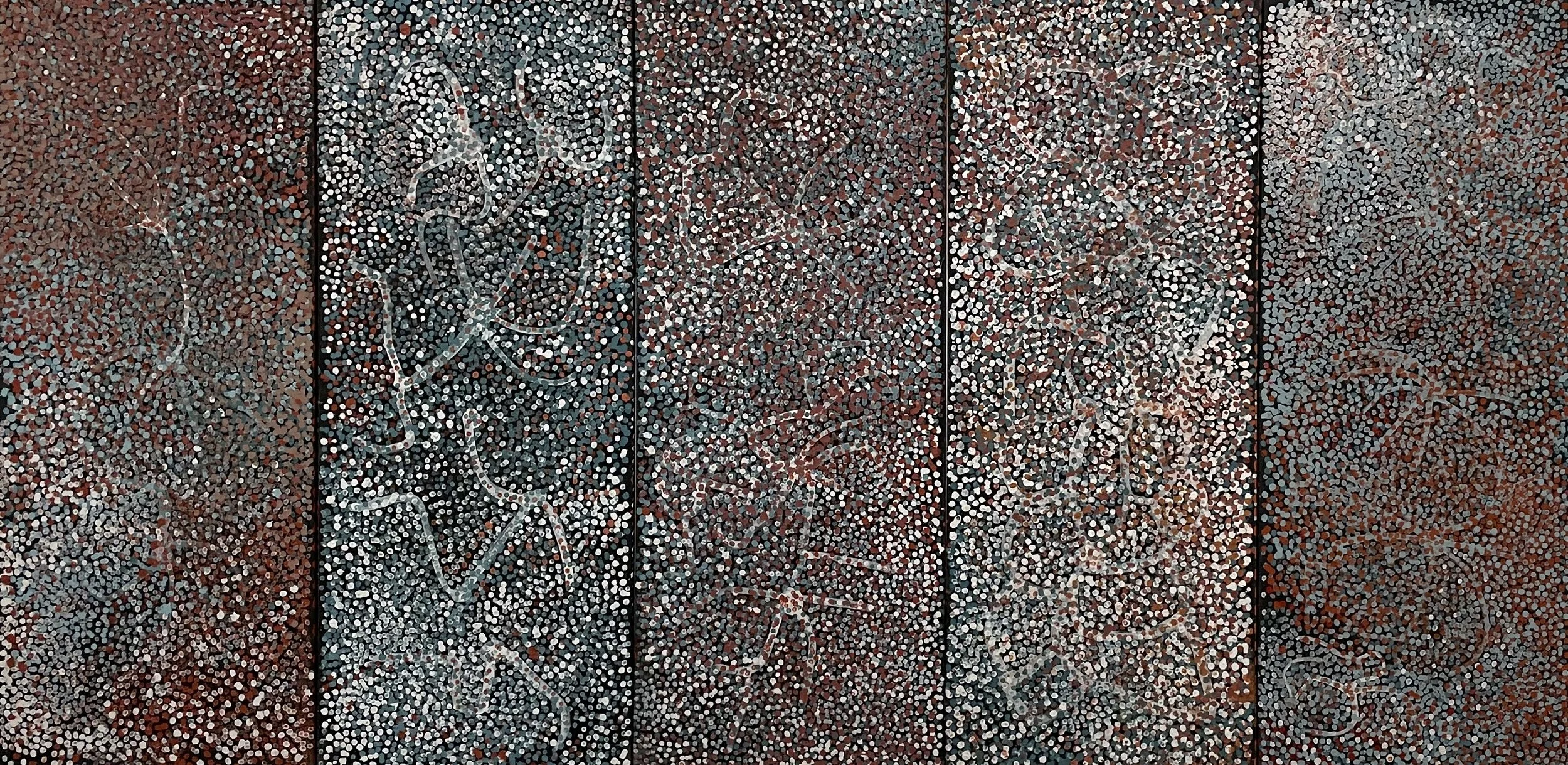
‘Alhalker Country’
A research visit to Tate Modern beckons. The chance to take in work by Australian artist Emily Kam Kngwarray - an artist new to me, and English born Richard Long - someone I am more familiar with. Kngwarray’s work comes from Alhalker, a region of land in the Northern Territory of Australia, specifically in the Central Desert Sandover region, to the northeast of Alice Springs. Long's work encompasses locations from across the world. Both artists explore the land, through topography, geography, geology and more - albeit in very different ways. I travelled to London with Carole, hoping their work would inspire and inform me and my current project, ‘The Path’.
“For Aboriginal and Torres Strait Islander Peoples, the concept of Country encompasses the lands, skies and waters to which they are deeply connected, over countless generations. Country is a shared place of spiritual, social and geographical origins. Kngwarray’s art embodies her detailed knowledge of the places where she lived throughout her life with layered motifs representing the plants, animals and geological features that formed the desert ecosystems around her.”
Emily Kam Kngwarray
I’d never before experienced work by this artist - you may well not have done either, given that the exhibition currently on at Tate Modern is the first large scale show of her work ever held in Europe.
The early work on show, first batiks then works on canvas, are impressive yet modest in size. Kngwarray quickly scales up, in subsequent rooms lengthy batiks hang from the ceiling, and the canvas pieces on the walls are sizeable. Something I’m drawn to is how the works look so very different at distance, than when seen close up. As you walk back and take in the work - the patterns and dots become something more akin to pathways and topography. I love how the change happens right before your eyes. Aboriginal culture is not something I yet know much about - so I hope it is OK to say that the writing in the show about dreams, combines with a sense of magic about the work in a way that resonates with me when I think about landscape and our connection to The Path. The exhibition runs until 11th January 2026.
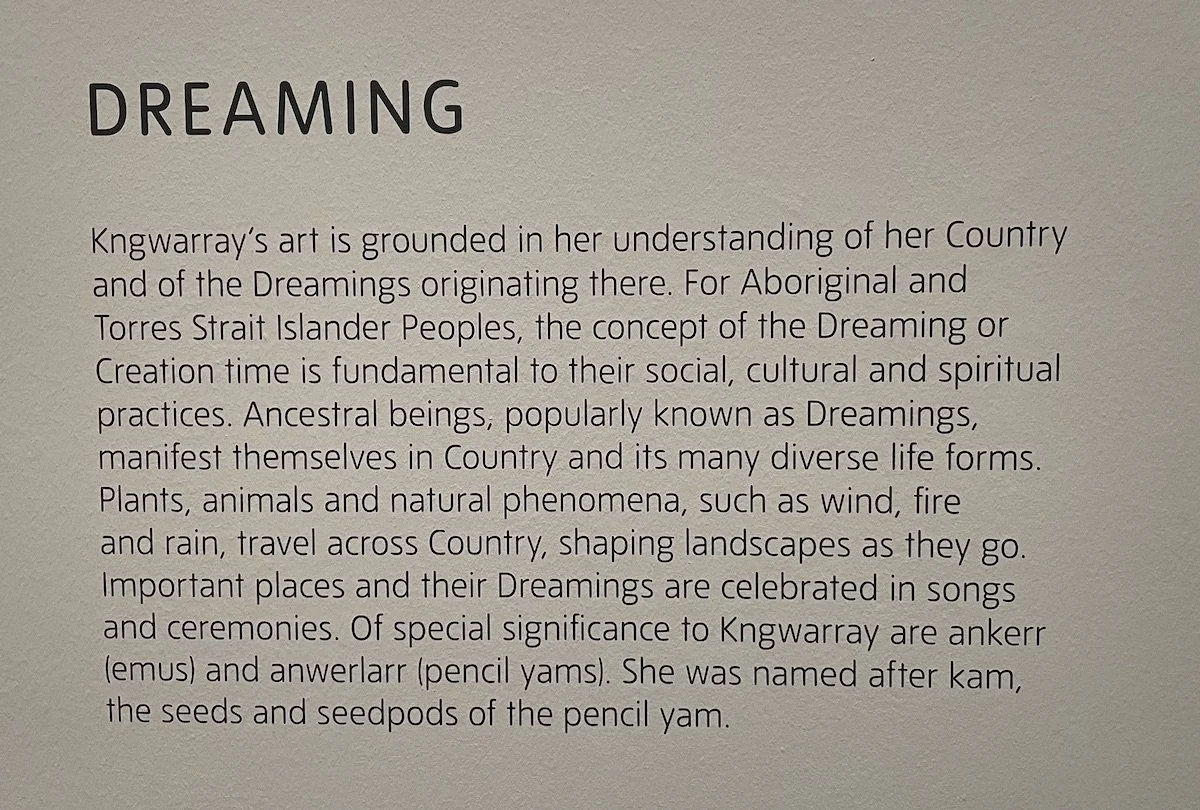
A description of Dreaming which accompanies the art on show
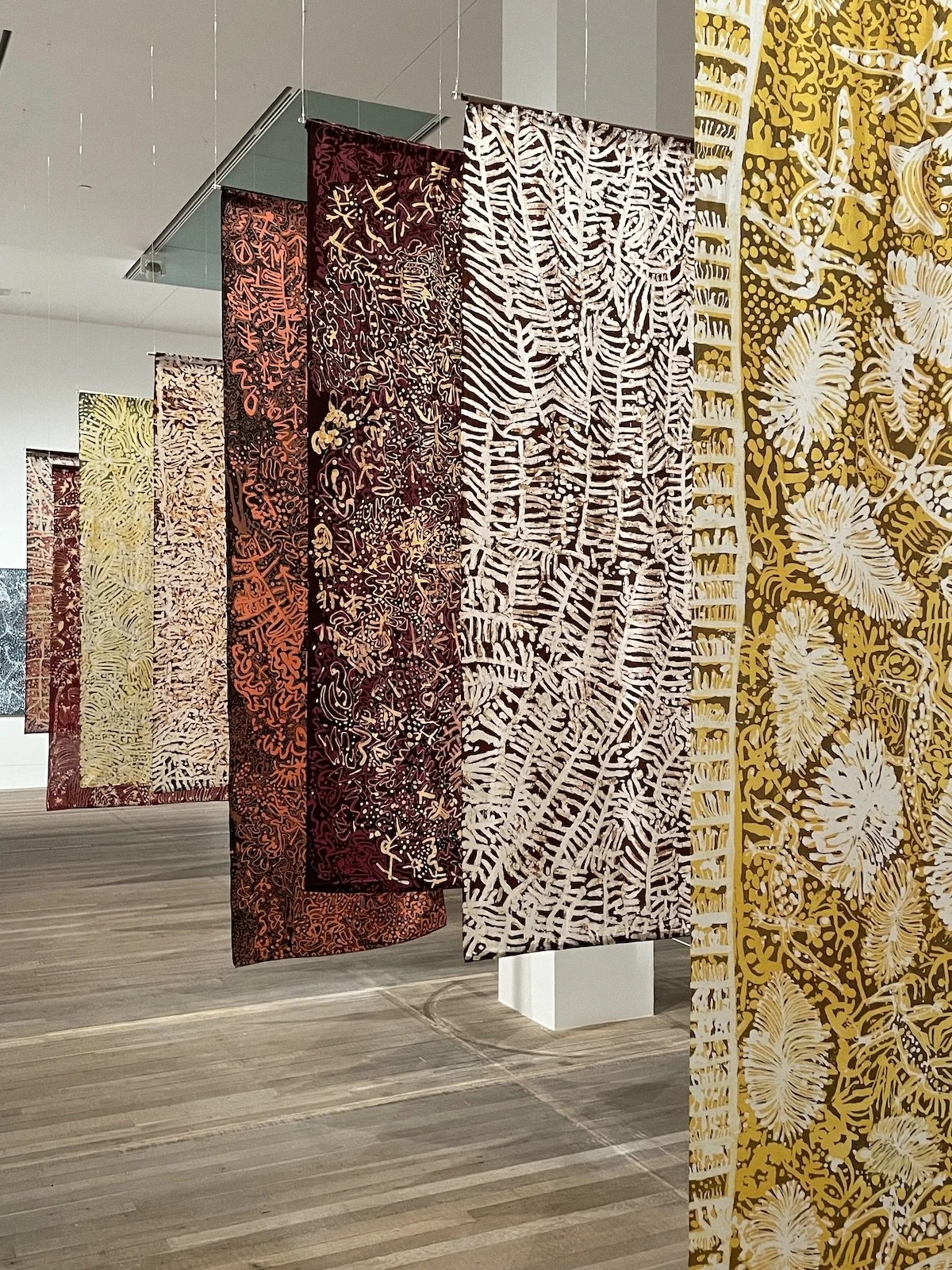
Hanging Batiks
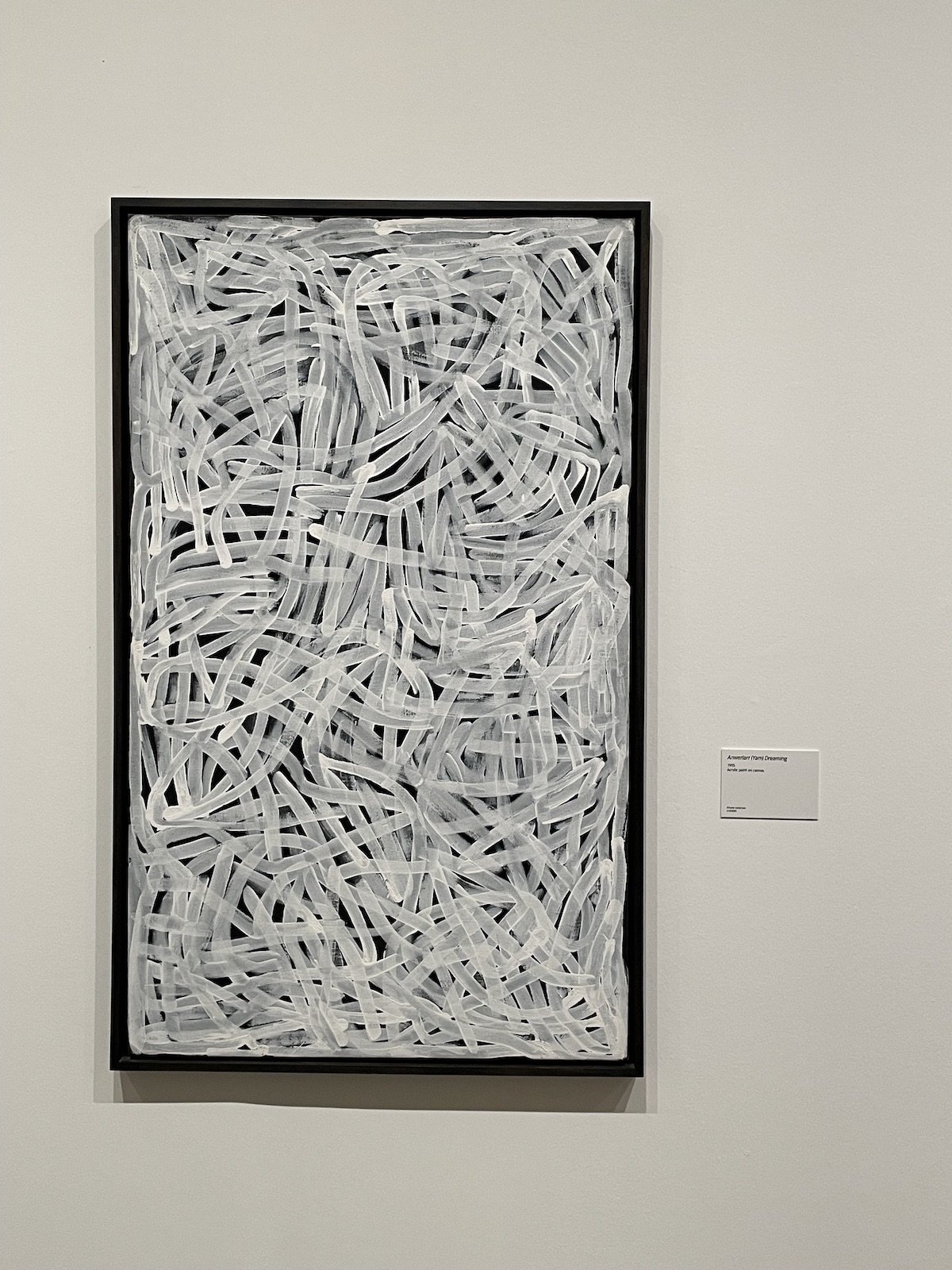
Anwerlarr (Yam) Dreaming
“My work really is just about being a human living on this planet and using nature as its source … I enjoy the simple pleasures of wellbeing, independence, opportunism, freedom, dreaming, happenstance; of passing through the land and sometimes stopping to leave (memorable) traces along the way.”
Richard Long
I first learned about Richard Long on a research visit to the Tate Archives. This visit was organised while on a relief printing and bookbinding course, run at The Art Academy by the talented tutor and artist, Carol Wilhide Justin ARE.
The research visit was focused on artists books - and though Richard Long’s work extends far beyond the pages of his books - into sculpture and land art, I was drawn to the clarity and simplicity of these written* and photographic works we were introduced to. Check out WANDERINGWONDERING - just one example from an extensive catalogue.
I love how Richard Long is able to distil the essence of several days walking into just a few lines. Learning about his work is part of what inspired me to delve into creative writing myself - focusing on local nature, currently in a more narrative and poetic way? I’m keen to try this distillation idea for myself too - but I worry it might be seen as copying - or too obvious? Anyway, I digress.
The work currently on show in Tate Modern is a mix of drawing onto maps, textworks, photography, sculptures, and a large reimagined wall painting, the original of which featured in the opening of the gallery back in 2000.
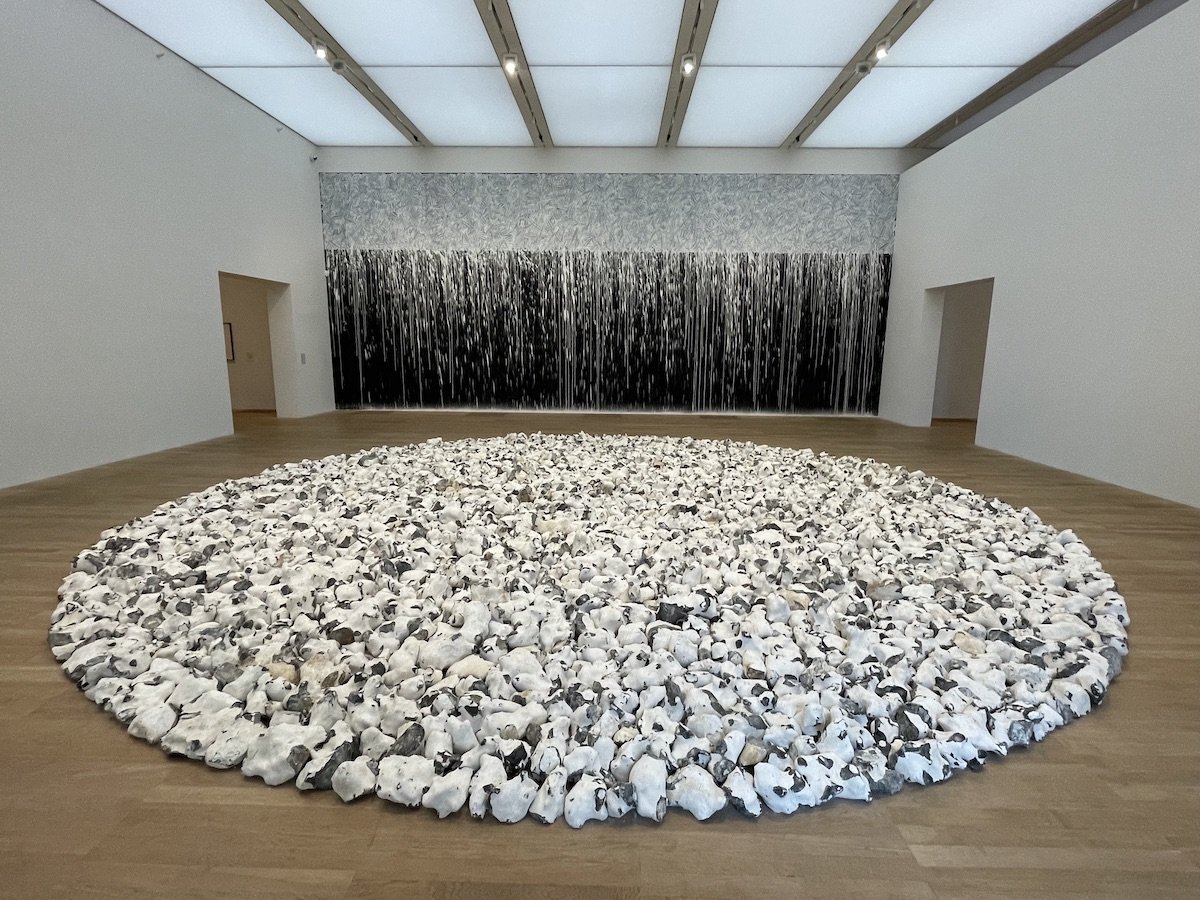
Huge flint circle, with china clay wall painting in the background. I didn’t write down the exact details but you get the idea, I hope!
Although Richard Long works all over the world, I find the work he makes based on time spent in the UK particularly fascinating - perhaps because it reflects my own experiences of walking in nature more closely? I don’t know how long this collection of Richard Long’s work is on show for - it’s free to wander in and I thoroughly recommend you do just that.
And as surely as Summer walks out the door and Autumn brings in falling leaves, long trousers and a jumper, I found today’s research particularly invigorating. I’ve done a lot of field work since my residency at The Hide last year. At the time, my host, Alice, advised me not to rush. She was right to suggest some time to reflect, and I think it’s now time to get to work.
Which Way Should We Go?
I’ve just completed a 21.5km out and back walk from home to Morden Hall Park. The ‘purpose’ of the walk - other than to spend time in nature, was to gather materials for a one-off artists book I’m making, using found materials to describe the route from Oaks Park to Morden Hall via The River Wandle.
My time on the trail was a mix of birdsong, butterflies, damselflies, dragonflies, unexpectedly huge fish, a friendly chat with an angler, and more. I couldn’t tell you how many times I’ve tracked this section of the river from Hackbridge to Morden, but it never gets dull.
I began to tire on the way home - I’d taken a few short curiosity fuelled diversions along the way, extending the walk further than originally intended. Approaching Carshalton I ignored my tired aching muscles, and took a final diversion onto Wilderness Island. Wilderness Island is a small nature reserve surrounded by water. I’d already been there once today - and recorded a zero sightings butterfly count. My main motivation in returning was to see if anything could be found fluttering in the mid afternoon sun. For the record, I saw Large Whites, Small Whites, and Speckled Woods in a clearing.
The island is split into a raised wooded area, and a lower, wetland section. As I walked around the woods, it dawned on me that I always walk the wetland section counter-clockwise. I chose to break this little habit, and wandered on. Over the years I’ve grown pretty good at walking quietly through nature, I often surprise birds who don’t hear me coming until we’re just feet apart.
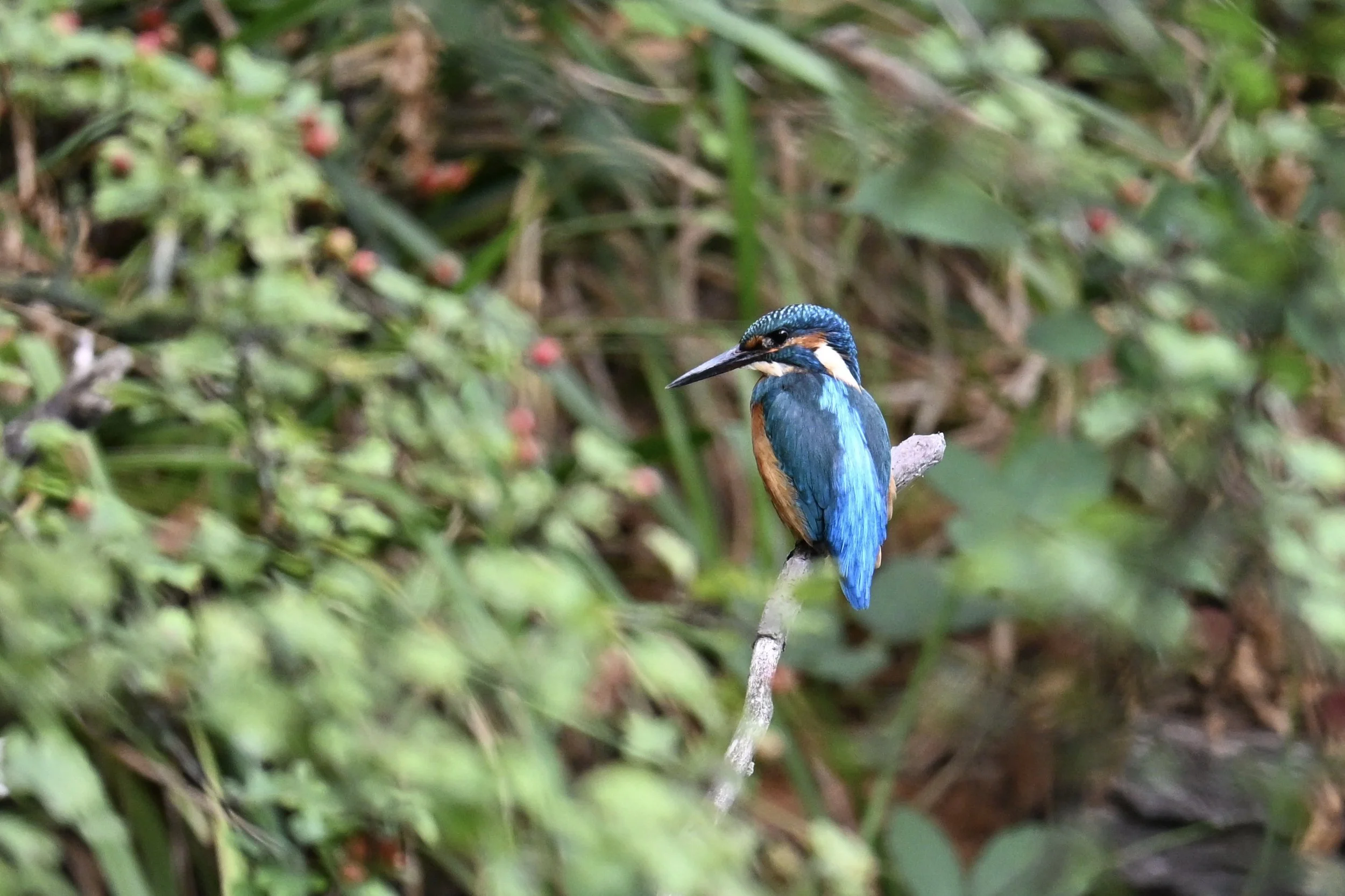
I turn a corner and my eyesight is immediately illuminated by an unmistakeable iridescent blue. The kingfisher - a notoriously skittish bird - has not noticed me. I unfold my arms and camera, fully expecting the bird to take flight, but it doesn’t.
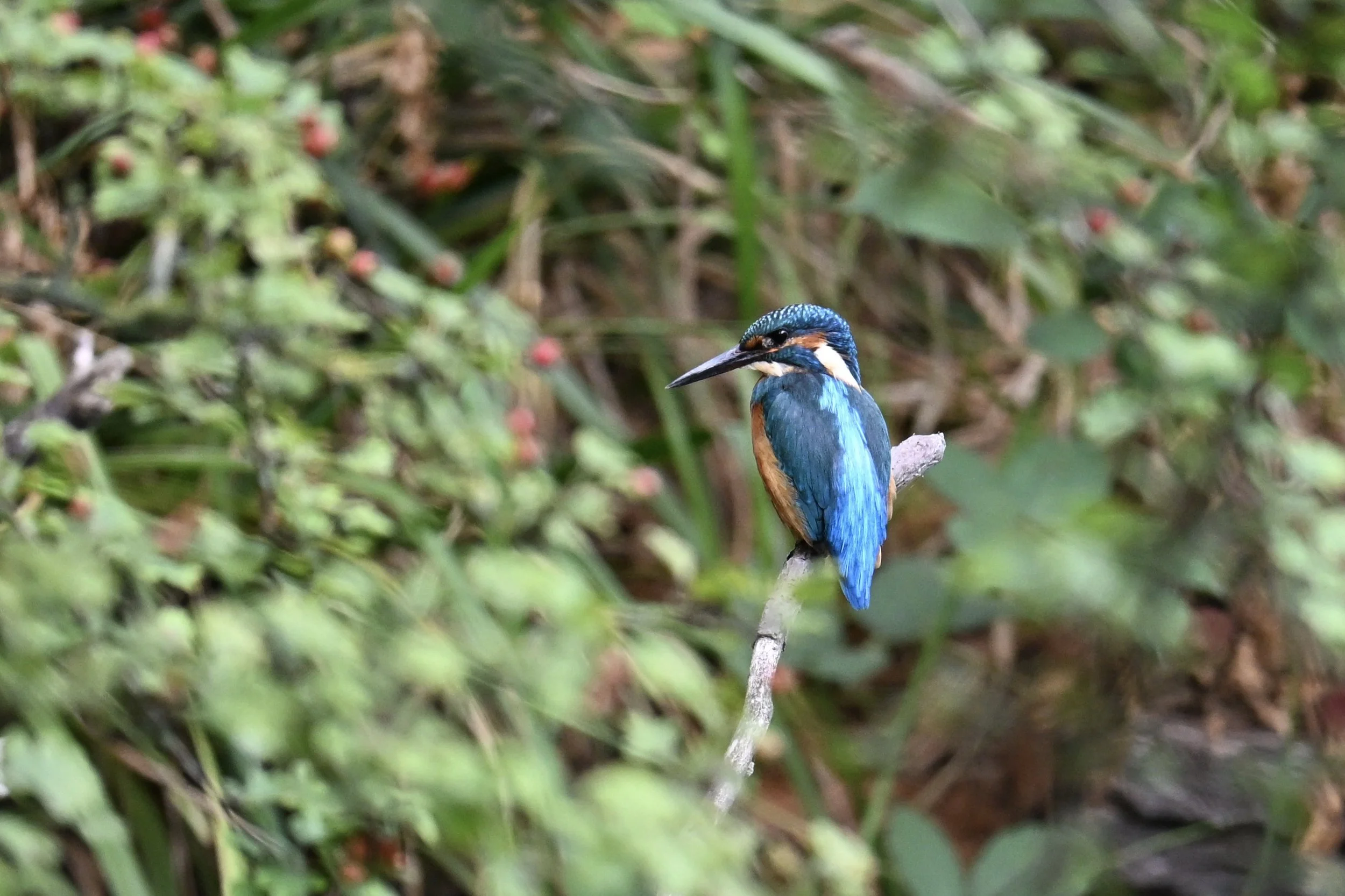
Kingfisher on Wilderness Island
Our encounter lasts several minutes. The bird scanning the river, me silently in awe. I’ve seen kingfishers here before now - three in one visit - but never this close, and never for this long. Eventually I let my guard down, moving slightly to my right, the bird catches sight of me, and is gone in an instant.
As I wander on - it strikes me that had I walked around the island counter-clockwise, the way I’ve always done before, I would have come across the bird totally differently. The angle of approach, the distance from which I’d have been seen - everything would have exposed me to the bird much more readily. I can’t prove this, but I am completely certain that my decision to break my counter-clockwise habit was pivotal in bringing me to this very special occasion. It’s no coincidence that the front and back covers of the book I am making are illuminated in a kingfisher blue, reflecting this beautiful bird, but I honestly never expected to be able to include such a vivid real life encounter, into this artistic tale.
For me - this is a simple, powerful reminder that habits often form quite unknowingly, and that breaking them from time to time, can deliver spectacular results.
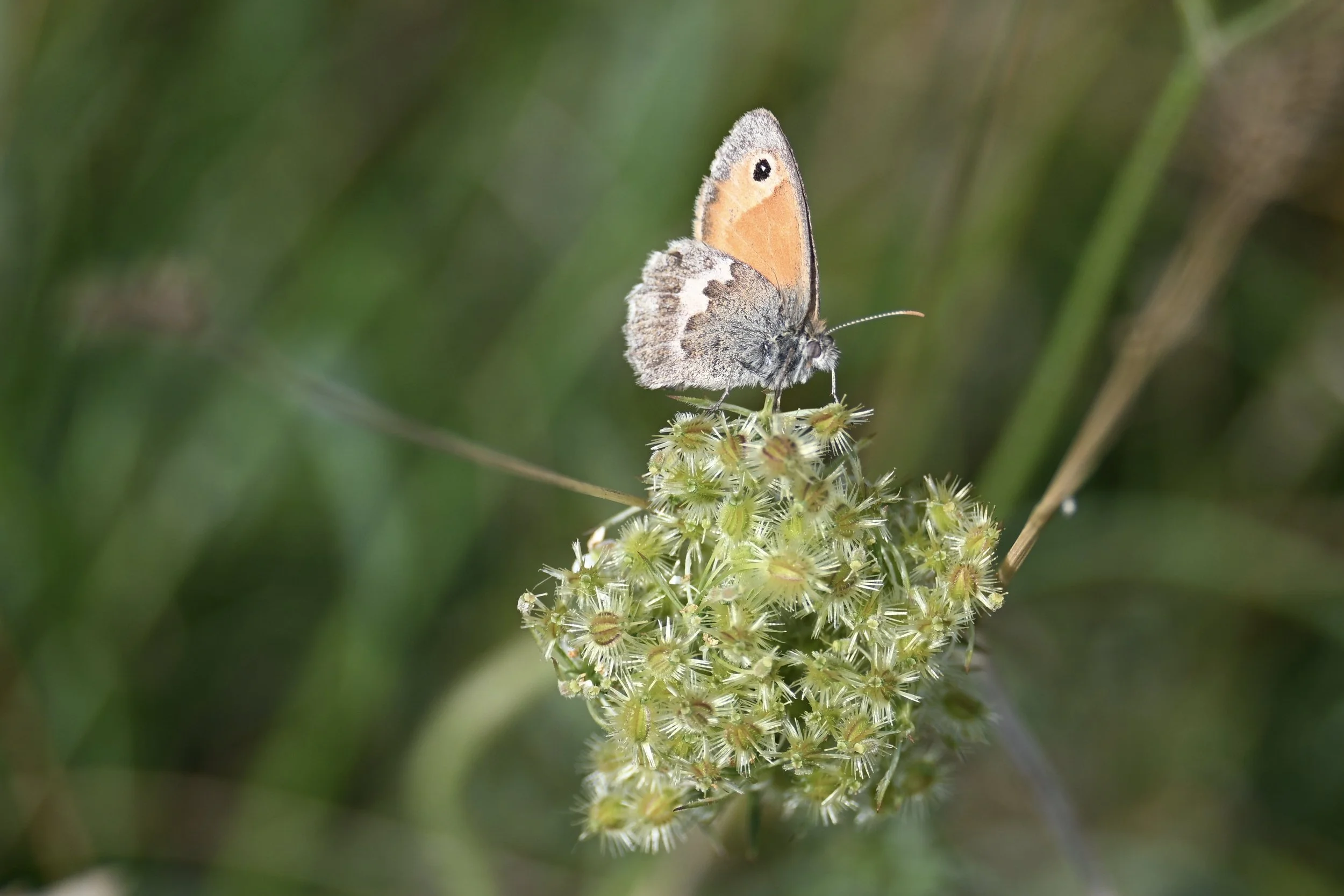
Out For The Count
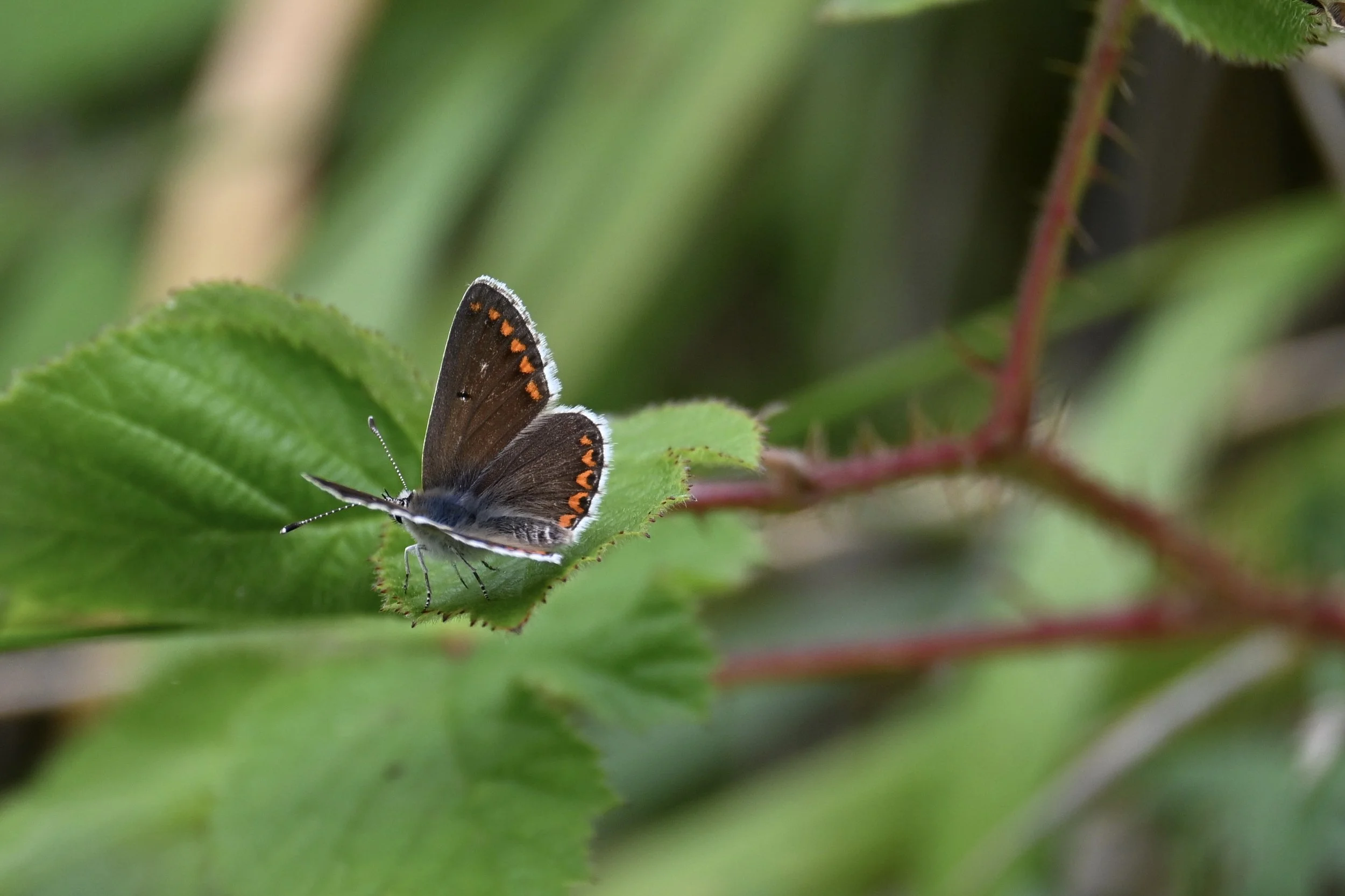
After a couple of days of meetings and research up in Manchester, I returned home on Sunday afternoon and took advantage of the fine weather in our neighbourhood to take a slow wander and record a few more butterfly sightings on the last day of The Big Butterfly Count. It was a truly lovely walk through Queen Mary’s Park and beyond, with several highlights, including this Small Copper taking a break on a rather tired wild flower.
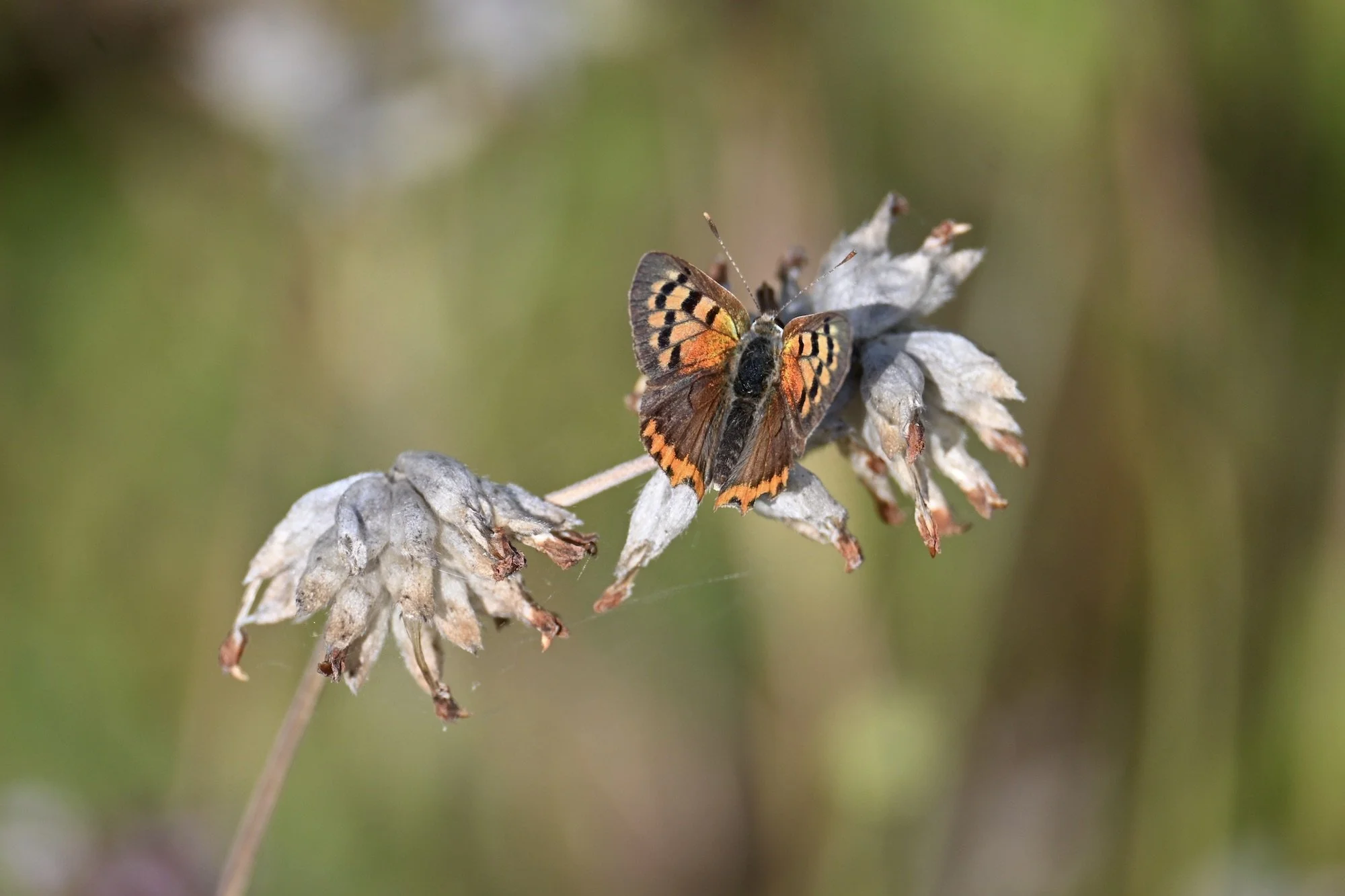
Small Copper in Wellfield Plantation
I’m getting ahead of myself however - as this citizen science adventure began 23 days earlier on 18th July 2025. Carole and I travelled to Epping Forest for the first time that day - to celebrate our wedding anniversary with a long walk in new territories for us. Epping Forest is stunning - ancient woodland reaching from the edges of North East London way out into the county of Essex. I could write pages based on our time here - but I digress. This is where our 2025 Big Butterfly Count began when we recorded 32 Gatekeeper butterflies flurrying (is that a word) around ragwort. Here are some of thos Gatekeepers along with a handful of other highlights from the walk.
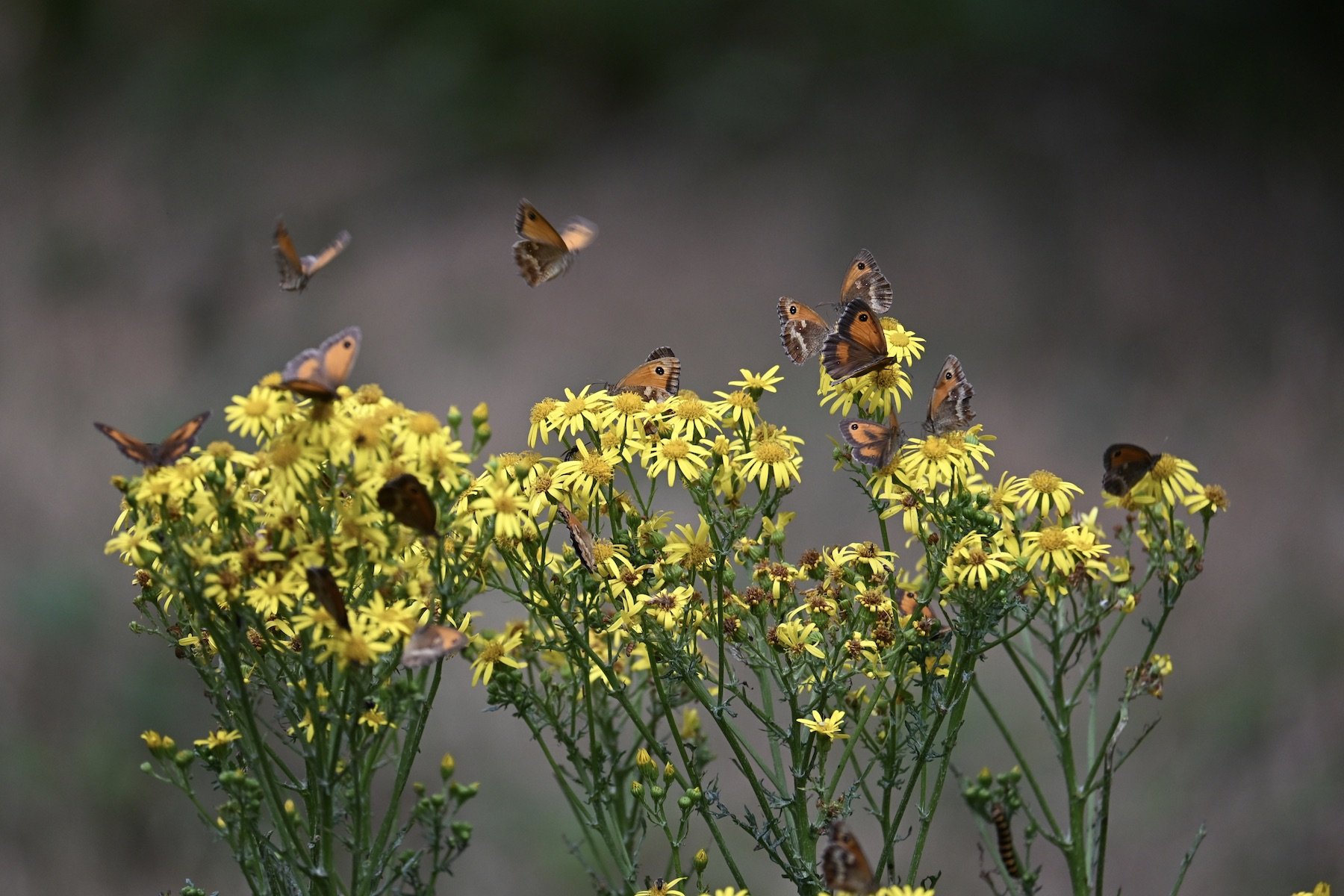
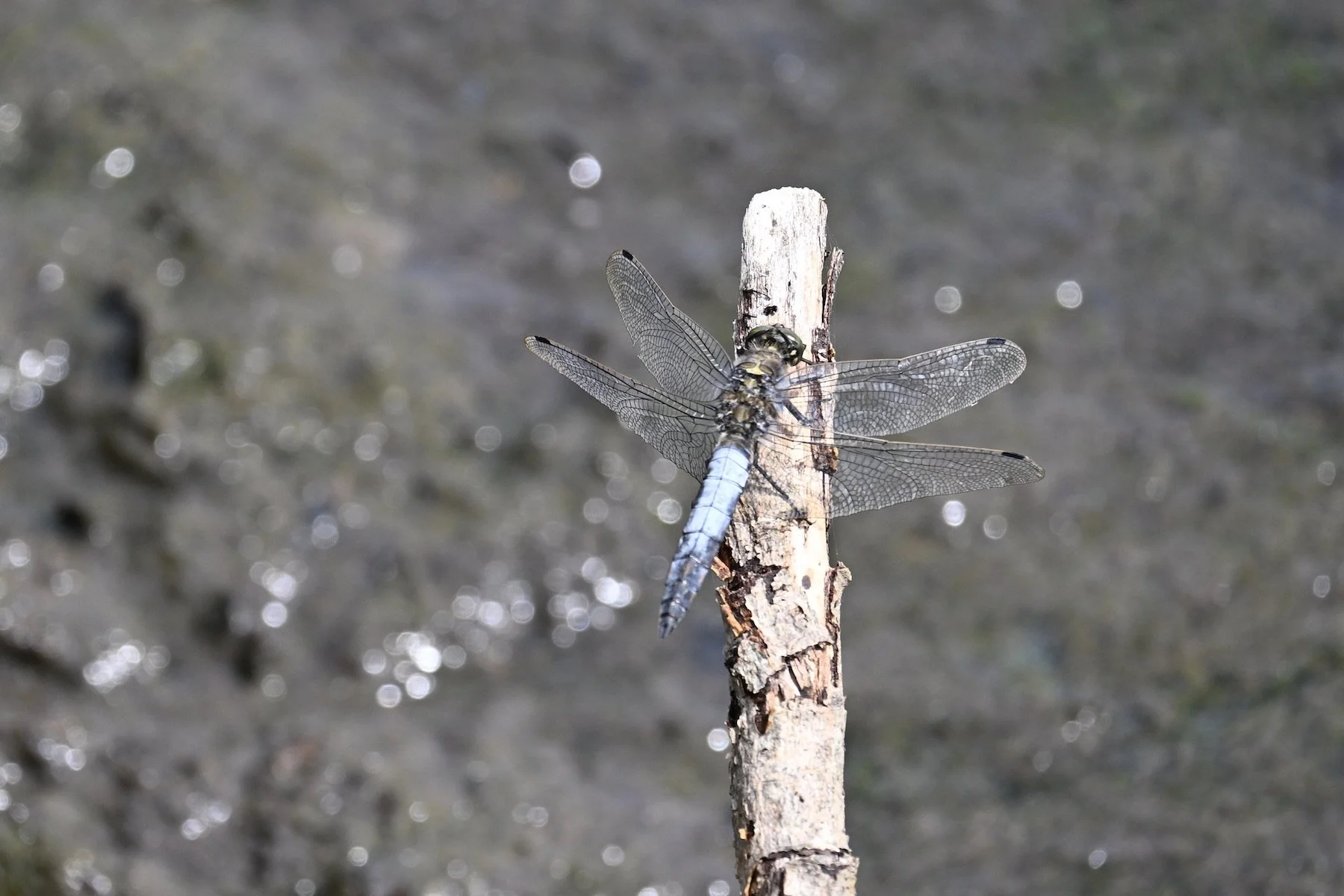
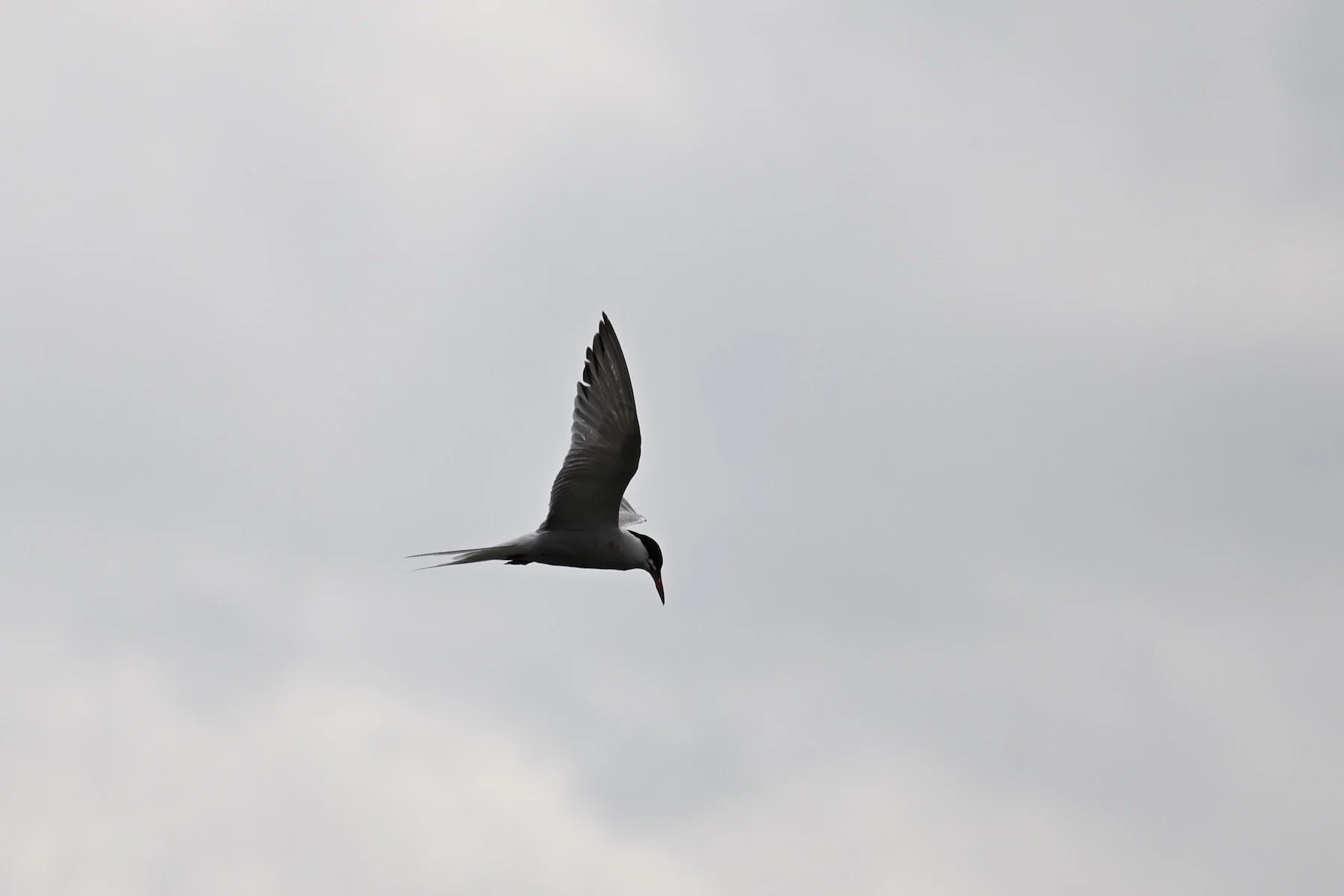
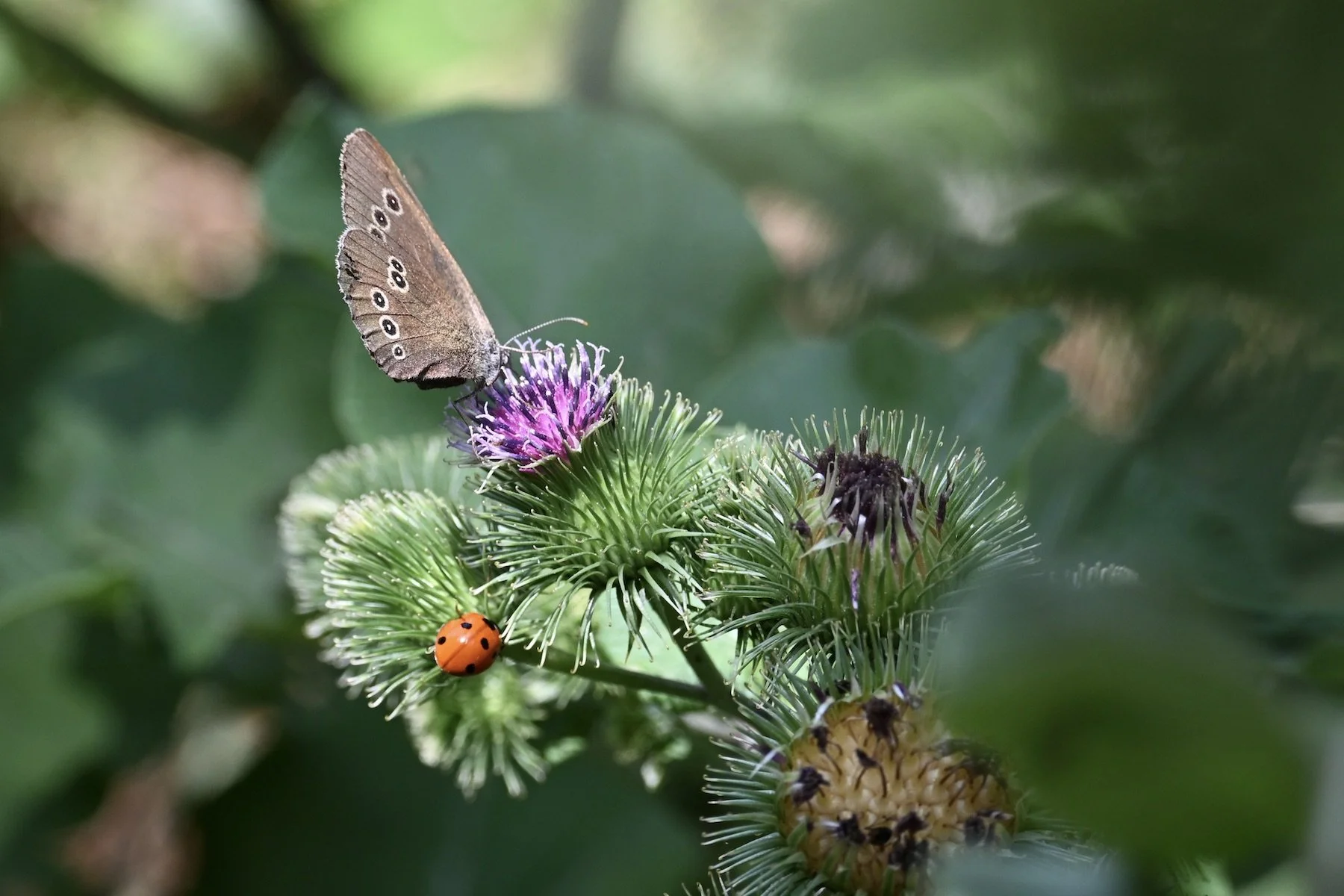
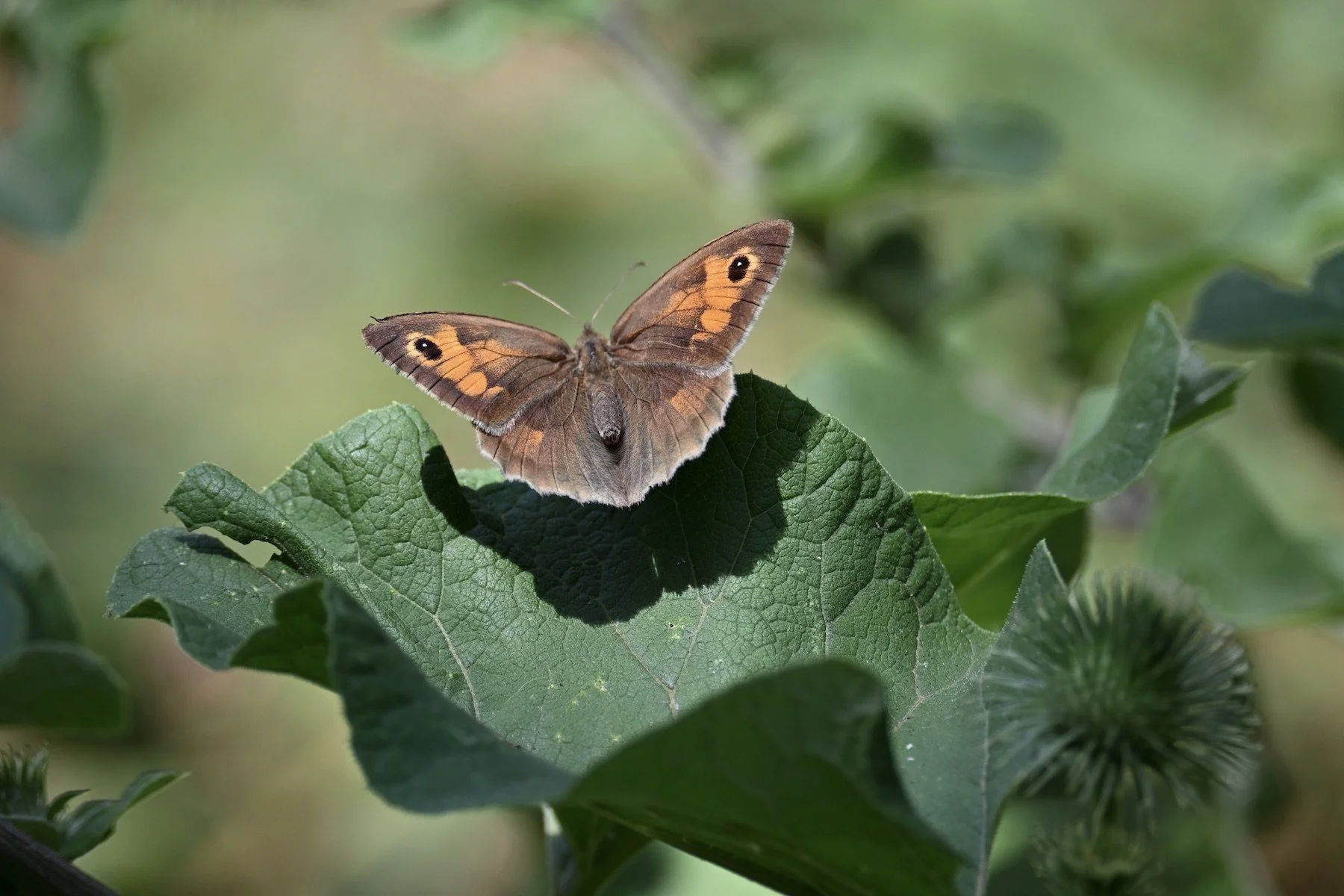
Taking part in the count is simple. You just find a green space - enjoy it for 15 minutes, and log any butterfly sightings during that time, on an app. I chose to integrate this project into my daily work - butterfly spotting on the way to and from work, and in other green locations I encountered along the way. Over the course of the 23 days, I ended up submitting 103 counts, which might sound like a lot, but given many of these were slotted into walks I was already having to do - it was easy to fit this work in.
Most of my counts were submitted on local walks, beginning and ending at home and my art studio in Oaks Park, passing through Queen Mary’s Park, Queen Mary’s Woodland, Wellfield Plantation, and close to Sutton Community Farm. As the days unfolded, I resolved to take a few adventures further afield, to see what else I could find. I visited Hutchinson’s Bank, and Chapel Bank - well known local nature reserves on the Croydon/Kent borders, and I also travelled to Knepp - a fascinating rewilding project in Sussex. These places deserve their own write ups and for now here’s a brief photographic look at some of the surprises awaiting me when I travelled slightly longer distances. At one point there were 16 storks flying over us at Knepp - an amazing sight!

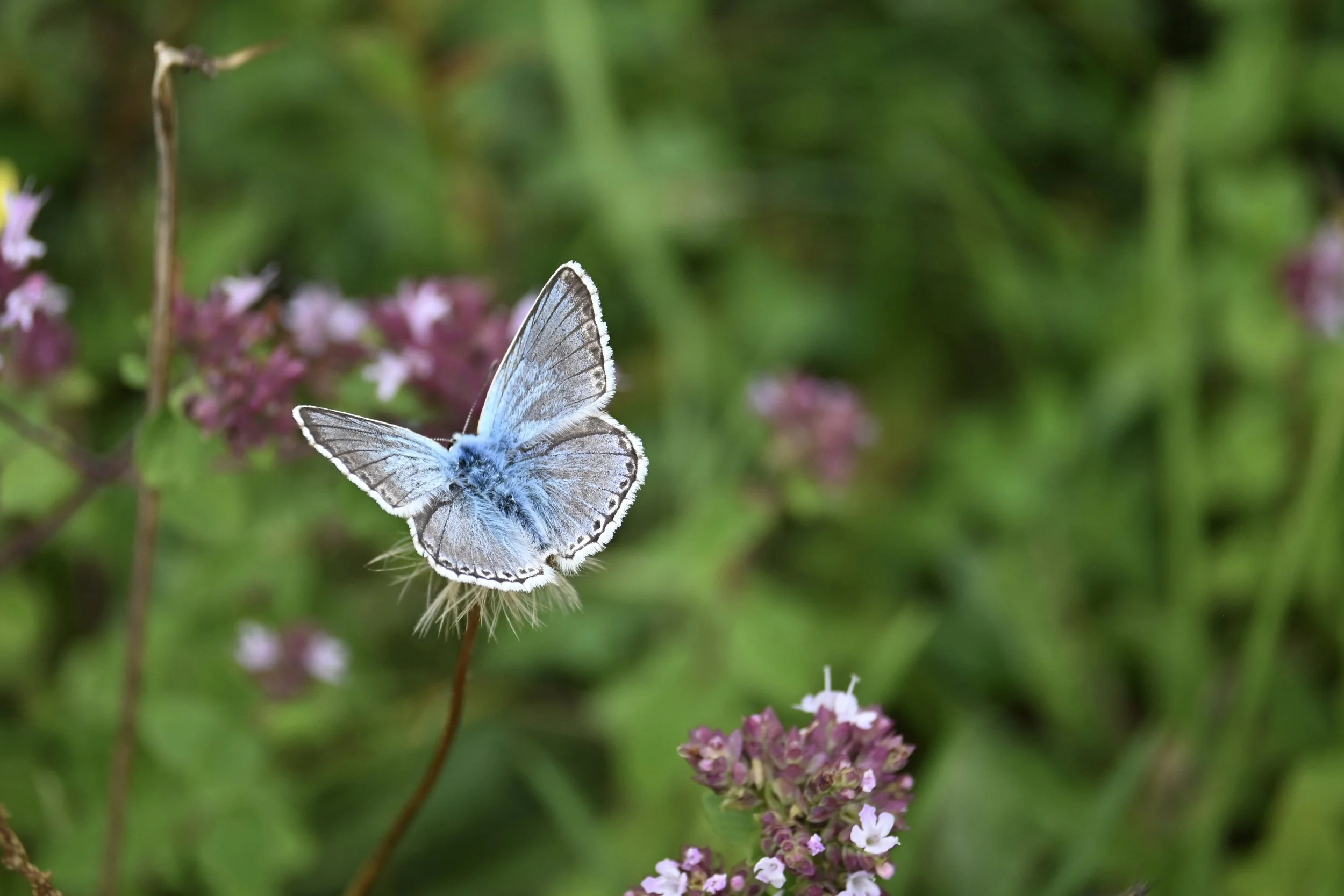
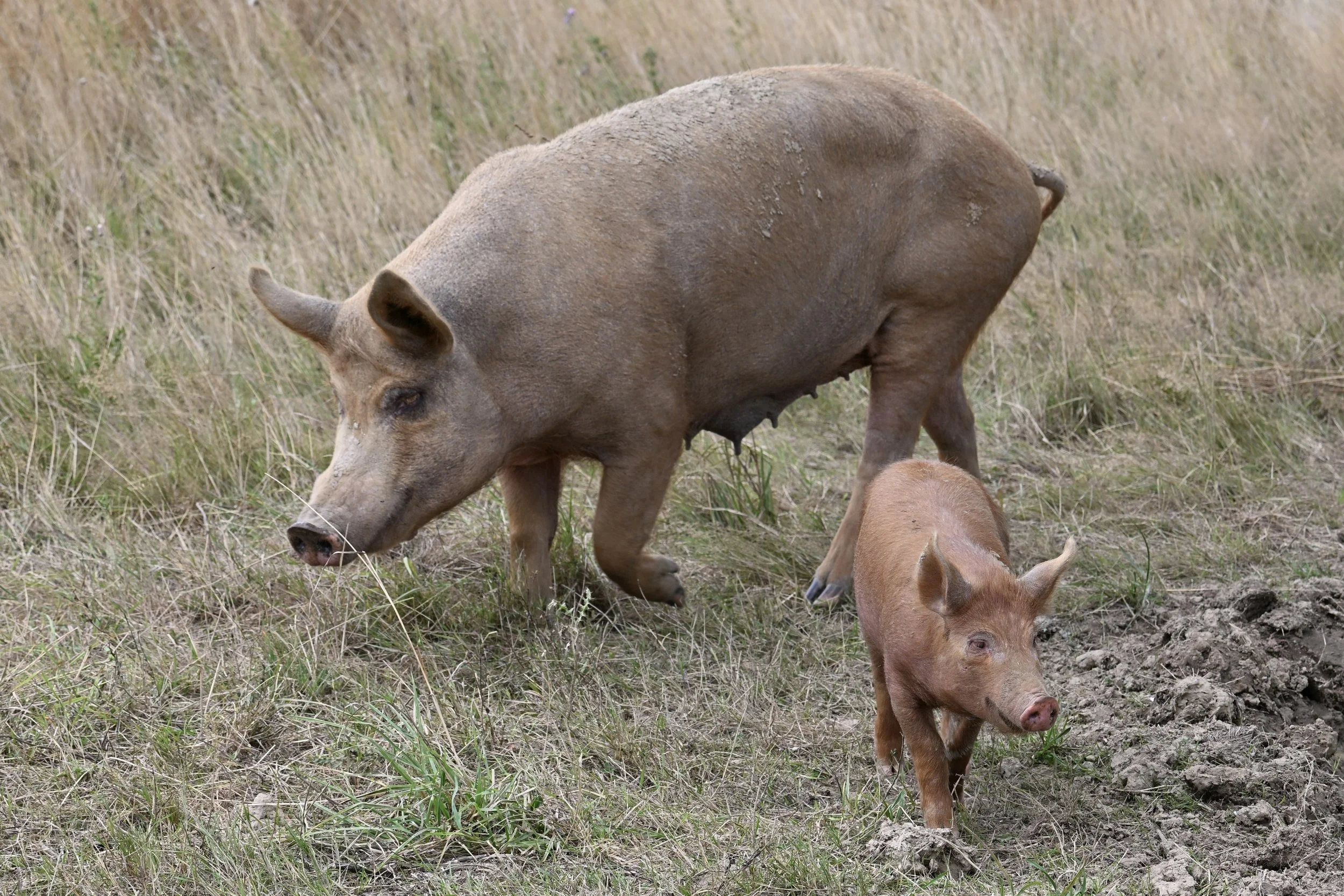
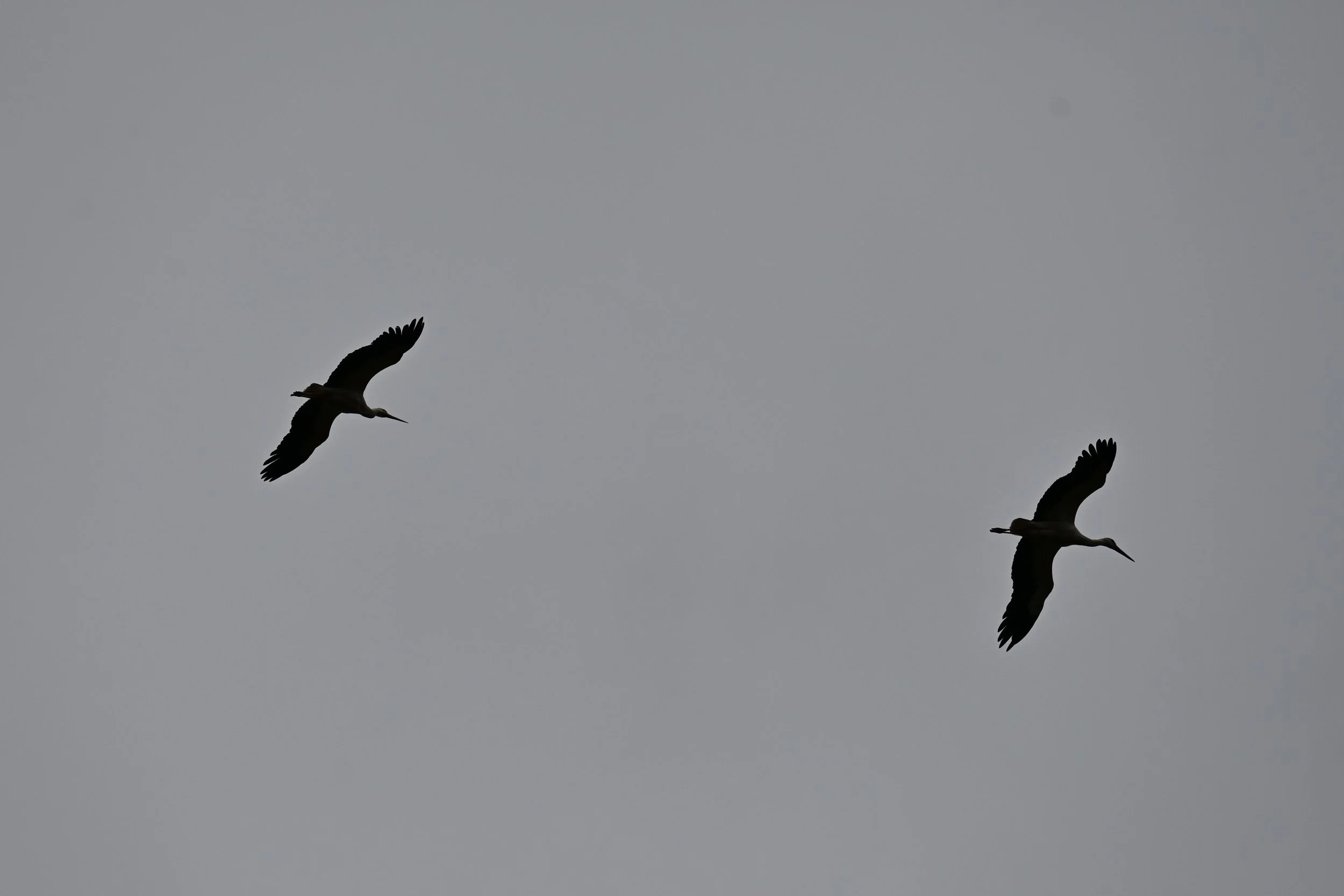
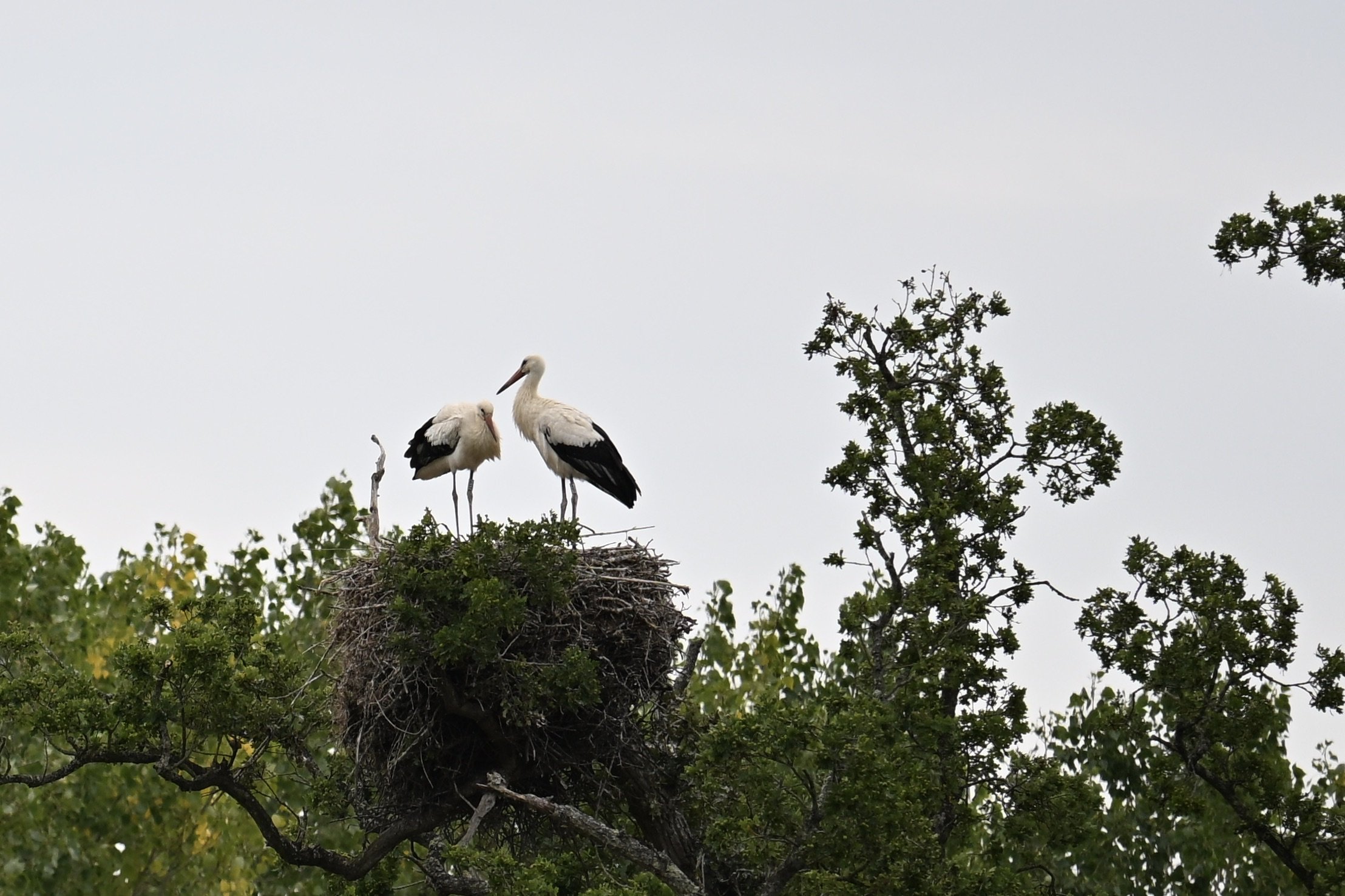
When submitting to the Big Butterfly Count you’re given a range of species (including a few moths) to identify and record. They’re all pretty distinctive - the choices offered are all reasonably popular species and ones most of us are likely to be able to identify positively. You don’t have to see something to submit a record, on a handful of occasions I saw no butterflies - it’s important to register these zero counts too.
Across the 103 counts I registered, I spotted just over 1,500 butterflies, and while that might not seem many in a total count of well over 1.8 million, my figures have me listed as 9th nationally based on the number of counts, and 14th nationally, based on the number of butterflies recorded, from a total of over 117,000 participants. To be clear - back on July 18th I didn’t set out to climb this particular mountain, nevertheless I am really glad I did. Not only did I get to spend time in nature, gathering important data, I visited less familiar places, and saw things way beyond my expectations.
As well as the beauty and variety of what I’ve experienced, what this year’s Big Butterfly Count has shown me is how powerful and simple, data gathering can be. Imagine what you could learn in your organisation through encouraging people to observe things regularly, repeatedly and with curiosity at the heart of that activity.
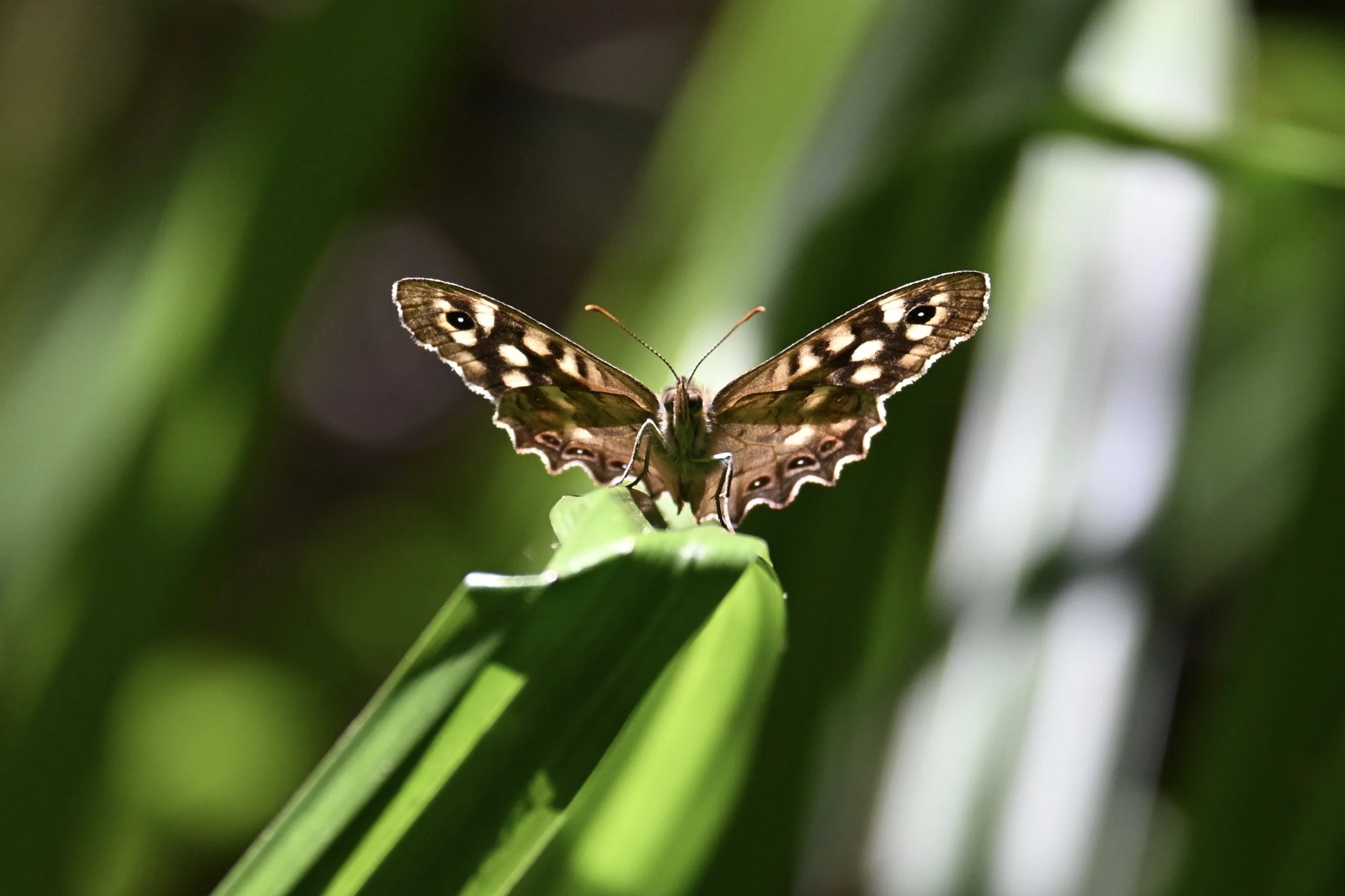
A Speckled Wood butterfly on Wilderness Island, perfectly backlit.
A Rare And Special Day
It’s 8am, the sun is pushing weakly through cloud cover. All is quiet at Hutchinson's Bank, a nature reserve situated on the Croydon/Kent borders, about 8 miles from where I live. I don’t typically travel far to get my nature fix - preferring to walk in and around my immediate neighbourhood, but this is a special place, worth jumping in the car for.
I begin my walk, making my way into the reserve, heading for and wandering slowly through a cutting, covered in pollinator friendly plants. The cloud is burning off fast, and this area is still largely in shade, so I press on. As I prepare to leave the cutting, I discover three Small Blues. Prior to this the most I'd seen in any one day was two - so I felt off to a good, gentle start.
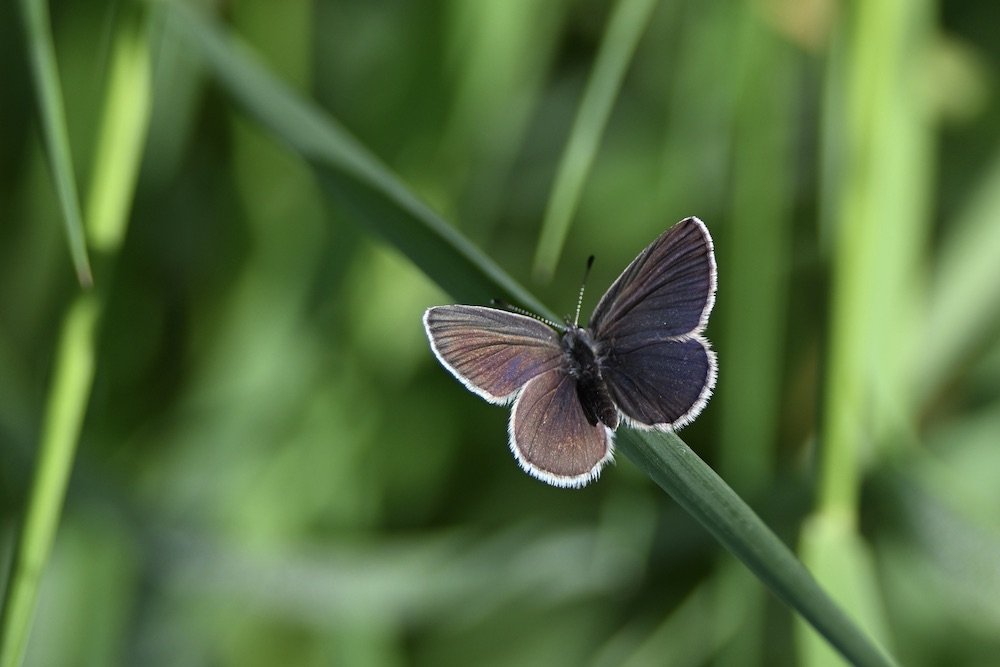
Small Blue
Wandering slowly past sheep in the fields, I hear an engine growling up above and briefly, see a Spitfire crossing the sky. Not the kind of flying object I was primarily seeking, but a nice surprise nonetheless.
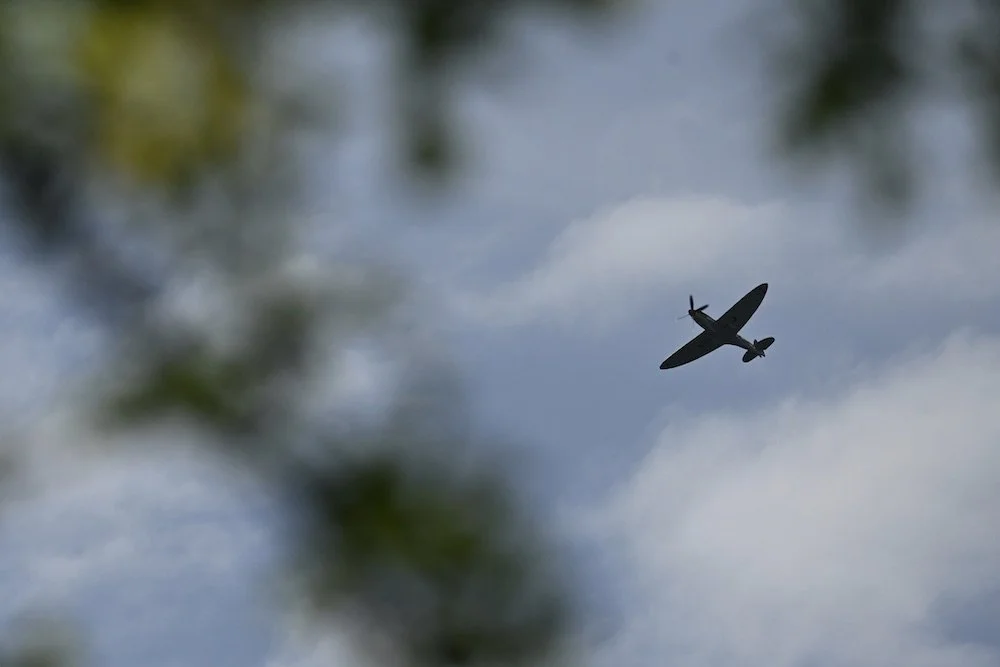
Spitfire over Hutchinson’s Bank
The plane engine noise subsides, and peace in the valley returns. The sounds of song thrushes, blackbirds, and chaffinches gently fills the air. I walk on, passing through a gate into Slimming’s Down, and everything begins to change. Almost immediately I become aware of a handful of Small Blues. They’re tiny butterflies, and their fluttering is almost ghost like. 1, 2, 3, 4, 5 and more. I’ve never seen anything like this before. It really hits me that I’m the only human around, and I’m delighting in my solo adventure. Truly I feel speechless, so if anyone else had been there - I probably would have remained silent, in awe of what I am seeing.
I cross a barren patch of ground, keeping close to a chalk bank full of flowering wild plants. Everywhere there is fluttering movement. The Small Blues keep coming, and I keep counting, in amazement. I slowly cross the field, spotting the pale orange and brown of Small Heath butterflies, and a vivid Small Tortoiseshell - which leads me a merry dance across scrubby ground before putting its foot down and leaving me for dust.
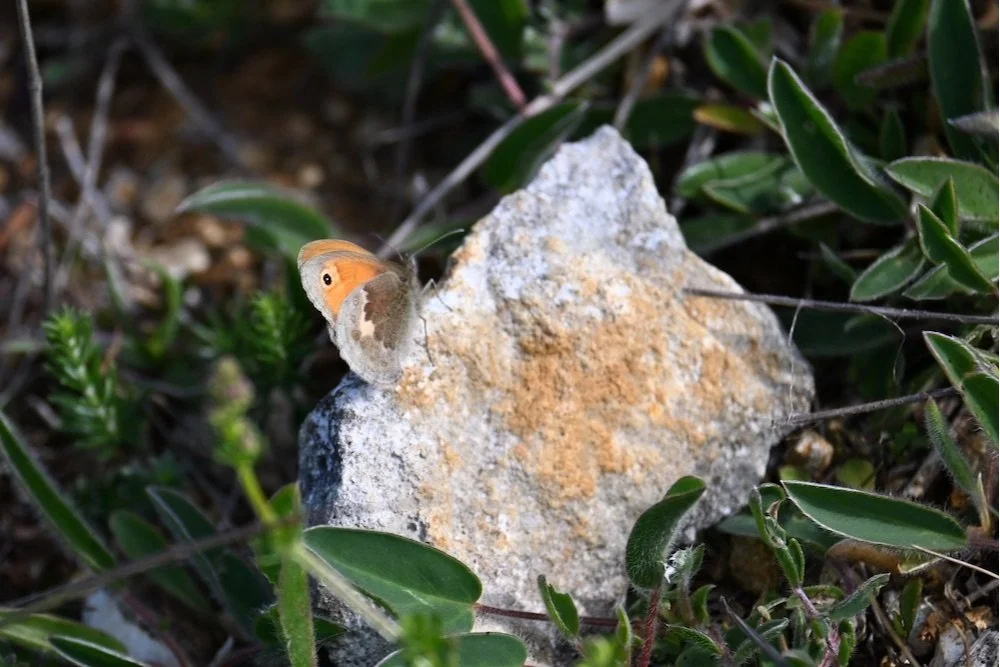
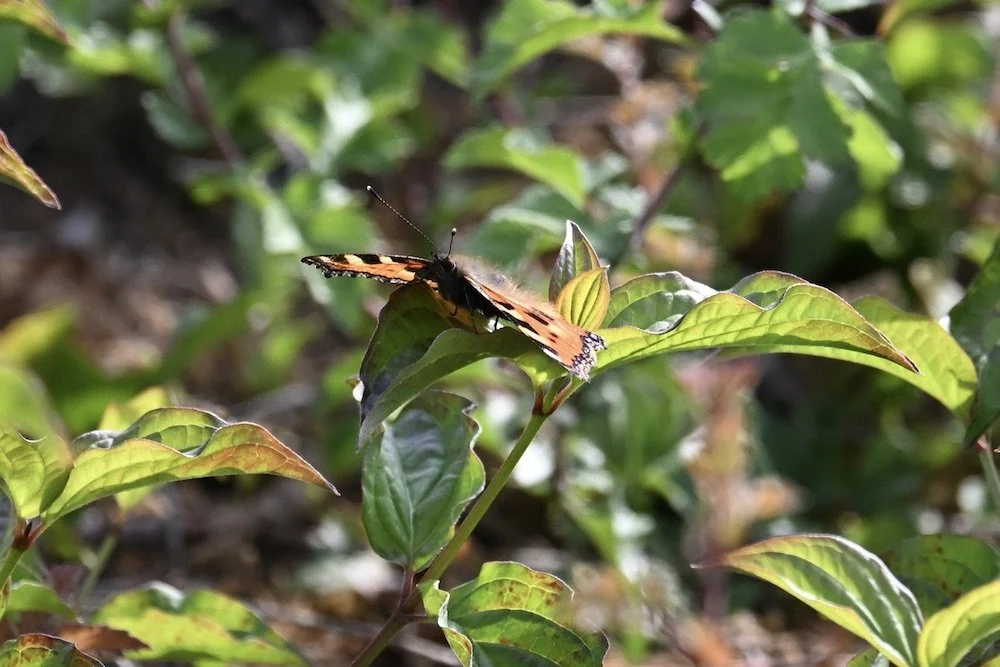
I carry on, disappearing into woodland, and the Comma and Speckled Wood butterflies dance around in dappled shade. I get lost a couple of times in the woods before arriving at a roadside gap in the trees. This narrow lane can get quite busy, so I look out carefully, and the peace remains intact. I cross the road, and find myself in Chapel Bank, an adjoining nature reserve.
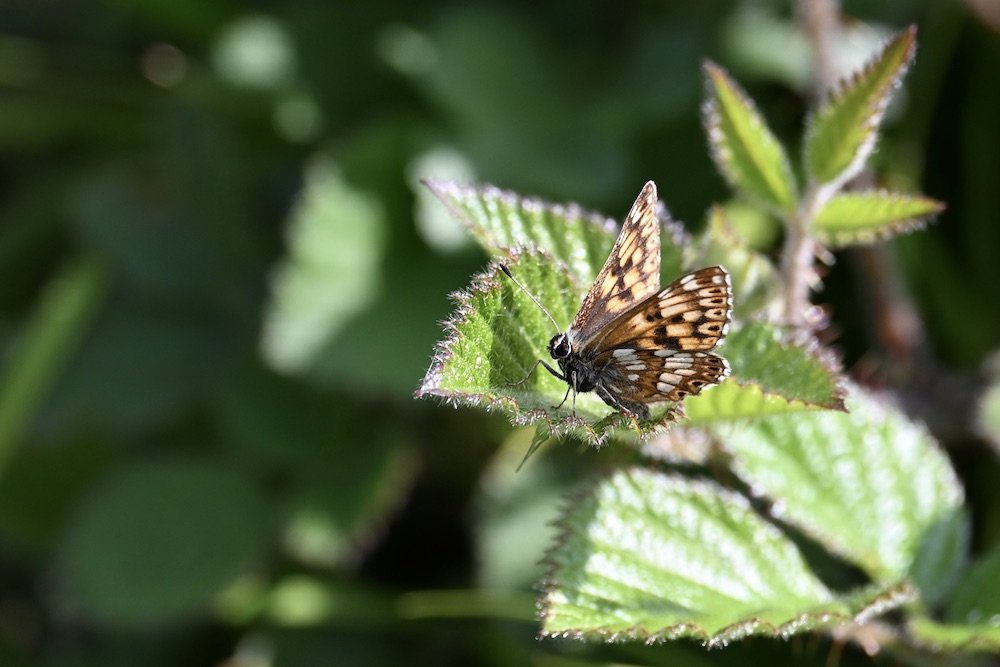
Through the woods and out into a clearing, planted with dogwood. I pause and receive a delightful surprise. The Duke of Burgundy pays me a visit. This is a rare butterfly - I know of nowhere else around here where you’ll find one - and we’re close to the end of their short annual season, so I stop a while to spend time in this exquisite company. As we sit together, Common Blues flutter around choosing not to disturb us.
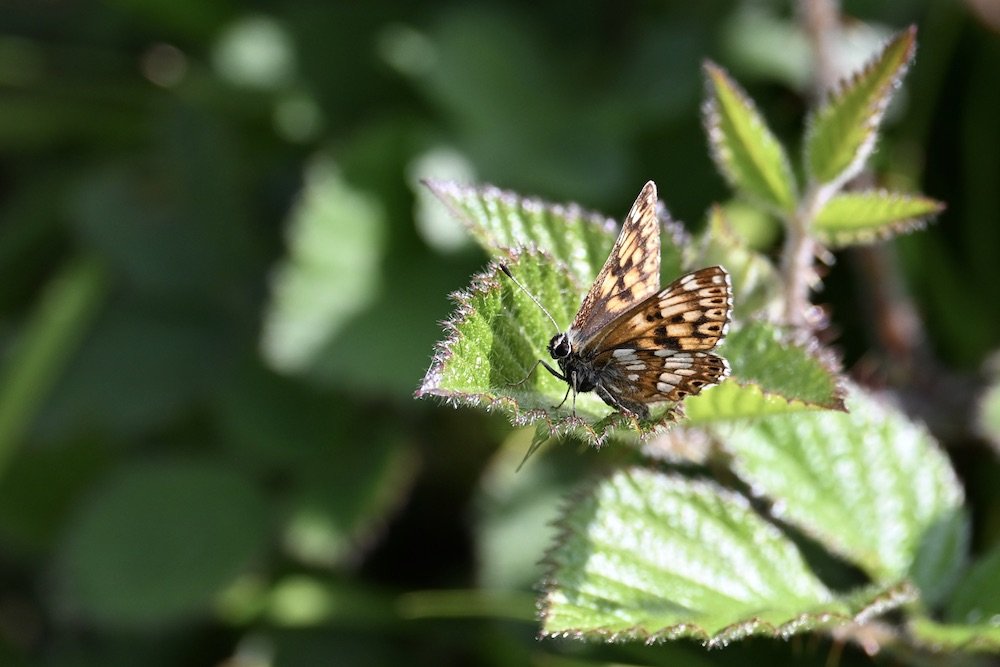
Duke of Burgundy
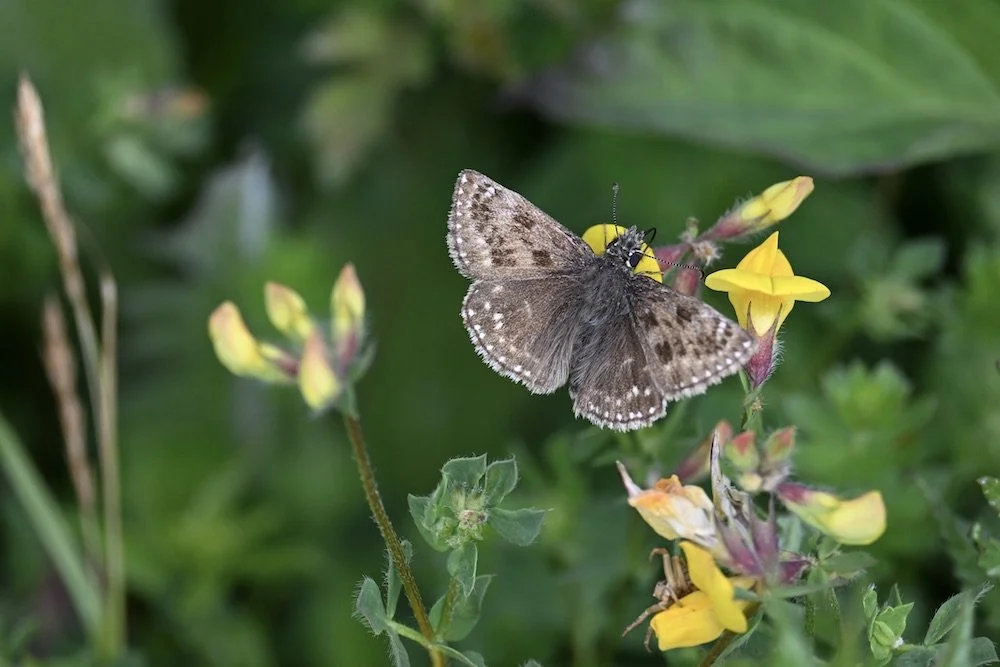
Beyond the clearing, and through a gate, a field opens up, and the proliferation of Small Blues continues. I eventually stop counting at over 150 sightings. I literally pinch myself - what a time and place to be alive. In the same field I also find the Green Hairstreak and the Dingy Skipper. This walk just gets better and better.

I begin my return leg, leaving the field, and crossing the clearing. There, right in front of me on the path, is a Painted Lady. Another unexpected beauty. A strong flyer, and not in the mood to hang around, I’m lucky to grab a photo as it briefly alights at eye level before flying away.
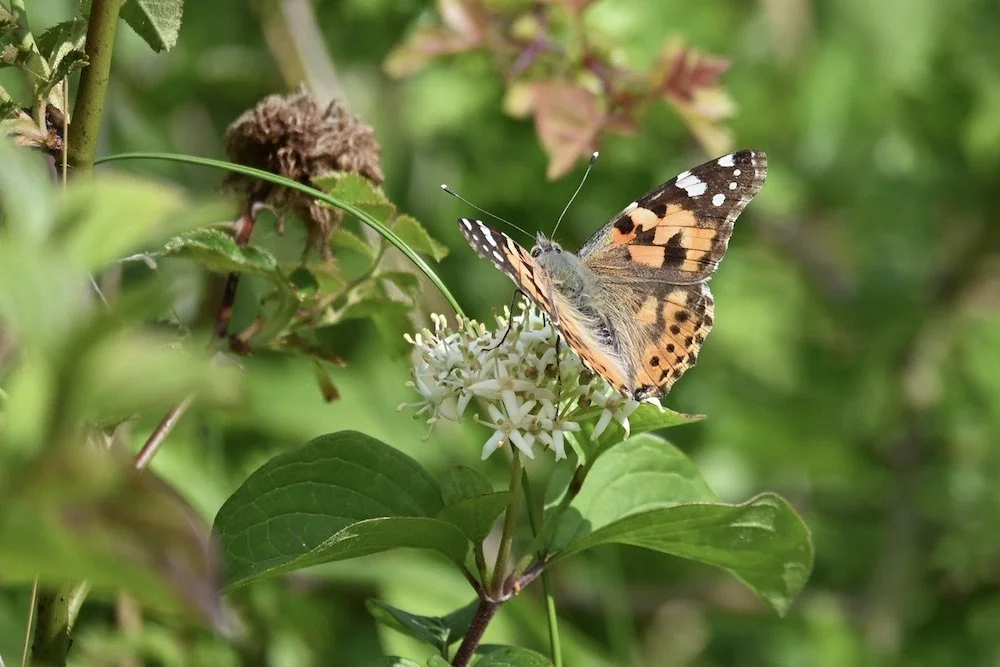
Painted Lady
I carry on, slowly making my way back - not really wanting this to end. As I arrive back to the cutting in Hutchinson’s Bank, I bump into two people, and we briefly chat about our different discoveries. I leave the cutting and make my way back to the car.
Walking along the final section of pathway before leaving the reserve, a small brown and orange flash zips by. I stop, and wait. Not one, not two, but three Glanville Fritillaries appear. Without a doubt the rarest beast I’ve seen today.
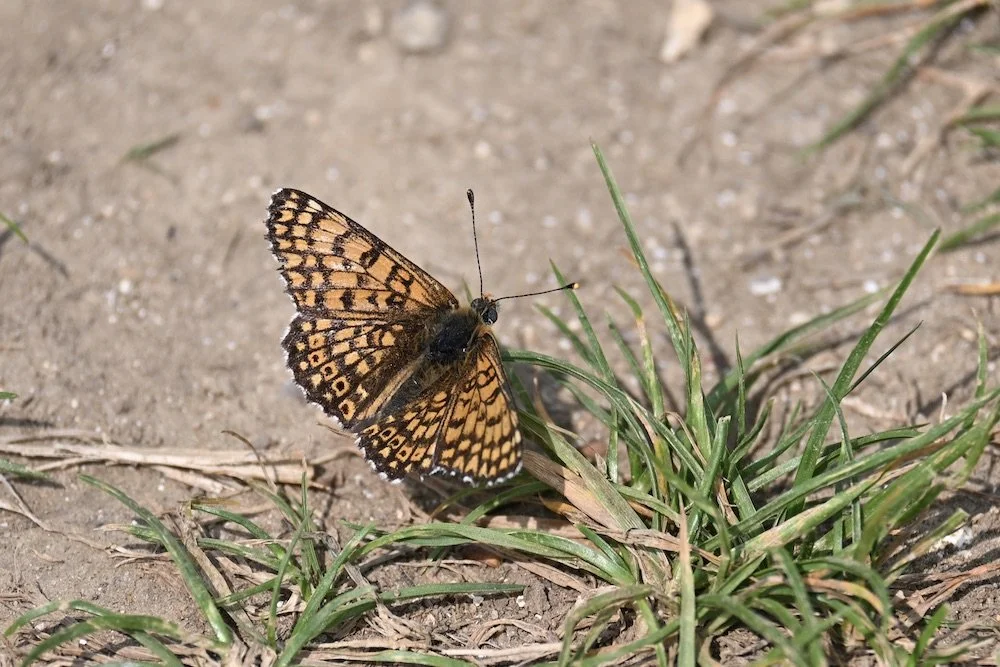
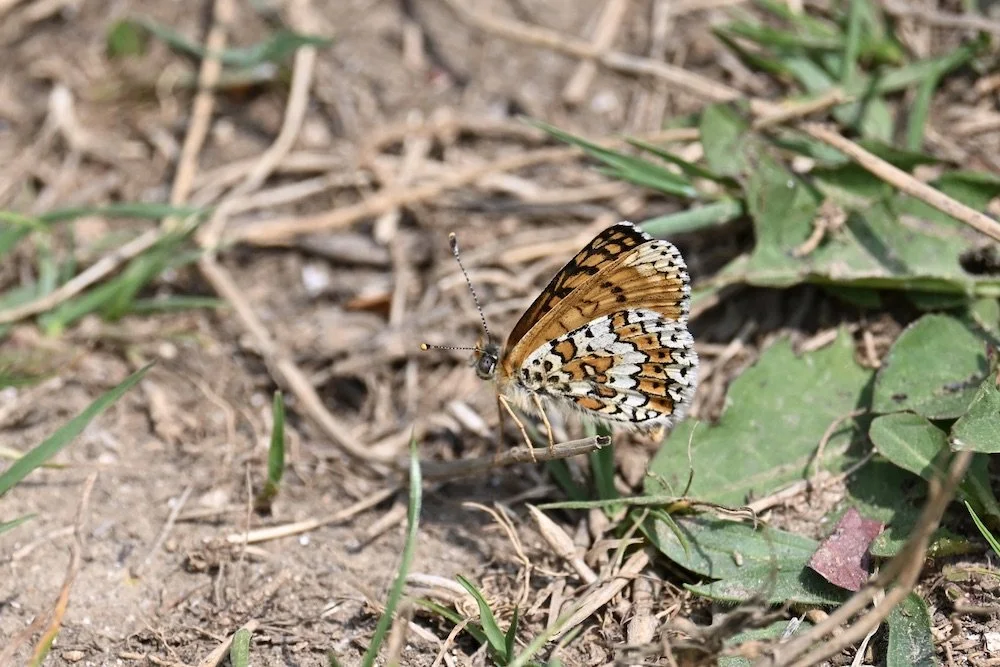
To end this walk in such beautiful company is so much more than I could wish for, but here I am, and there they are. Stunning.
I drift back to the car, and check my notes.
I saw:
Small Blue - I stopped counting at 150 - never seen anything like it!!
Small Heath - 5
Small Tortoiseshell - 3
Comma - 3
Speckled Wood - 3
Common Blue - 12
Duke of Burgundy - 1
Green Hairstreak - 2
Dingy Skipper - 1
Painted Lady - 1
Holly Blue - 1
Glanville Fritillary - 3
A truly rare and special morning walk.
Wandering and Wondering
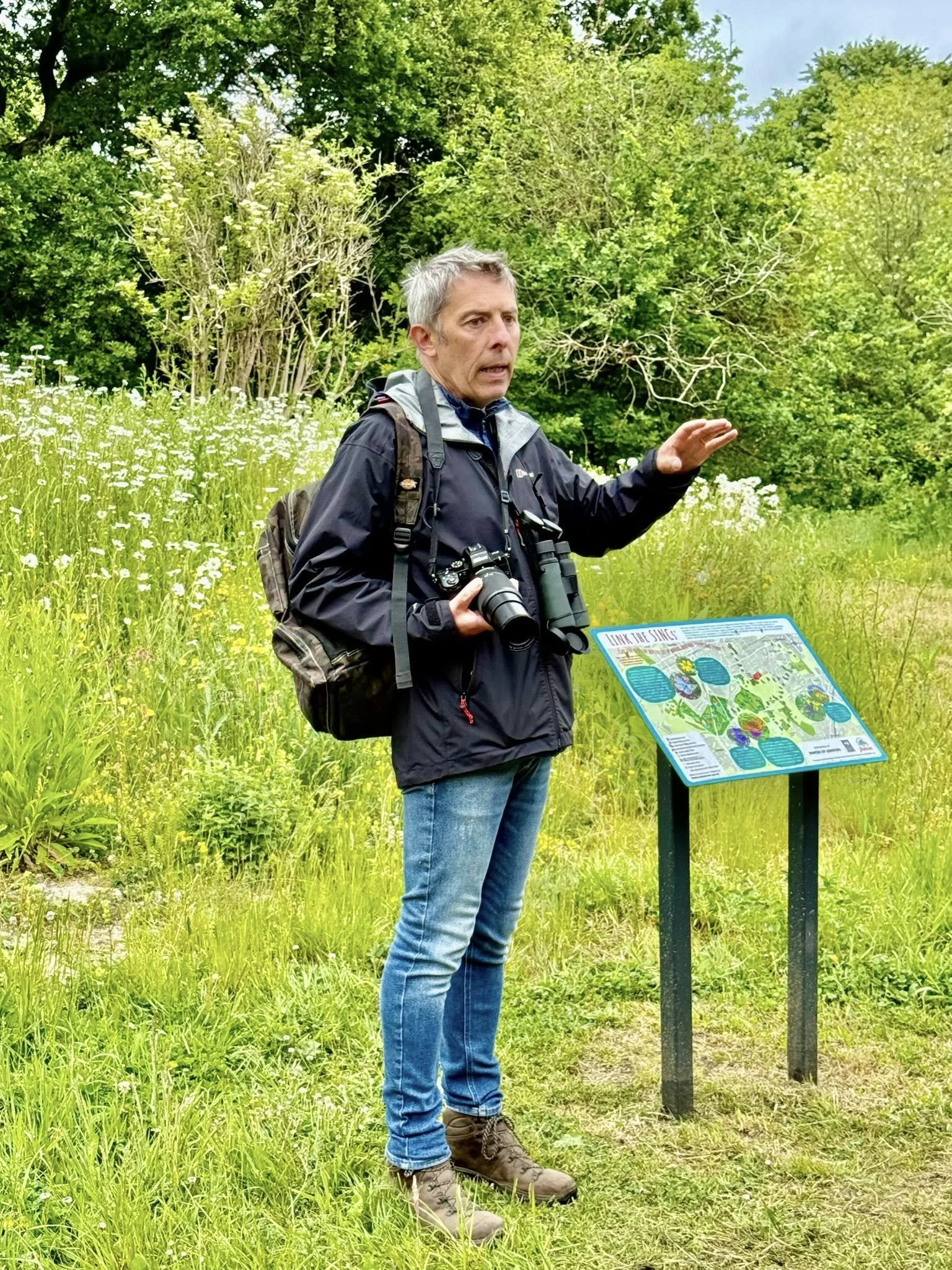
Me yakking on about butterflies - not that we saw any on such a cloudy day!
I led a short nature walk through a local park this weekend (Queen Mary’s Park in Carshalton), the first time I’ve done such a thing. It was interesting, enjoyable, and seemed to be well received. I thought I’d scribble a few notes about it in case I need to refer back, and who knows, maybe you’d like to give this a go too? To be clear - I am no expert - simply an enthusiast who appreciates the benefit of spending time in nature.
I introduce my ‘philosophy’ as being made up of Curiosity : Patience : Persistence. Although I did more of the talking - the session was very much about dialogue, and shared experience. The time we spent together was about nature and us, not nature and me.
Around 20 of us gathered against a backdrop of cloudy skies. The plan - such as there was one - was to wander slowly through the park - stopping in various locations, to listen and look.
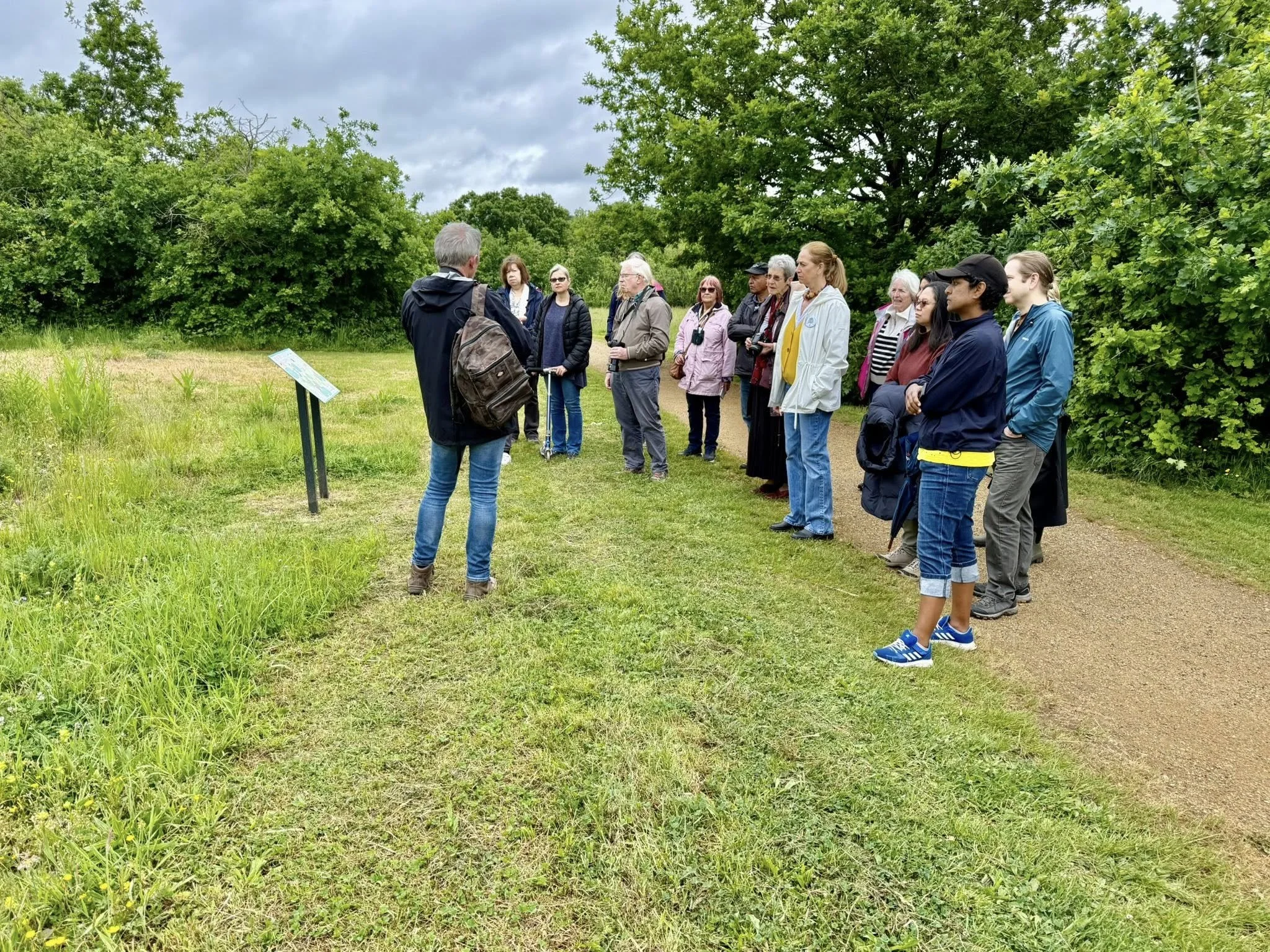
Pausing to talk briefly about plants, and their role in attracting and sustaining different species.
Being led by sound is a great way to improve our understanding of what is going on in the trees and hedges around us. I sometimes use technology to help me figure out what I’m listening to, and increasingly I prefer to use my ears and try to figure things out myself first - then use tech as a back up or a check.
I often find I see interesting things when I have the time to stop and wait a while. Birds frequently fly off when they see and hear movement, and when we've the time to stand and wait - that patience can be rewarded. Birds can be territorial - you notice this more and more after repeated, slow walks around nature. That repetition helps you build mental maps and imagery.
I kept a note of what was seen and heard - not a complete list but an interesting one I hope.
Swift
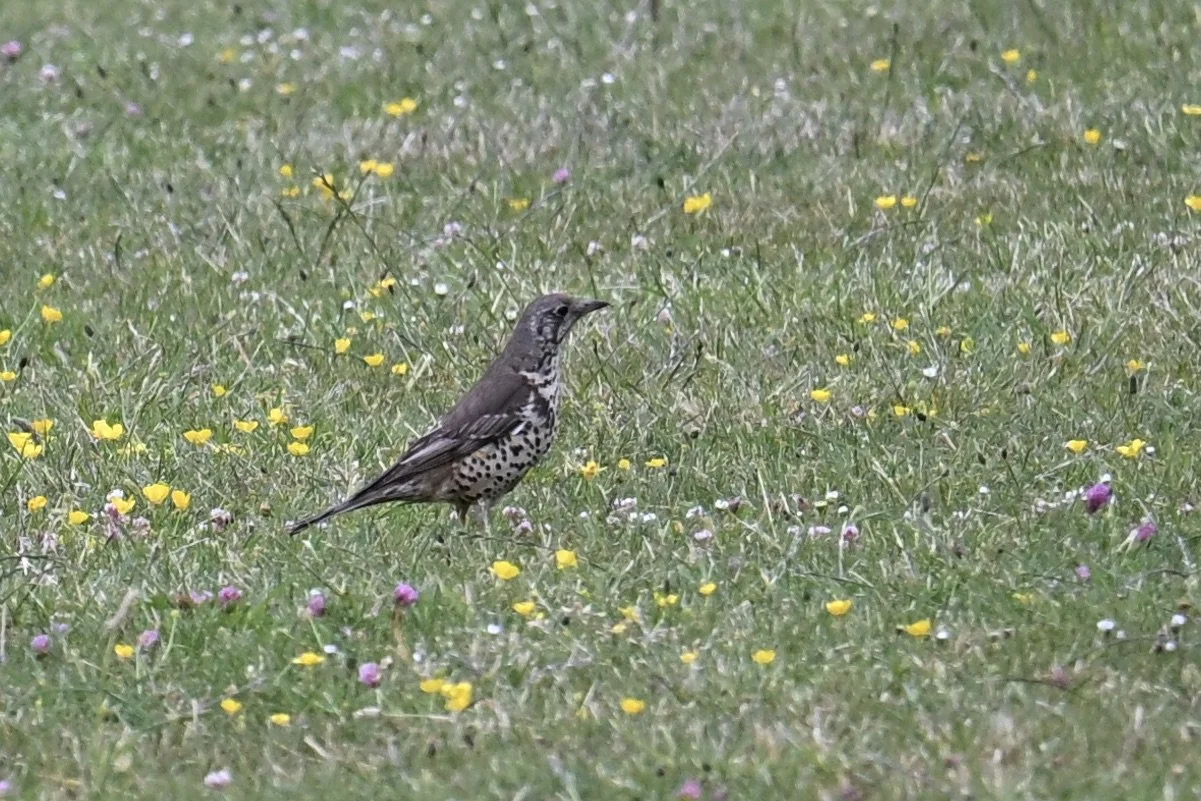
Mistle Thrush
Crow
Magpie
Chiffchaff
Wood Pigeon
Greenfinch
Skylark
Starling
Wren
Blackbird
Great Tit
Robin
Mallard! Yes - a duck wandered along a path by a wooded section of park just as we were finishing up.
Firecrest
Jay
The hour or more we spent together passed in what felt like a few minutes, and as is often the case in times like these, we headed for home with the words of WH Davies drifting through my head.
"What is this life if, full of care, we have no time to stand and stare?" WH Davies

Remix : Revolutionising the music industry from the ground up

I attended an interesting panel discussion at The RSA last night. I took some notes and I thought it might be useful to share them here. They’re not particularly polished - and I haven’t attributed the words directly to the speakers - but they may serve a useful documentation purpose, so here goes.
The Remix: Revolutionising the Music Industry from the Ground Up
Question: If you could do one thing overnight to change the industry, what would it be?
Government Action: Devolve responsibility from DCMS (Department for Digital, Culture, Media and Sport) into business, planning, etc.
We need a ministry for the arts and it must be separate from sport.
Put music back in schools and on the high streets. Music should be experienced, like nature, to create connections.
Redistribution of Money: Shift funds from the top down to the grassroots level.
Key Additional Discussion Points: Sustainability of Grassroots Music:
Most music does not generate significant revenue. How does grassroots music work in this model?
There is a need for support as it’s difficult to bring new talent on without covering operational costs.
Community Ownership: Could reduce risks and increase local engagement with venues and events.
Passion projects often overtake usual business practice, making it harder to develop talent.
New Artists: It’s hard to find the right place or community. Networking and finding a space is crucial.
Technology in Music:
Is immersive sound technology an interesting direction?
Diversification:
Festivals are struggling with how to get their message out effectively. Traditional print ads and social media ads are no longer as effective due to low trust in advertising.
Many music venues are diversifying their offerings out of necessity. This has become a key way to stay sustainable, but is it what’s needed? How can we focus on the core offer - grassroots music.
The Need for Connection & Wellbeing:
Despite challenges, there remains a deeply human need to connect through music. This connection is a powerful force for community building.
The Sound Lounge has cultivated a vital community that plays a critical role in loads of ways, including keeping doors open for this grassroots venue.
Grassroots venues are incredibly important for community wellbeing, acting as spaces for social connection and creativity.
Local Government Support:
Local government needs to be brought along on this journey. But how can we get them to actively support the cause?
The shift in consumer habits is significant: post-2000 generations engage with home entertainment more than pub culture.
After the panel discussion - I spoke briefly with the representative from the Music Venue Trust about a ticket levy proposal, aimed at large venues.
There’s a suggestion for a voluntary £1 ticket levy. If widely adopted, this could generate an estimated £20 million, which could be reinvested into the grassroots music ecosystem. This could be something to engage local and national politicians with. It provides local community benefit at no cost to government. You could write to your local MP and Councillors inviting them to engage with this - I’m going to.
Host and Speakers
I’ve copied the following from the event invitation.
The event was hosted by Lynsey Shaw
Lynsey Shaw began her career with chart success in the pop group Girls@Play and now fronts Urban Cookie Collective, performing at major European festivals. Her entrepreneurial ventures include the Electric Dolls, a Live Nation-backed festival act, and innovative projects in LA blending music, film, and storytelling. As a leader at Big Finish Recordings, she has helped pioneer immersive entertainment formats. Lynsey is a champion of artist-led change, particularly in response to structural challenges facing the live music industry.
Hannah White – Sound Lounge CIC
A critically acclaimed British singer-songwriter, Hannah White blends Americana, folk, and country with deeply personal storytelling. Her 2023 album Sweet Revolution, produced by Michele Stodart (The Magic Numbers), touches on themes of resilience, social justice, and personal growth, with collaborators like Beth Rowley and Ricky Ross. In January 2025, she received UK Artist and UK Album of the Year from the Americana Music Association UK. She is also a passionate advocate for grassroots venues and co-founder of Sound Lounge CIC, a live music space and social enterprise.
Gill Tee – Black Deer Festival / Black Deer Radio
With a background in radio and large-scale event production, Gill Tee has been a driving force in the UK music industry for decades. From launching Party in the Park with Capital Radio to creating the genre-celebrating Black Deer Festival, Gill has consistently championed Americana music and social impact. Through Black Deer Live and Black Deer Radio, she is expanding opportunities for emerging artists year-round. Her work with Supajam also reflects a long-standing commitment to youth empowerment through music education and experience.
Sophie Brownlee – External Affairs, Music Venue Trust
Sophie Brownlee leads on external affairs at Music Venue Trust, a UK charity dedicated to protecting, securing, and improving grassroots music venues. Her work focuses on advocacy, industry engagement, and policy change to ensure a sustainable future for grassroots music. Through campaigns and policy leadership, she helps amplify the voice of small venues at both national and local levels, ensuring they are recognised as vital cultural infrastructure.
Maarten Walraven – Music X / Symphony.live
At the intersection of music, tech, education, and community, Maarten Walraven is co-CEO of Symphony.live and a lecturer in music business at Utrecht University. He is also the editor of MUSIC x, a popular newsletter exploring innovation, audience engagement, and new models in music. His work is grounded in a belief that the right sound and story can connect people across any divide.
Once in a Lifetime : Patience and Repetition
Queen Mary's Park is a small area of mixed woods and open space located at the very edge of Carshalton, on the site of a former children's hospital. At first glance it is quite unassuming. Head down, you could march from one end of the park to another in a mere handful of minutes. I know, I've done this many times. I used to see the place as a stepping stone of green on the way to and from work.
More recently, my movement through this space has slowed, and the frequency of visits increased. As this happens, nature cautiously reveals itself to me. Stop for a minute or two - and see what happens. A Nuthatch on a silver birch just metres away. One, two, three Great Spotted Woodpeckers in the trees. Blackcaps singing while they ghost in and out of view. In the summer, Marbled Whites and Common Blue butterflies can be seen moving beautifully through the grass.
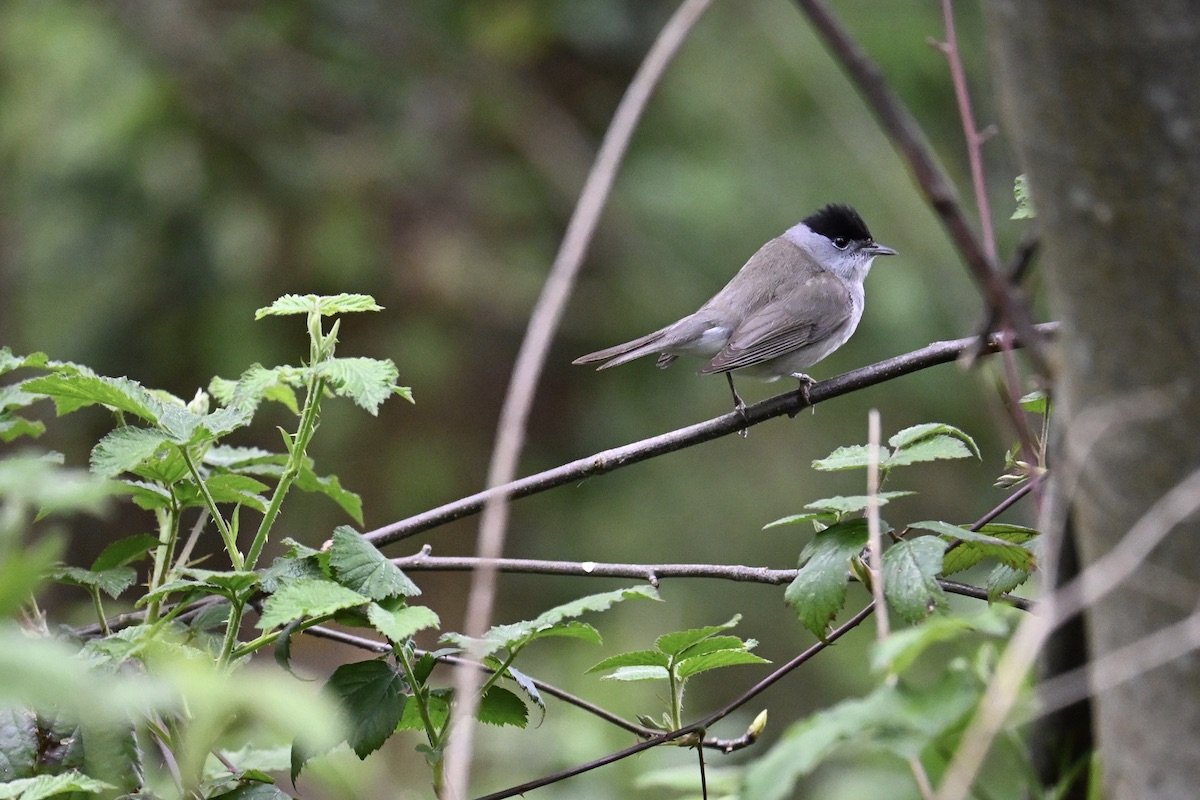
Male Blackcap in Queen Mary’s Park
There is always something going on. Often, when that something relates to birds, these happenings are led by sound, followed by curiosity. The other day I was craning my neck, looking up into a tall tree which has recently burst into leaf. The call of a greenfinch could clearly be heard - but the bird itself was invisible. Two people passed by and asked what I was looking for. I pointed out the distinctive call and we chatted for a minute or two, while the bird remained unseen.
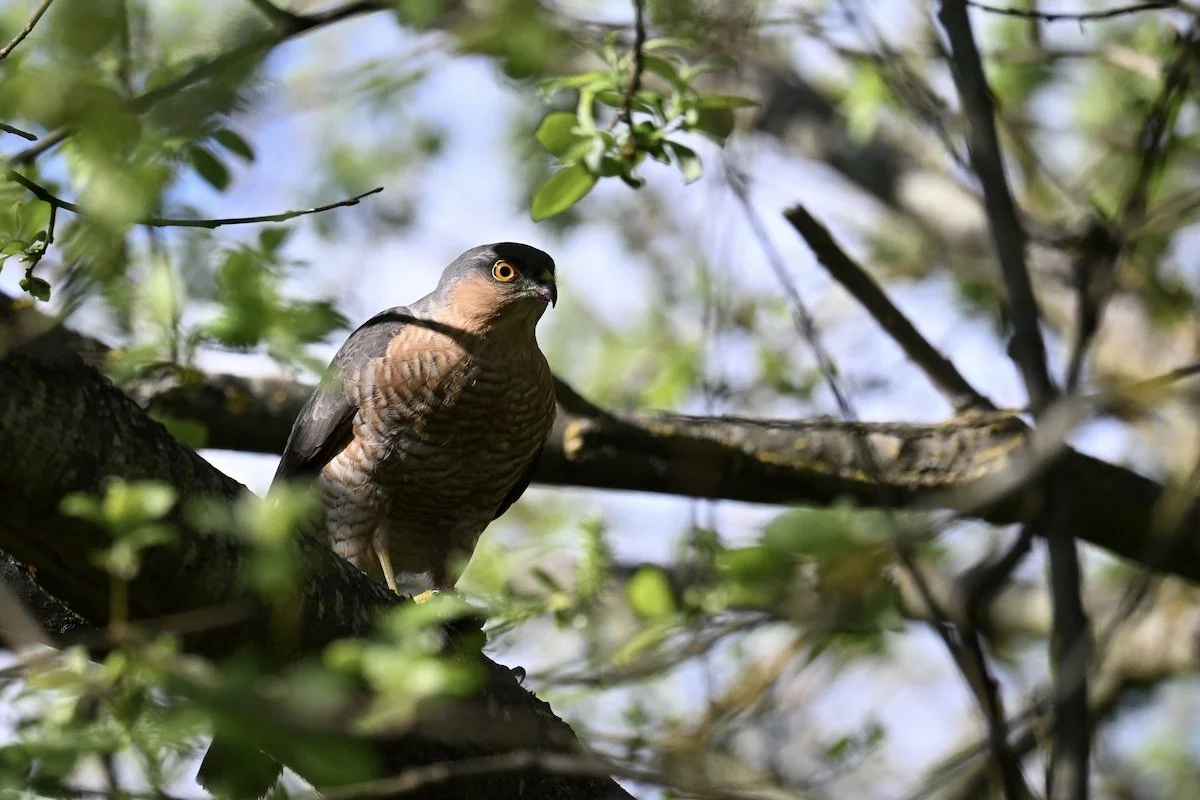
I walked on, and as I crossed the park, I heard Blue Tits chattering loudly, urgently. I followed the sound and came to a small tree. The birds sounded distressed, and as I stood there, a peripheral movement caught my eye. Just to the right of the tree, a Sparrowhawk, partly obscured by branches and shadow. I thought it would fly off as soon as we made eye contact, but no. I then realised the hawk was eating a small bird, and though I was quite close by - a thicket between me and the hawk’s tree provided a sufficiently robust defence, preventing me from getting any closer. The Sparrowhawk continued to eat, keeping an occasional eye on me. We spent over fifteen minutes in each other's company before I moved on.
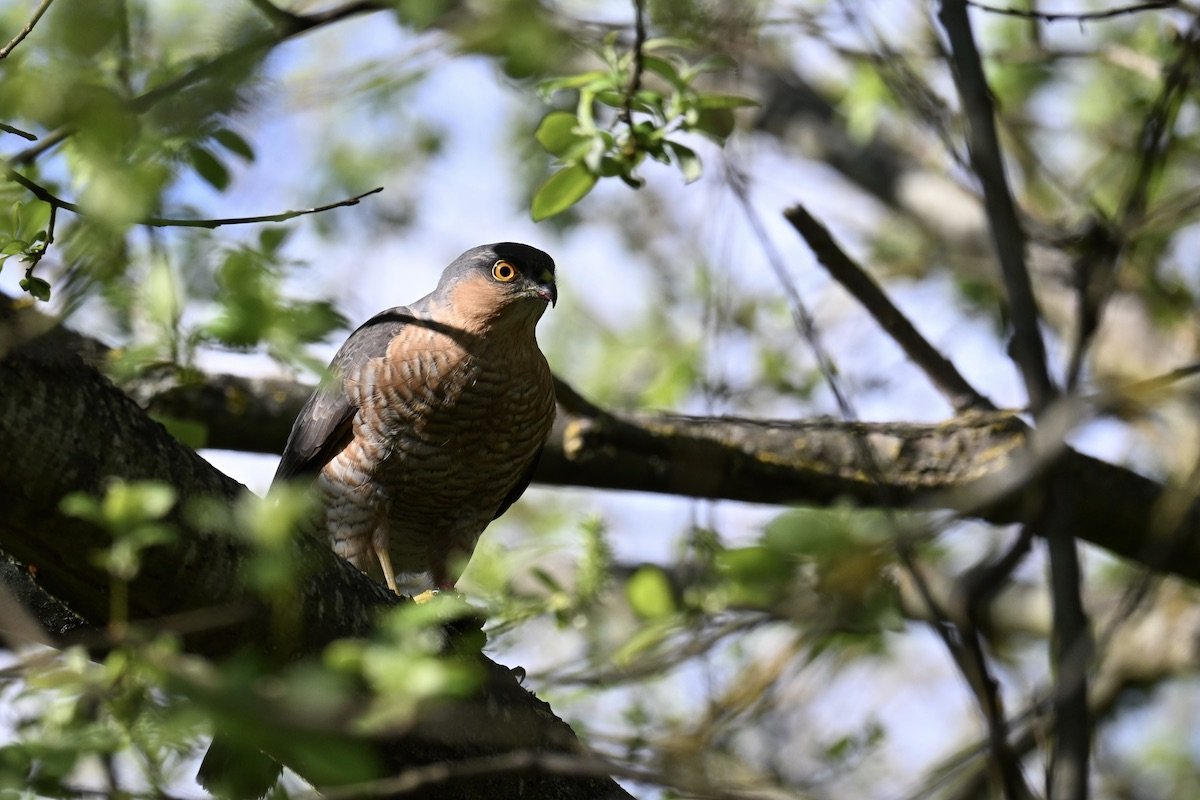
Male Sparrowhawk in Queen Mary’s Park
Nature is happening all the time, yet it has taken me fifty nine and a half years to find myself in this place, with this bird. Chances are I'll never get to experience such a close encounter with a hawk again. And yet, I keep wandering, and wondering.
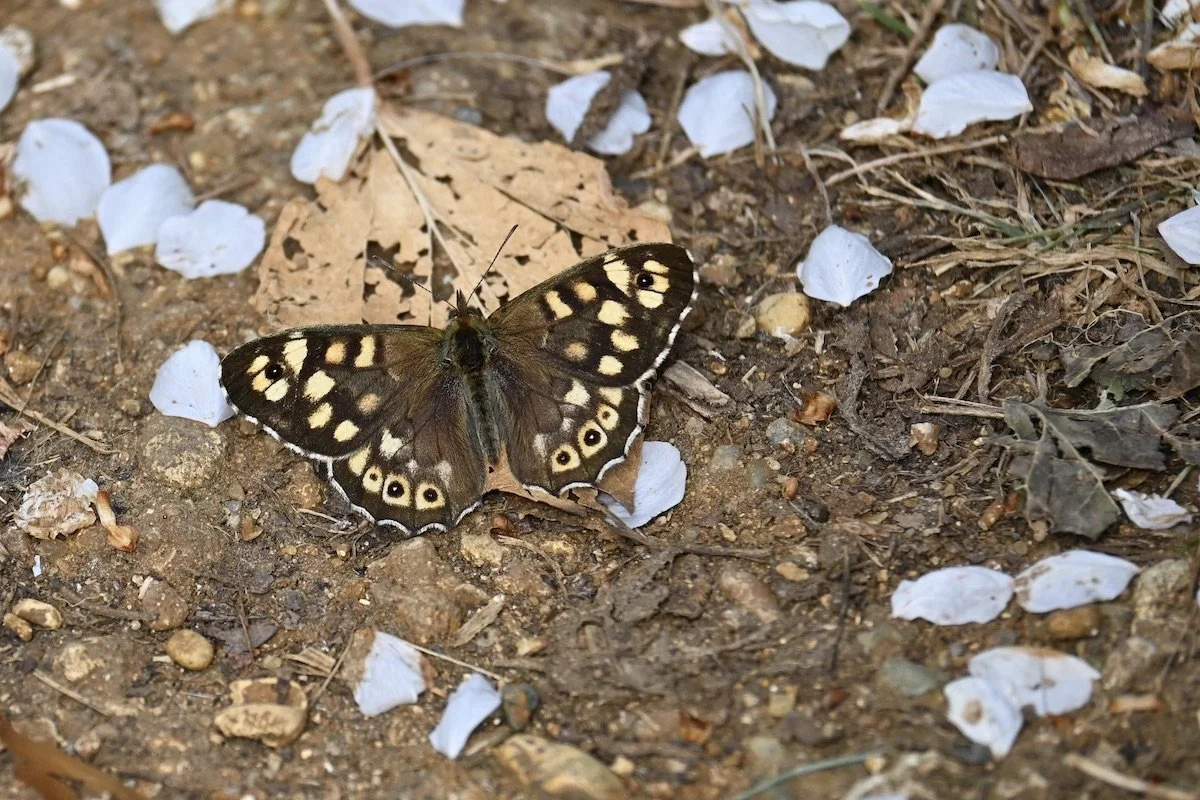
Gathering and Reflecting
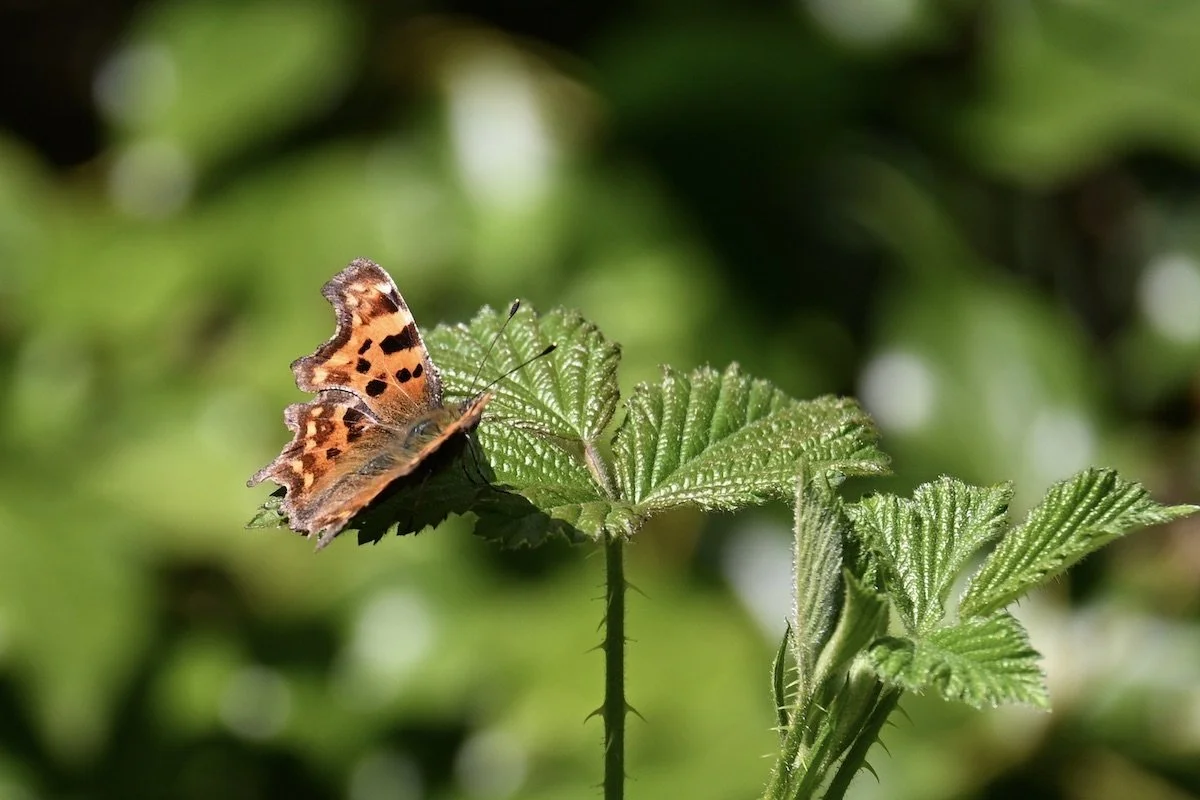
For several years I've been researching 'The Path*'. Observing, recording, documenting, and sometimes sharing my findings. When I say researching - I really mean just wandering about, noticing. In essence very similar to much of the consulting work I do, at least the interesting and useful stuff.
As this research continues I am realising a couple of things.
First - I am becoming more interested in specifics. For example - I've been logging information about butterfly sightings since 2022, but it's only this year I've decided to record not just what I've seen, but when and where. Slowly building more detailed ‘maps’ of my experience.
Second - I want to turn this research into something artful. Actually - it's more than a want - it's a need. Since I created my first fully handmade book last year, I've become fascinated with the idea of books as containers that may hold all kinds of....wonder. And so I'm currently conceiving ideas about how to combine my research and recordings into something 'publishable'. I put that word in speech marks because whatever artefact emerges from these ideas, it will contain hand made elements, and as such - publishing it will literally be a part of the process. I will use machines for reproducing photographs and writing, but some of the printing will be done by me, by hand, and I've other ideas I want to incorporate, watch this space as they say.
*The Path is in fact many paths. Mostly these paths are local to me, others further afield, all connected in some way.
And in case you are interested.
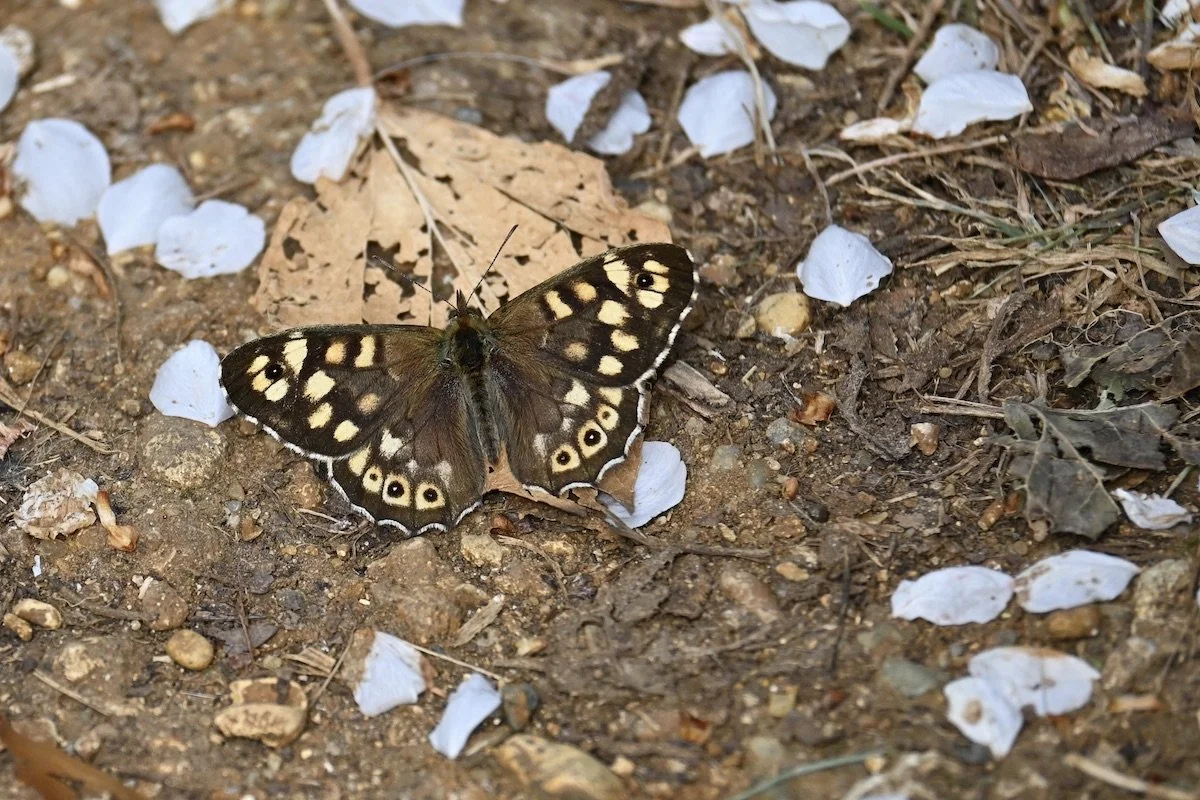
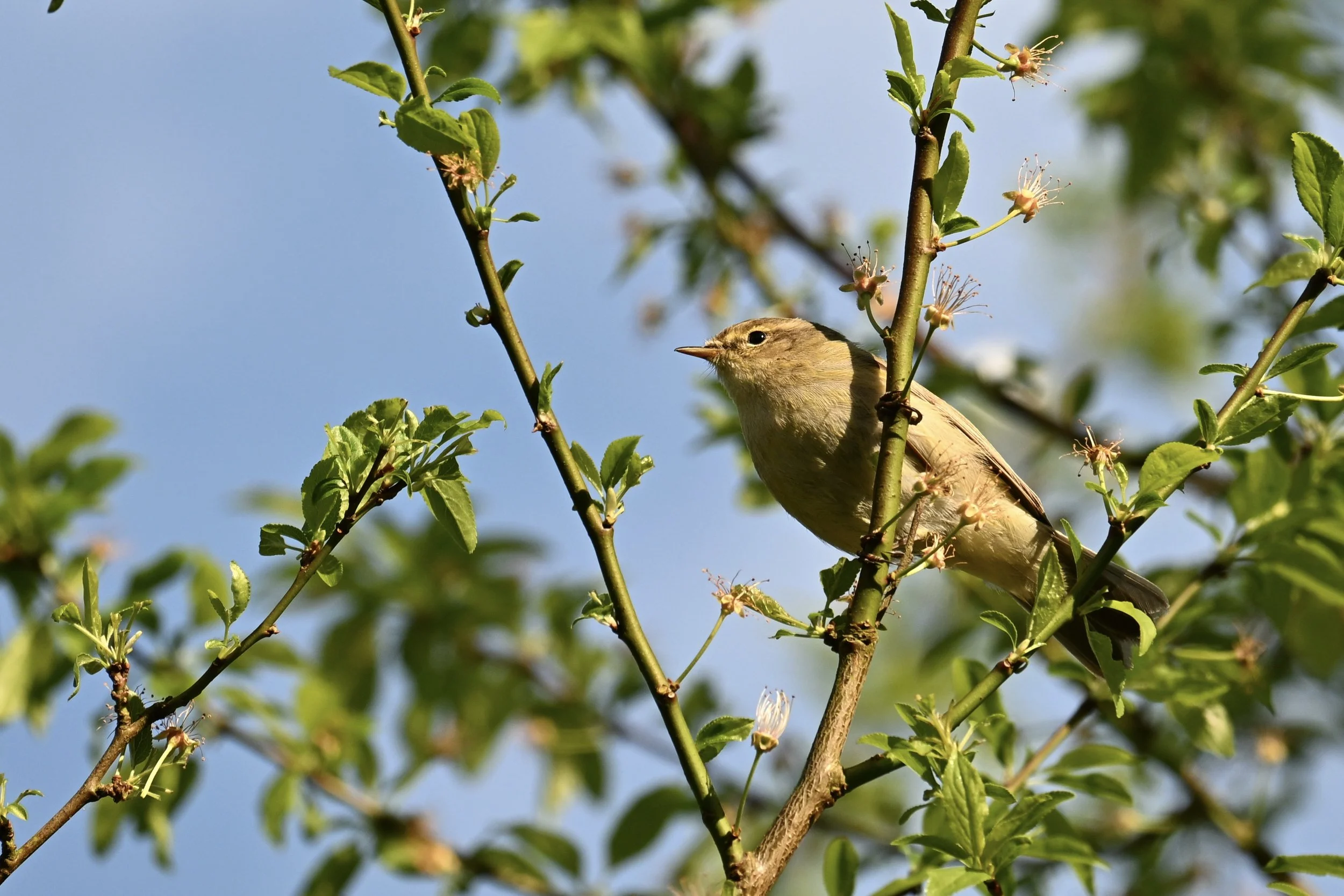
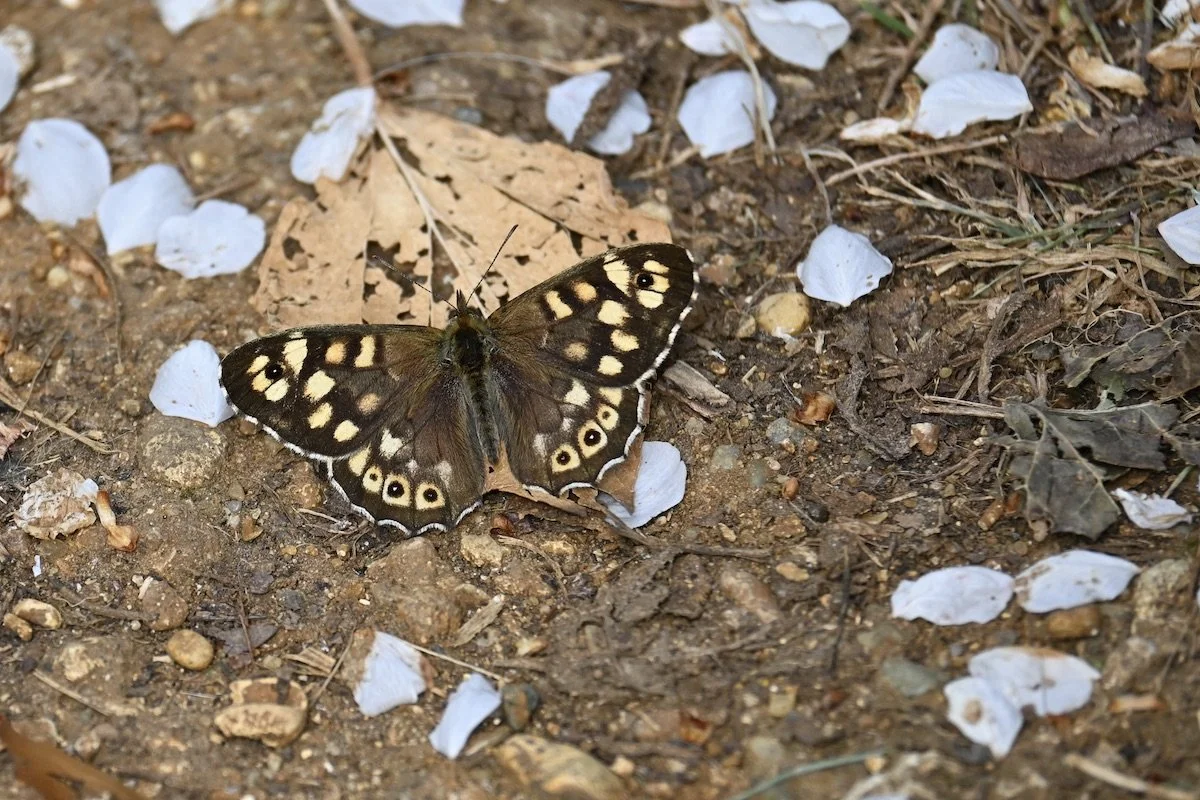
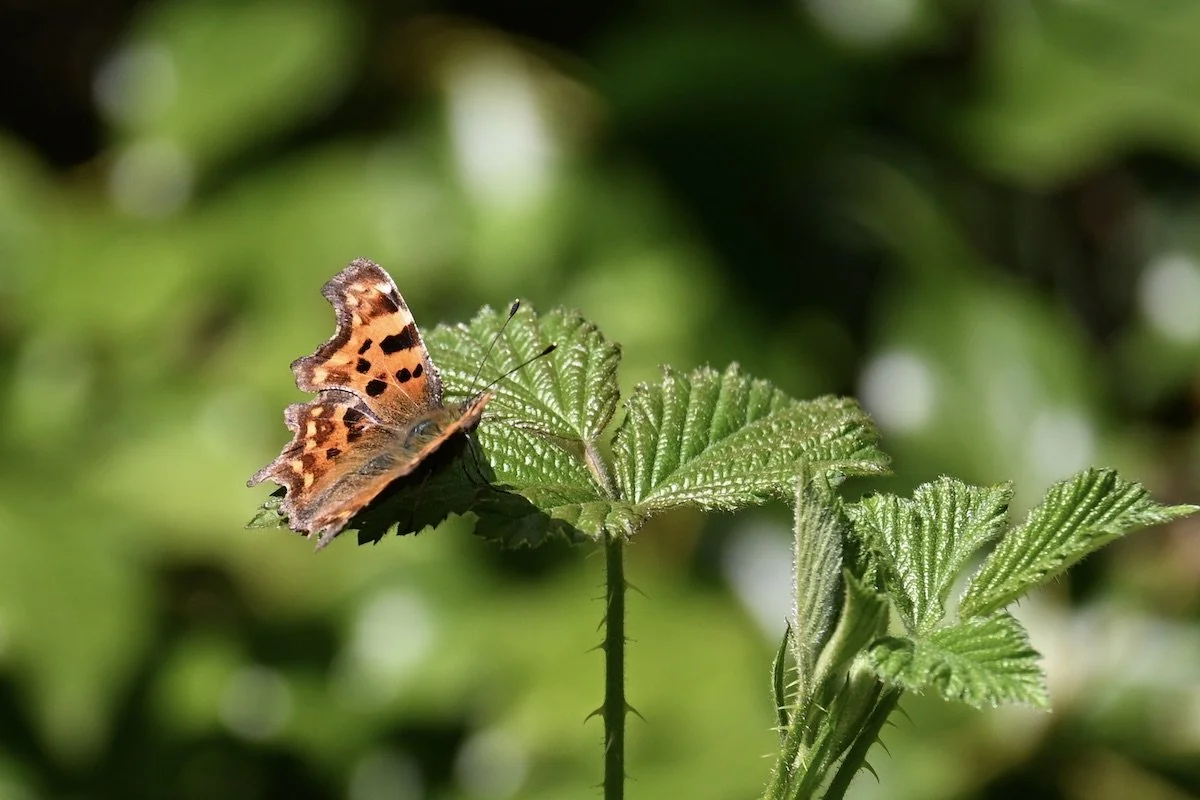
Photo 1: Comma, Queen Mary's Woodland 13th April 2025
Photo 2: Speckled Wood, Queen Mary's Woodland 13th April 2025
Weeknote 2025/08
Time Off…Sort Of
School’s out so Carole is off work, and I am too…sort of? My more regular work continues and because my hours are flexible I’m fitting it in and around more recreational and research based activity.
The Camera Eye
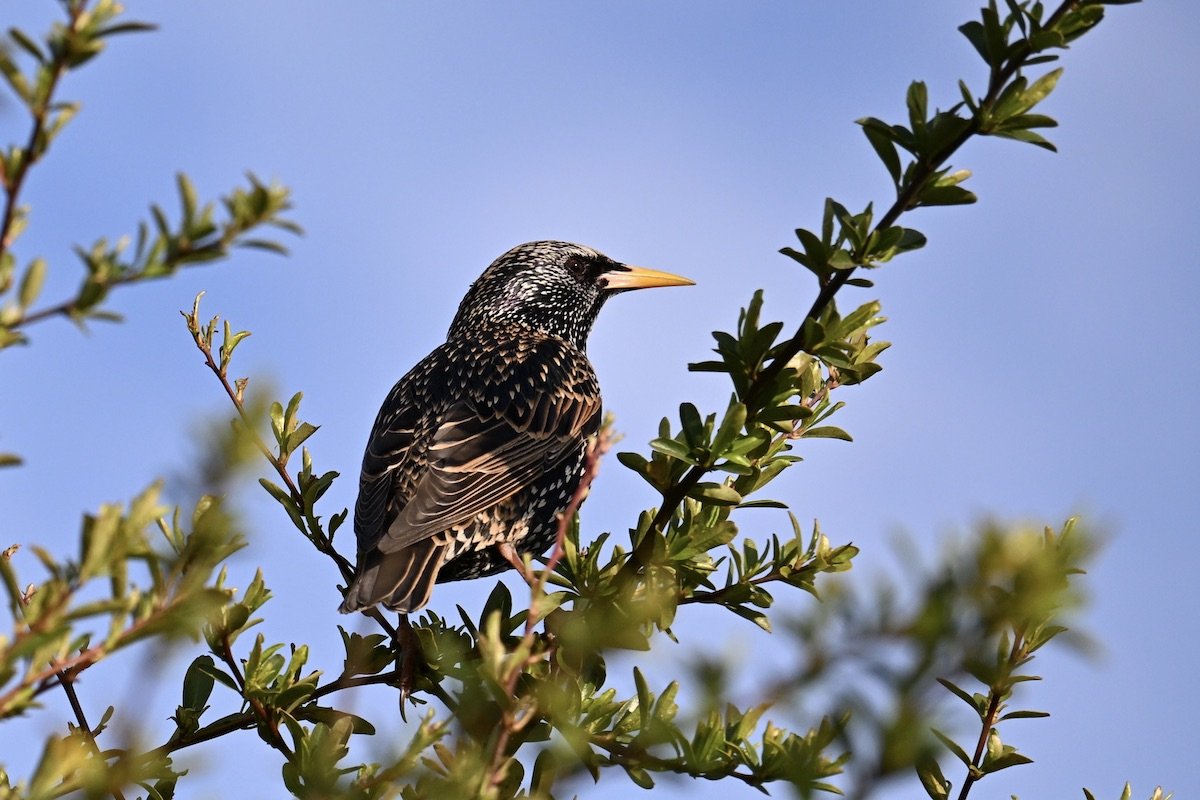
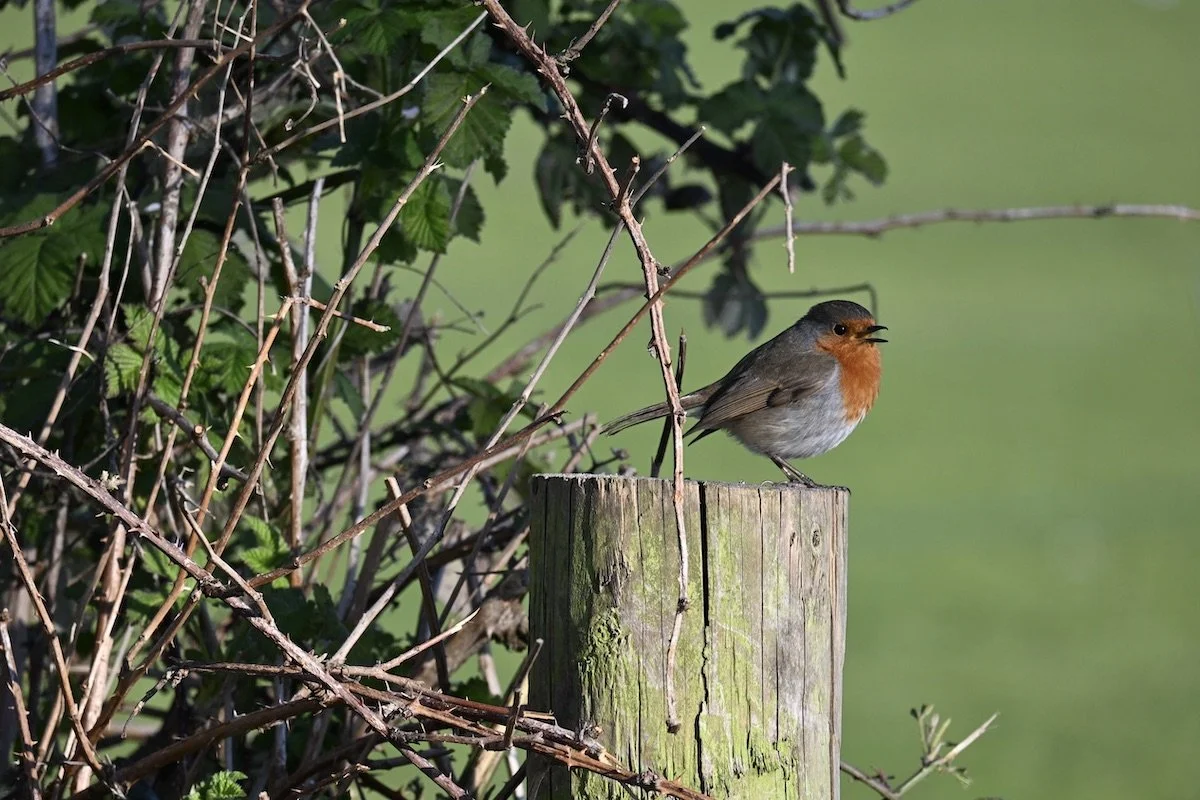
My camera is an essential part of my creative field research. I use it to ‘record’ observations and sightings. I’m slowly getting to grips with a new one. The zoom lens on my ageing Nikon 1 started failing several months ago. It’s been to and from the service centre several times, parts get replaced, sometimes it works, sometimes it stubbornly refuses. After a frustrating recent exchange where the camera failed to work in my hands, but did just fine when in for repair, we looked at other options. Thankfully I’ve had the same person helping me at Nikon the whole way through so they’ve shared the experience with me, and made me a very decent offer when it came to sourcing a replacement. Good customer serivce remember that eh? And so it came to pass I have a new camera. I’m very much in figuring things out mode - but even so - I am really chuffed with some of the recent work I’ve done.
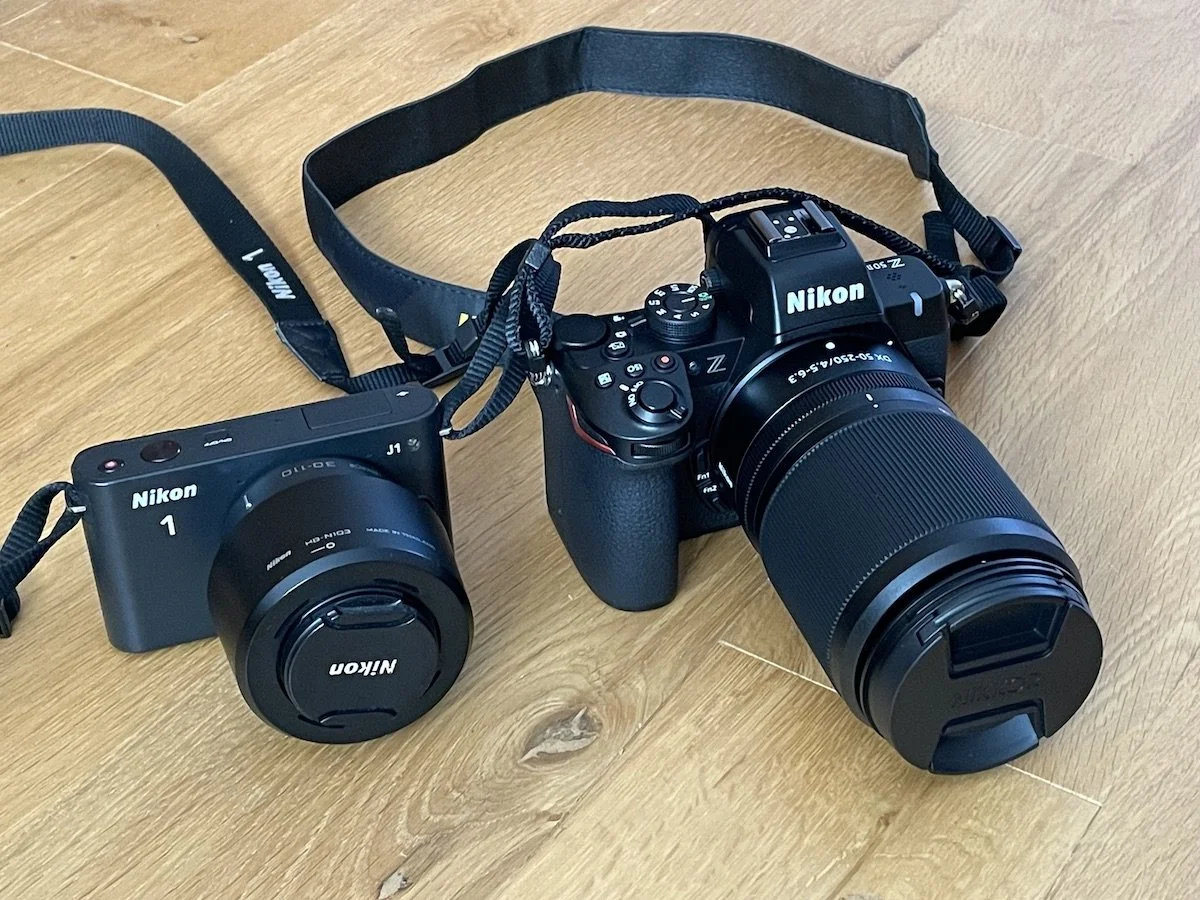
Nikon : Where I’ve been v Where I’m Going
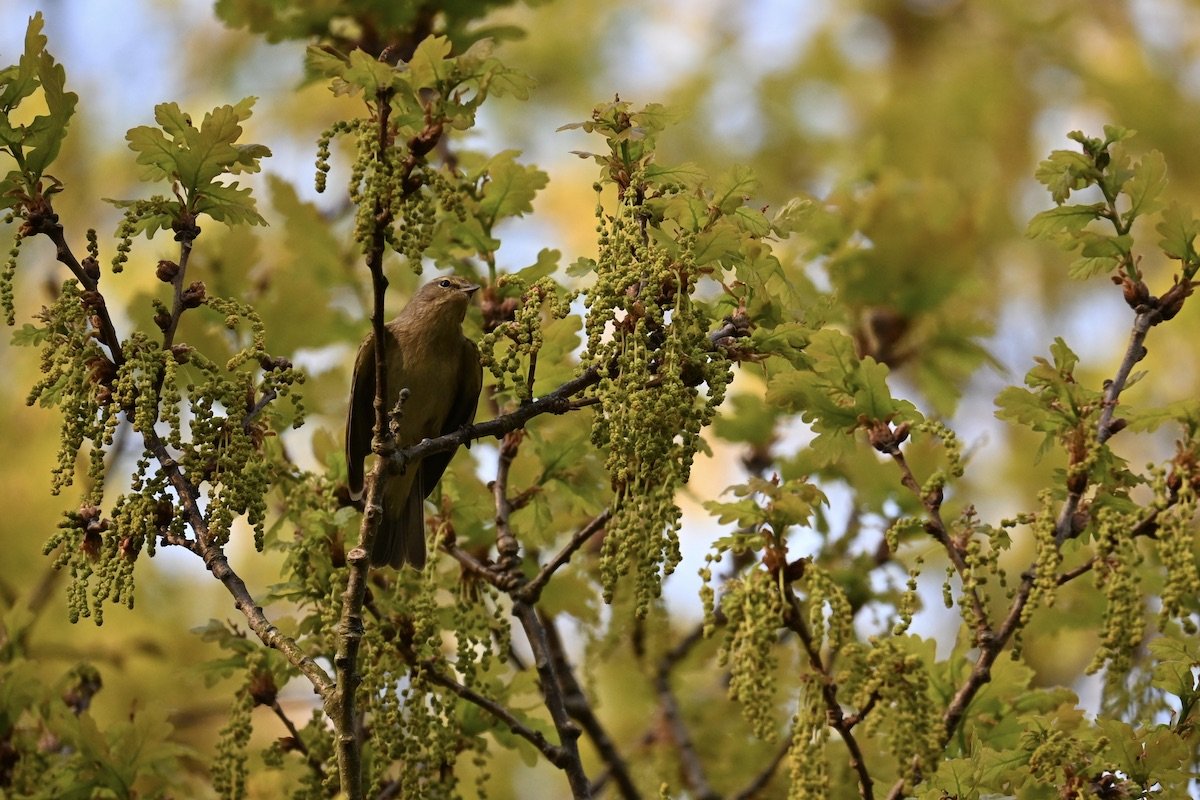

The Art of Books
I had a useful meeting with with a local college last week who are interested in commissioning some introductory bookbinding work from me. It’s early days and we’re figuring out how best to combine the skills I have with some of the courses students are exploring - poetry being one space where we can interestingly combine artforms.
In other news, I was successful in a recent pitch to take part in a Resilient Futures creative programme locally. This will involve me designing and delivering a zine making session - and the contents will have an artful wellbeing focus.
Watch this space as I develop these ideas and simultaneously consider how I incorporate bookish ideas into this year’s Open Studios. I have much to do.
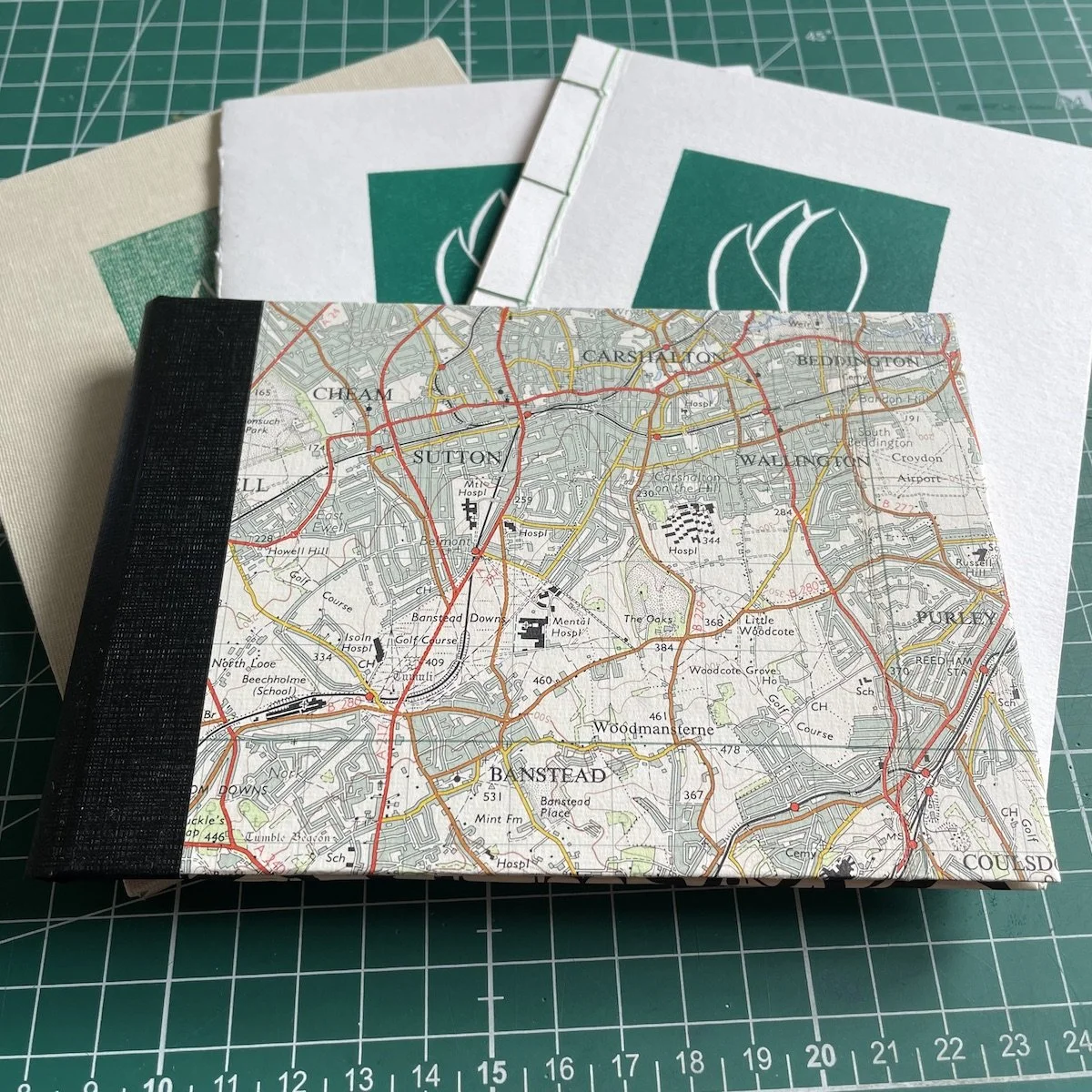
Bookish Ideas
Weeknote 2025/07
Am I Coming Into View Or Disappearing?
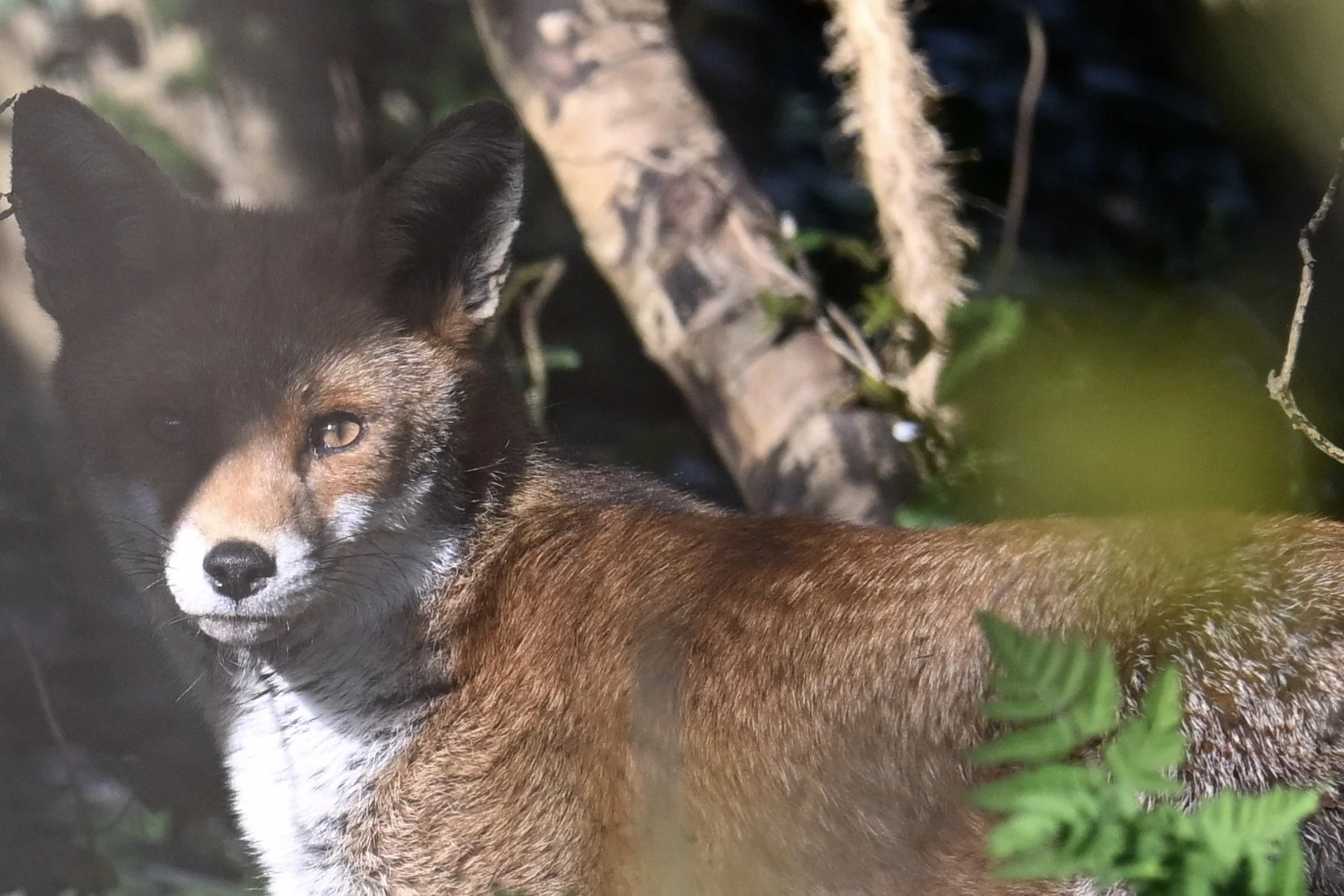
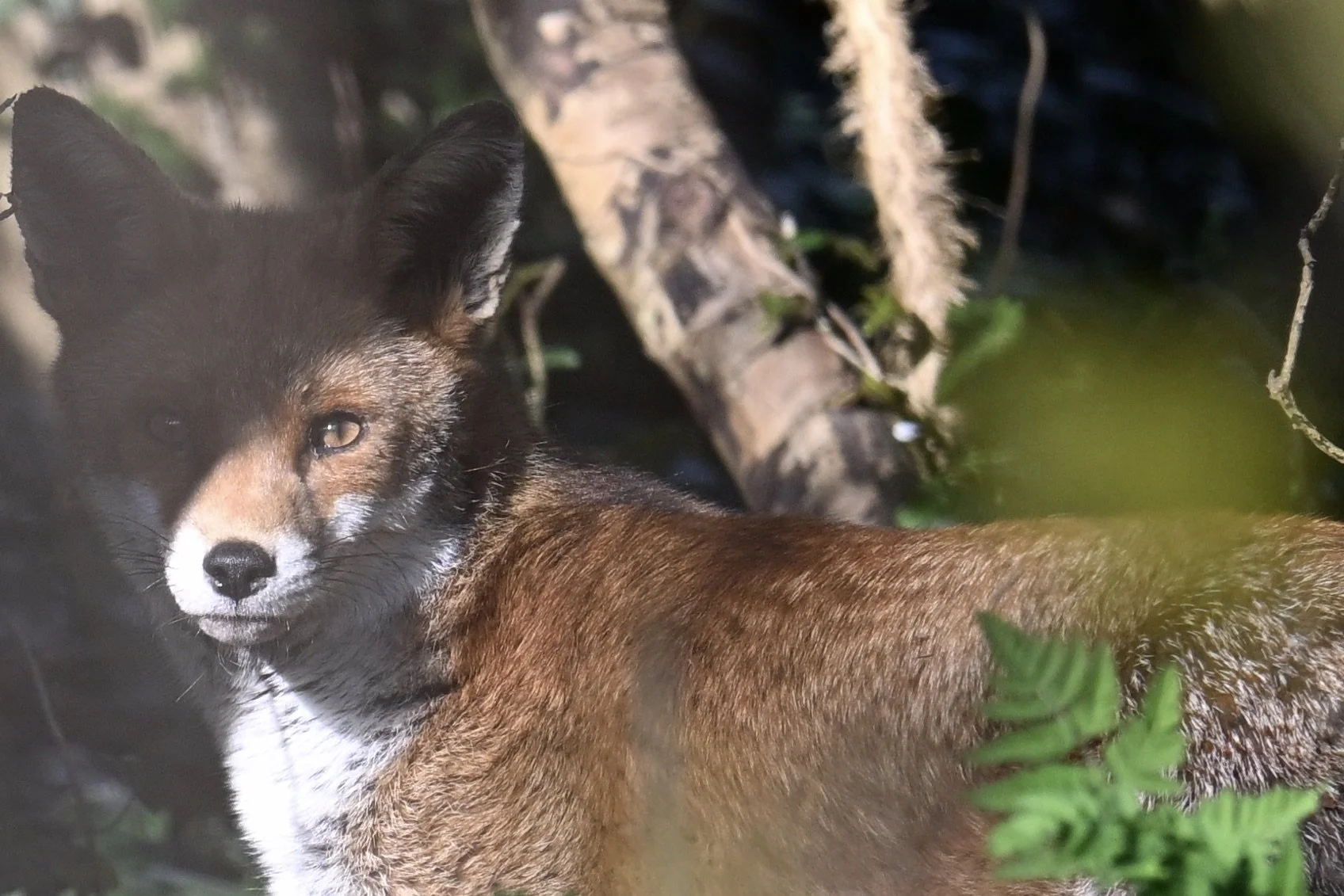
Fox in partial shadow : Queen Mary’s Park, Carshalton
A few weeks ago (Weeknote 2025/04) I wrote about a conversation Nick Court and I had on the subject of momentum. Since then - I’ve kept that conversation in my mind, and continued to act on it, with intriguing results. I’m currently busier than I’ve been for a while - and I hesitate as I write that down - because busyness is a double edged sword.
Assessing
In my role as Programme Manager for Arts Network Sutton - I support our Vice Chair on our annual grants programme. We award a series of small grants to local creative practitioners to enable them to design and deliver impactful community focused work. My role in this is to read and assess the submissions, and as part of a panel, interview the applicants. We’re a small charity so we choose to make the time to interview as this process helps the artists bring their story to life, and helps us understand and question their process. We then evaluate all we’ve heard and learned, and make the tough decisions on which projects we can support in the coming year, and those we have to say no to. Everyone is given feedback once the decisions have been made. Importantly, those who are unsuccessful are told why. This is hard, labour intensive, worthwhile work. Most funders wouldn’t and/or couldn’t choose to do this, but we do.
Familiarising
In my new role with SACCO, I’m trying to get to grips with many things. Tech, process, culture, accountability, responsibility, communication and more. All this while the organisation does its thing with a level of familiarity I can currently only dream about. These early times can feel a bit disconcerting, and they’re also really useful for asking the kind of lovely questions that newness and a lack of understanding brings.
Cultivating and Weeding
In parallel with all the above, I’m also having good early conversations with several people about subjects like visual minutes, creative workshops, street art, and more. In among all this - Carole and I are part way through an attempt to reinvigorate a 30 square metre patch of weed, ivy, and bramble infested garden. Blending the mental with the physical is tiring and yet invigorating. Making progress, knowing when to take a break, adapting plans, we’re getting there. I’m loving this, and as momentum builds and continues, I need to make decisions about where to invest my precious time. Just like we are in the garden right now, I need to think about, and do more digging and weeding. I’ll leave it there for now - and close with a photo of another gardener I met this past week - this one was busy digging for his supper.
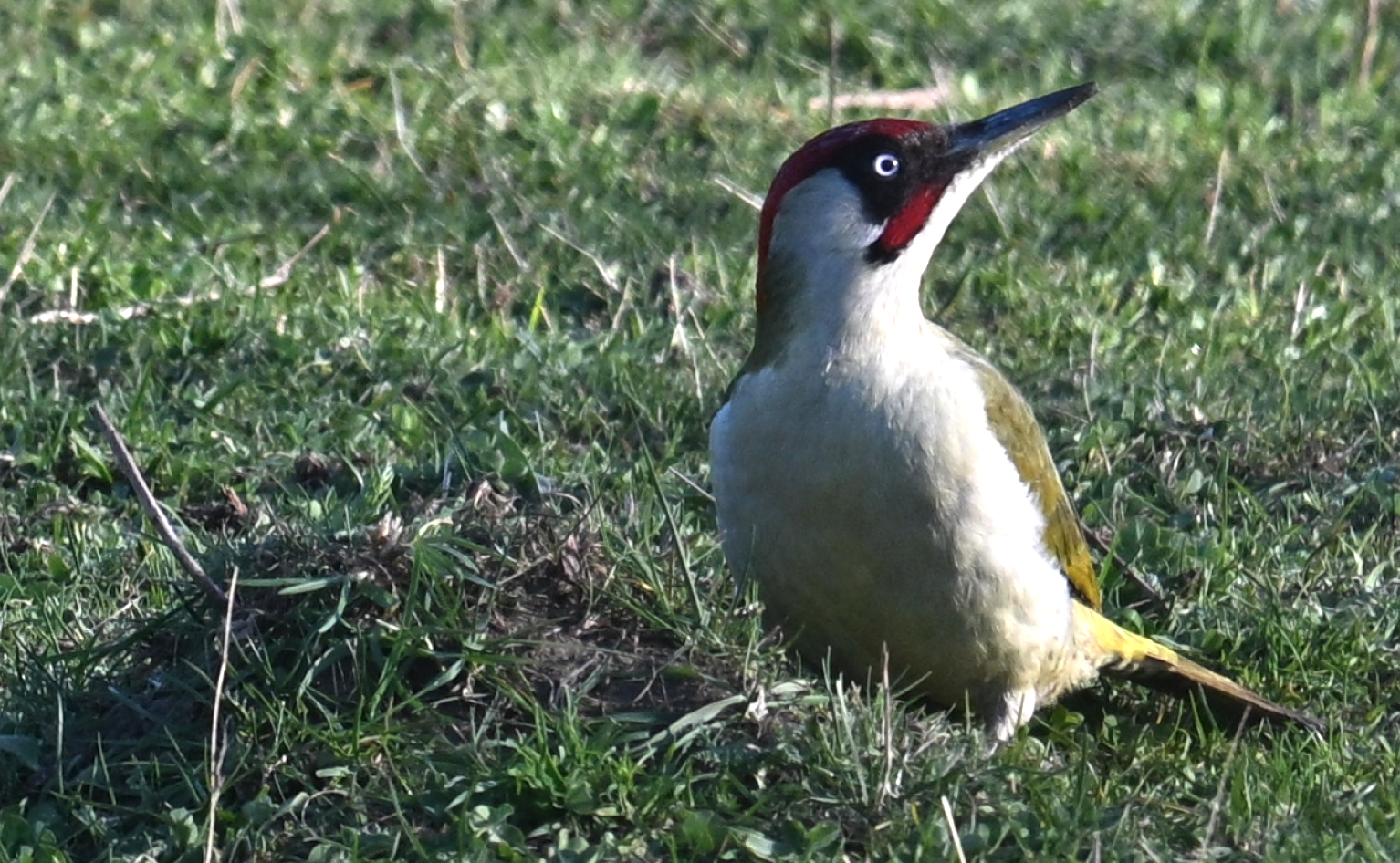
Green Woodpecker on Oaks Track, Carshalton
A Walk Of Two Halves
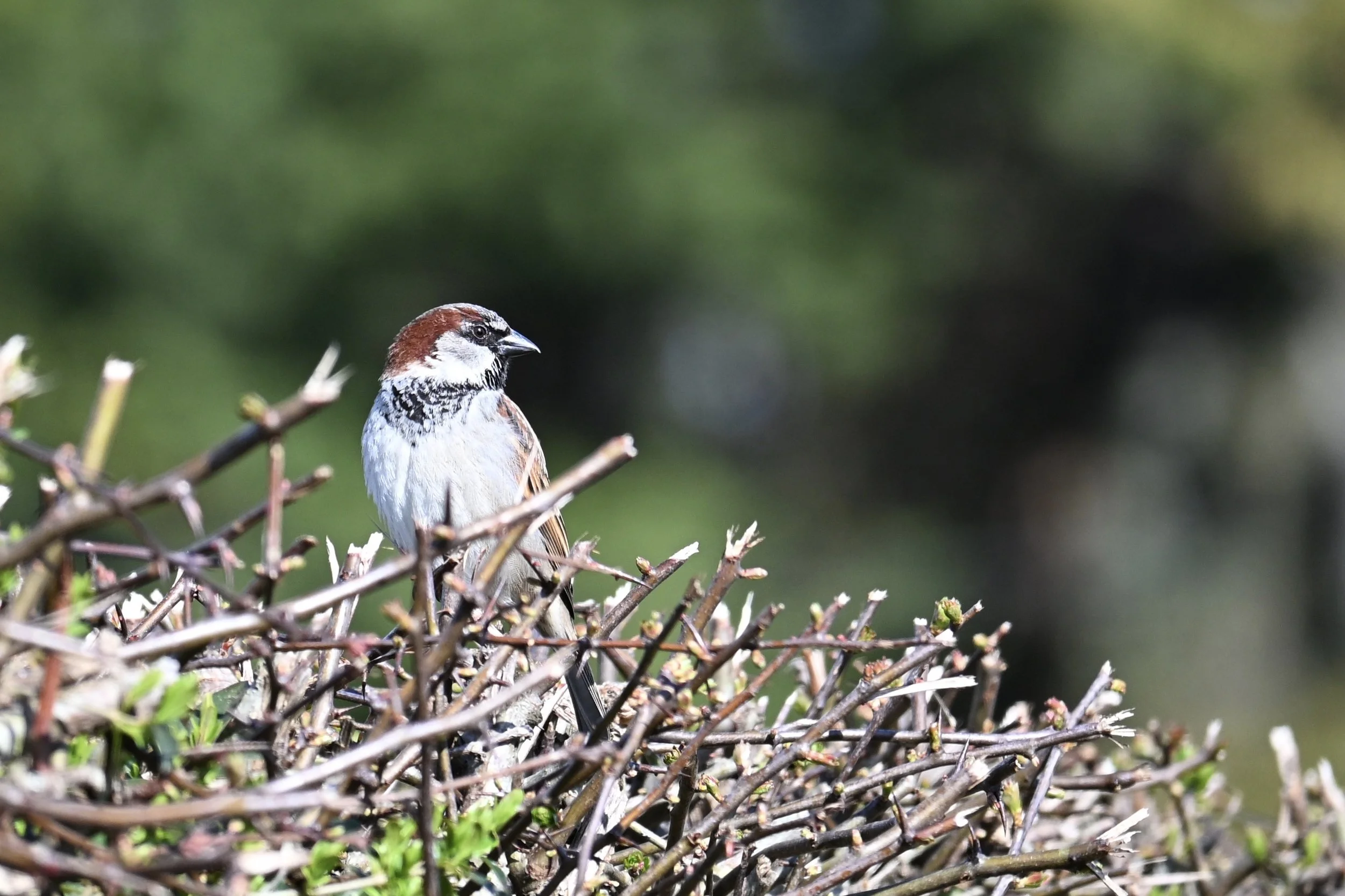
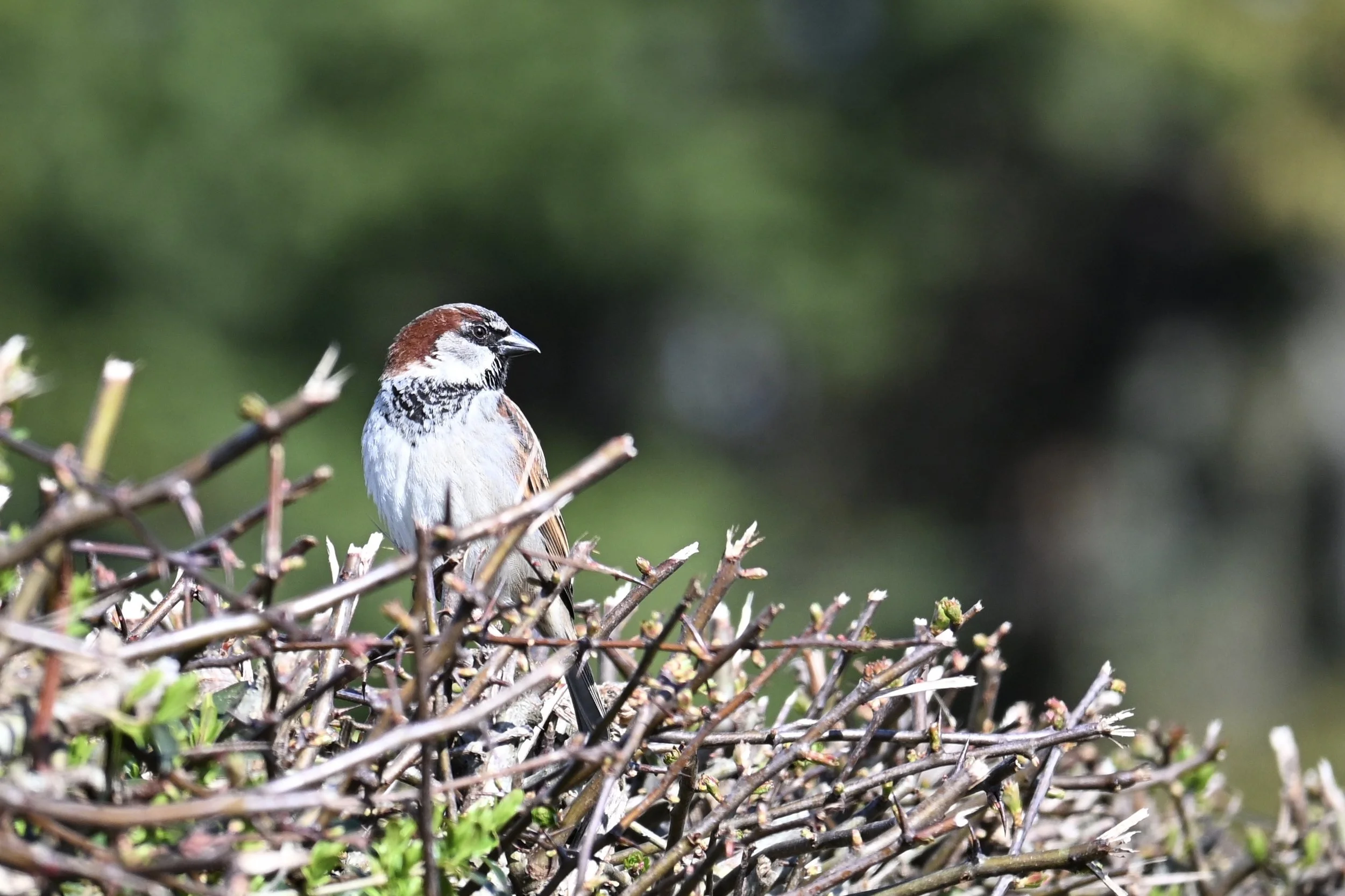
House Sparrow on Telegraph Track
Walking with Carole to her place of work : Two paths of peace separated by the endless thunder of a main road.
Within two minutes of leaving the house a great spotted woodpecker takes flight right in front of us, while a green woodpecker laughs - a sound so loud it could be sitting on my shoulder.
Soon we leave the calm behind and we’re on the busy road . Birdsong is replaced by revving engines, groaning axles, and exhaust fumes. Everything is different. You can see hear smell and (unfortunately) taste it . Everyone’s in a hurry, no one’s going anywhere.
Except us.
A gentle incline and we pick up the pace. As we leave the main road behind, rosy cheeked from our efforts, somehow the skylark’s voice rises up from neighbouring fields across the road, and works its way through the traffic, easing us on our way.
It’s quiet again, and pretty soon Carole and I part company. Returning to the racket. Nothing’s moving.
Except me.
Gridlock caused by roadworks and temporary lights which refuse to change colour. Beep your horn all you like mate - you’re not going anywhere, for a while at least.
With the noise behind me again, approaching the farm tracks I hear the greenfinch let go its familiar spring sigh. Goldfinches bob overhead, sparrows chat, and as the longtailed tit accompanies me down the lane I hear the woodpecker again.
Still laughing.
Weeknote 2025/06
Rejection v Not Getting Picked
I received the email from the Royal Academy informing me that after careful consideration, The Path, my submission to this year’s Summer Exhibition, has not been selected for the next stage. This is with regret…apparently. Does that last bit make me sound grumpy? I’m not - and aside from a fleeting tinge of disappointment, I move on.
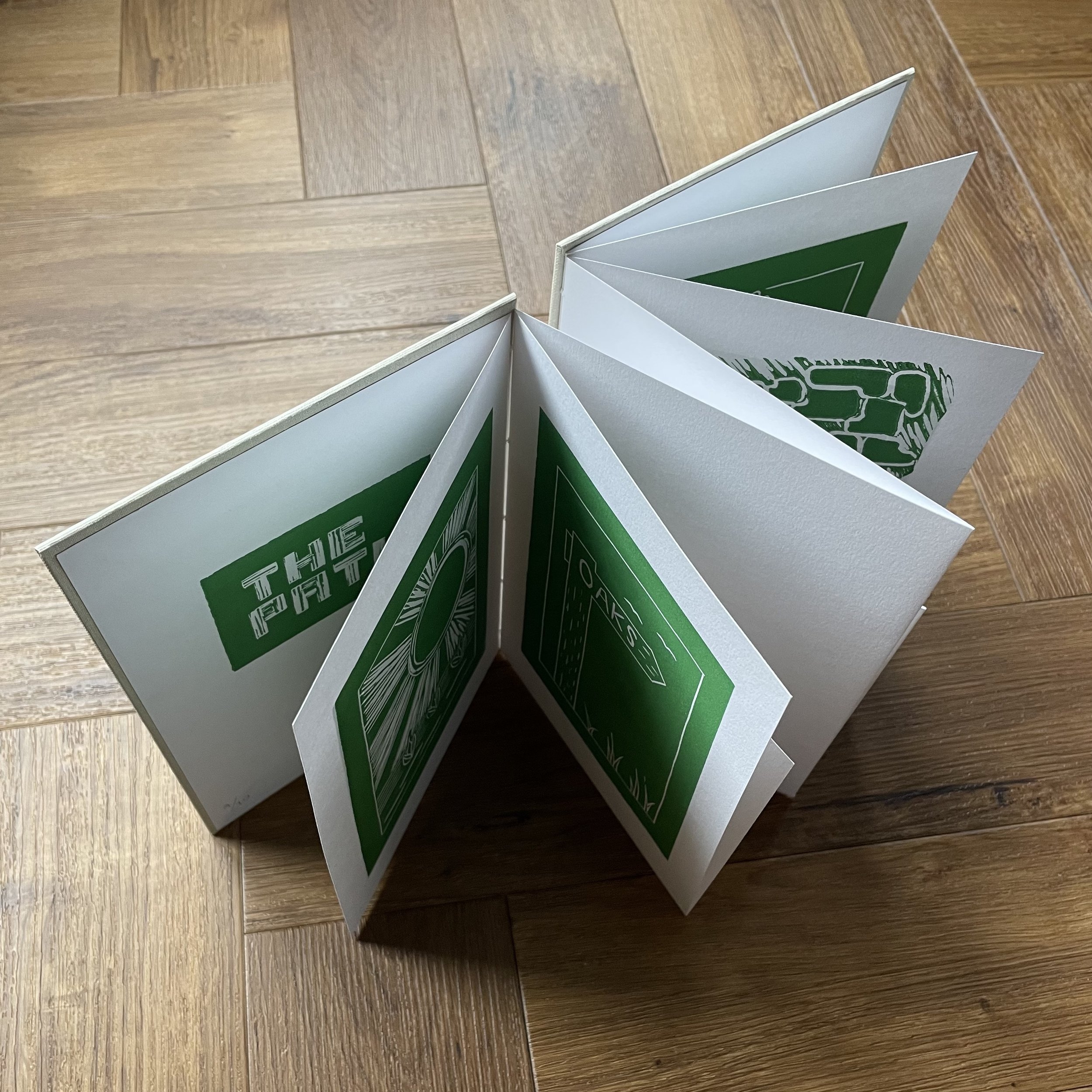
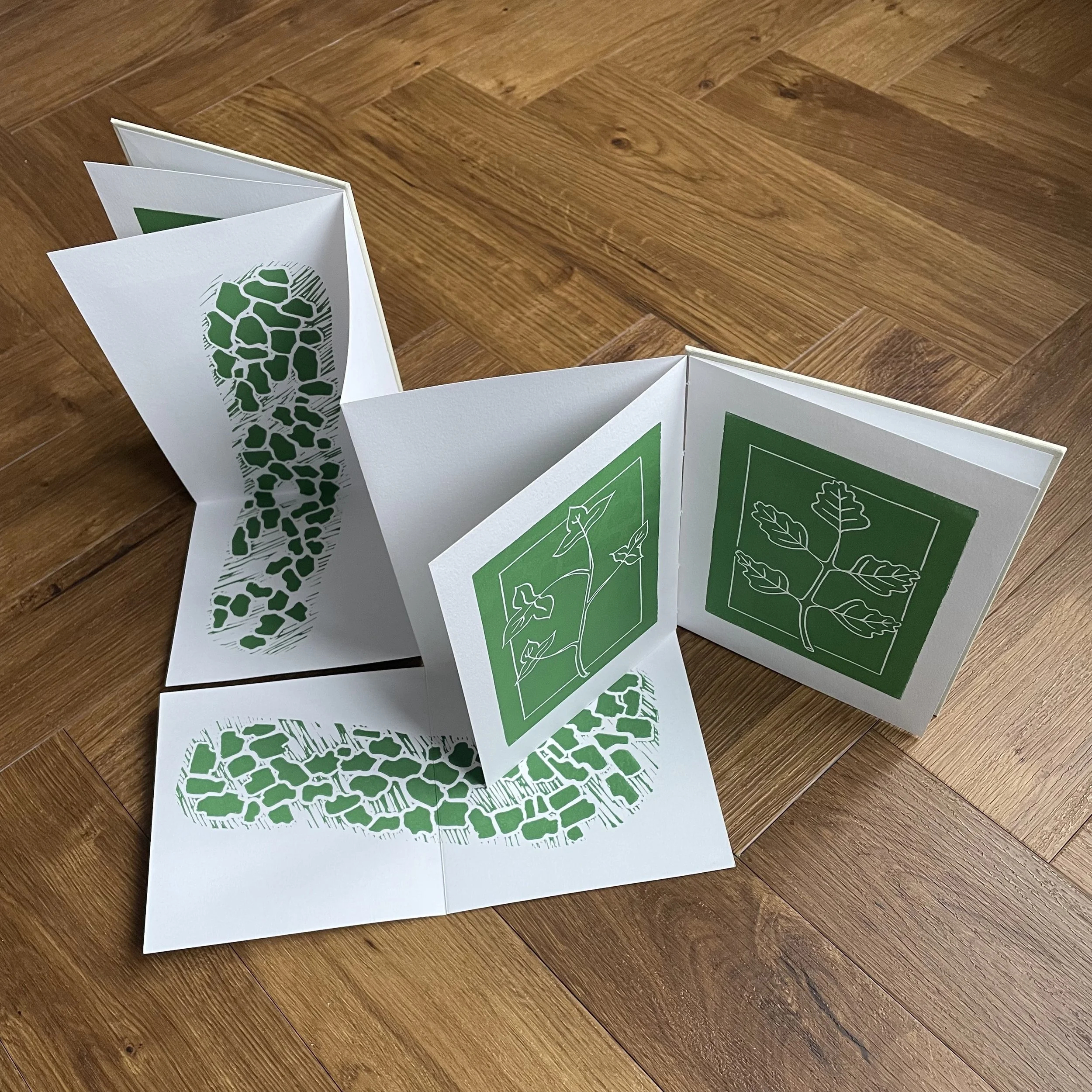
I used to see these things as rejections - and when I did, they weighed much heavier. I know it’s only words, but framing something like this as ‘not getting picked’, helps lighten it, for me at least. Although unchosen, the book I submitted remains a fine piece of work, one of my best so far, I think. Conceived, designed, and constructed over several weeks it tells a story of the walk to work, both pictorially and topographically. I love it and the news from the RA frees me up to show this work at a couple of other exhibitions soon. Not getting picked has left me feeling flying high, and as one door closes…

New Beginnings
A couple of weeks ago I wrote about interviews, and so it has come to pass that I’ve started working with Sutton African Caribbean Cultural Organisation (SACCO). It’s no secret that my work has becoming increasingly community focused in recent years and I’m please to be able ot use my skills to work with interesting people doing interesting things in my neighbourhood. What is SACCO all about? SACCO aims to help people of African and Caribbean heritage of all ages to participate more fully in the local community, through a range of enrichment activities, delivered from an African and Caribbean perspective. SACCO aspires to build bridges across the culturally diverse communities in Sutton and the surrounding areas, by organising events and activities where people from all backgrounds and races can come together to celebrate, share and learn about each other in mutual respect.
I think this work will complement my programme management role at Arts Network Sutton nicely, and I’m curious to see how one influences the other.
For Better or Verse (Ouch!)
I’m continuing to lean into narrative and verse - you may have seen one or two pieces emerge on here recently. I love how when you focus on something - it often starts showing itself more often, and as I’ve continued to write, both about work and nature, I’ve been seeing and hearing a lot more of this interesting character.
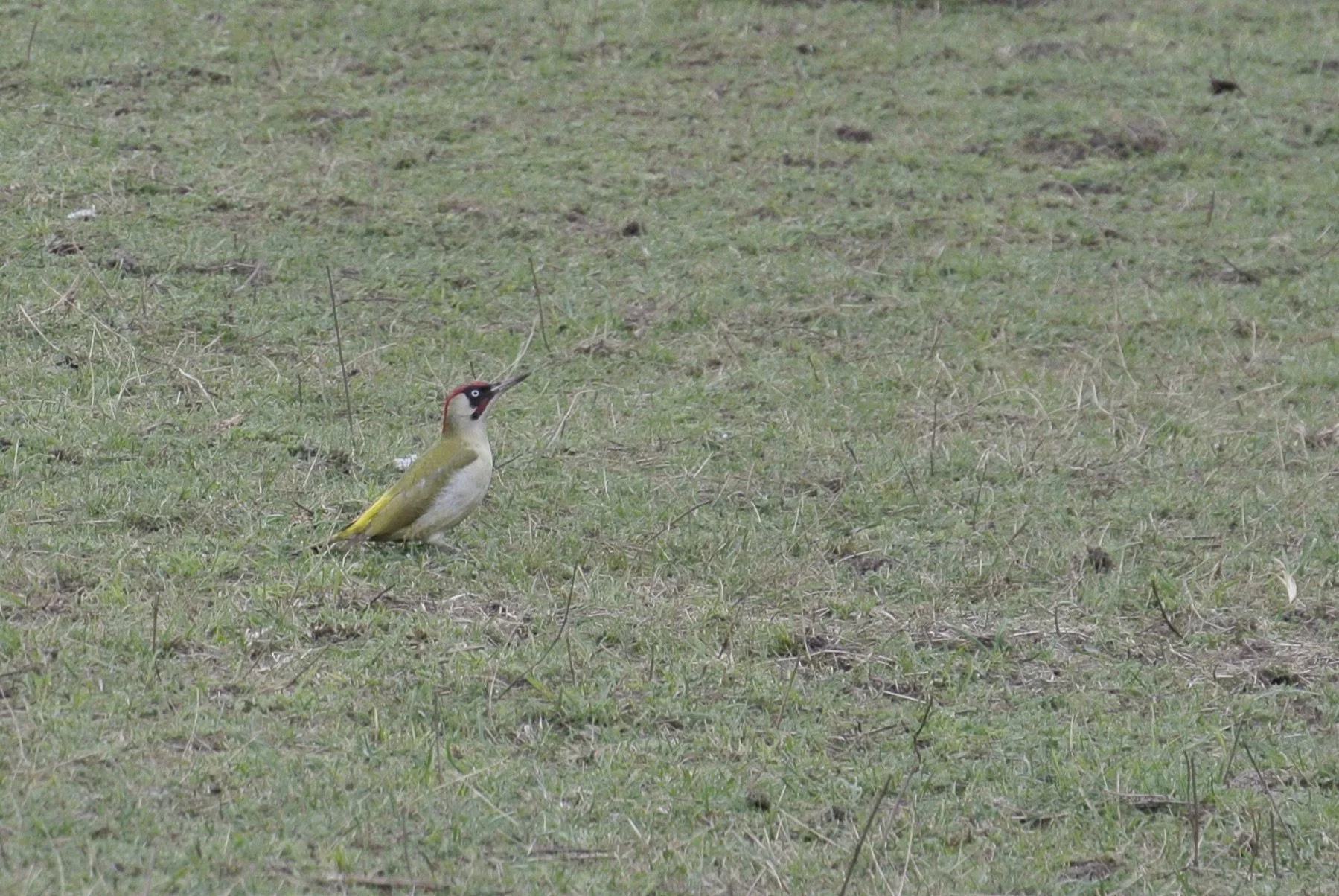
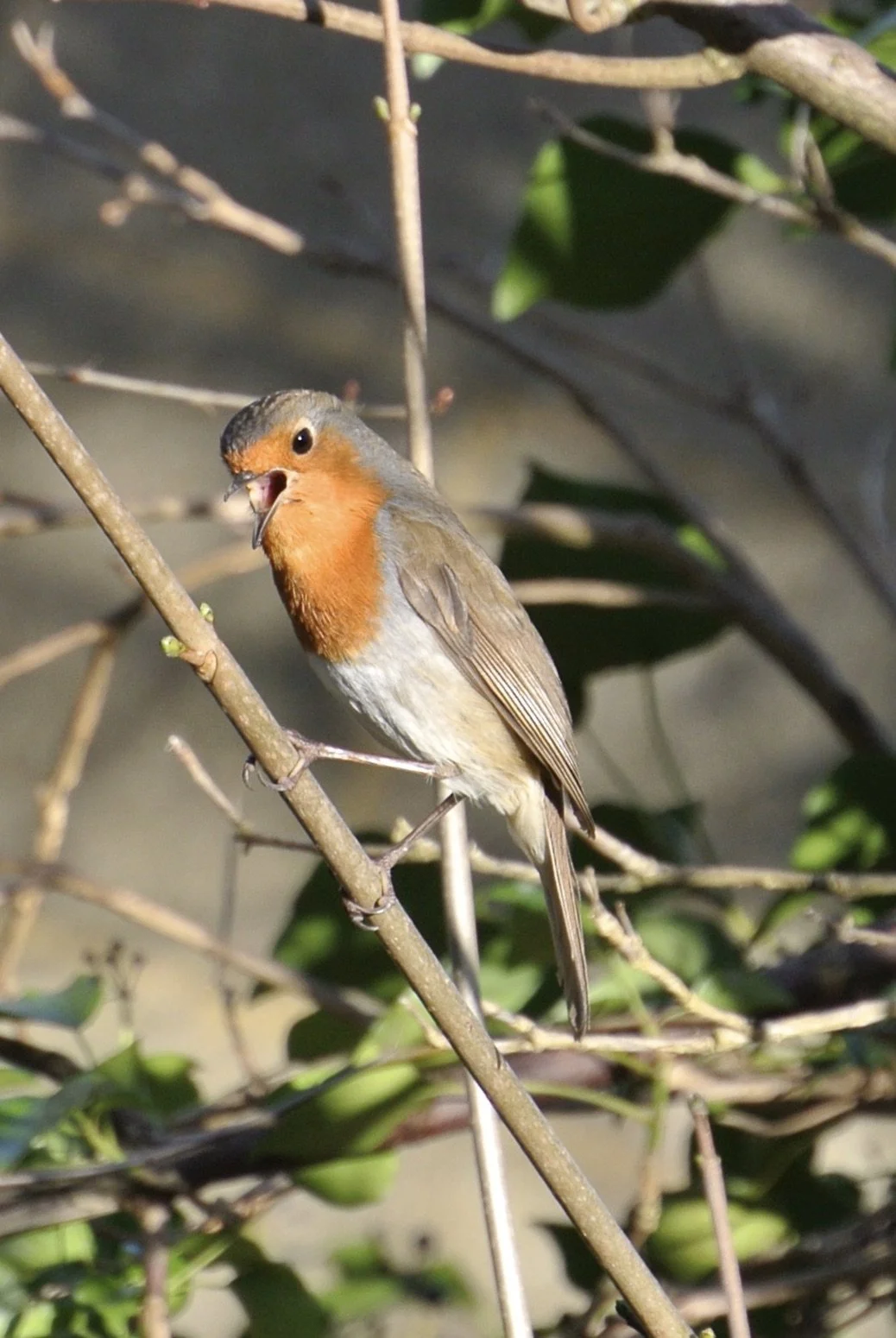
Green Woodpecker
The green woodpecker is a stunning, often nervous bird. Of late I’m often hearing its laughing call and spotting it rooting around for its main diet of ants. I took this photo - it pushed my old tired camera to the limit but soon I will have a new piece of kit with which I hope to supplement my field recordings to a better standard. Watch this space.
I’m also making some slow progress on my fledgling book idea - combining writing, photography, and hand printed work. A halfway house between a fully handmade book and a machine made one. I’ve chatted with a local printer, and now I need to assemble a mock up which I plan to start work on in the next couple of weeks.
Cold Bright & Quiet
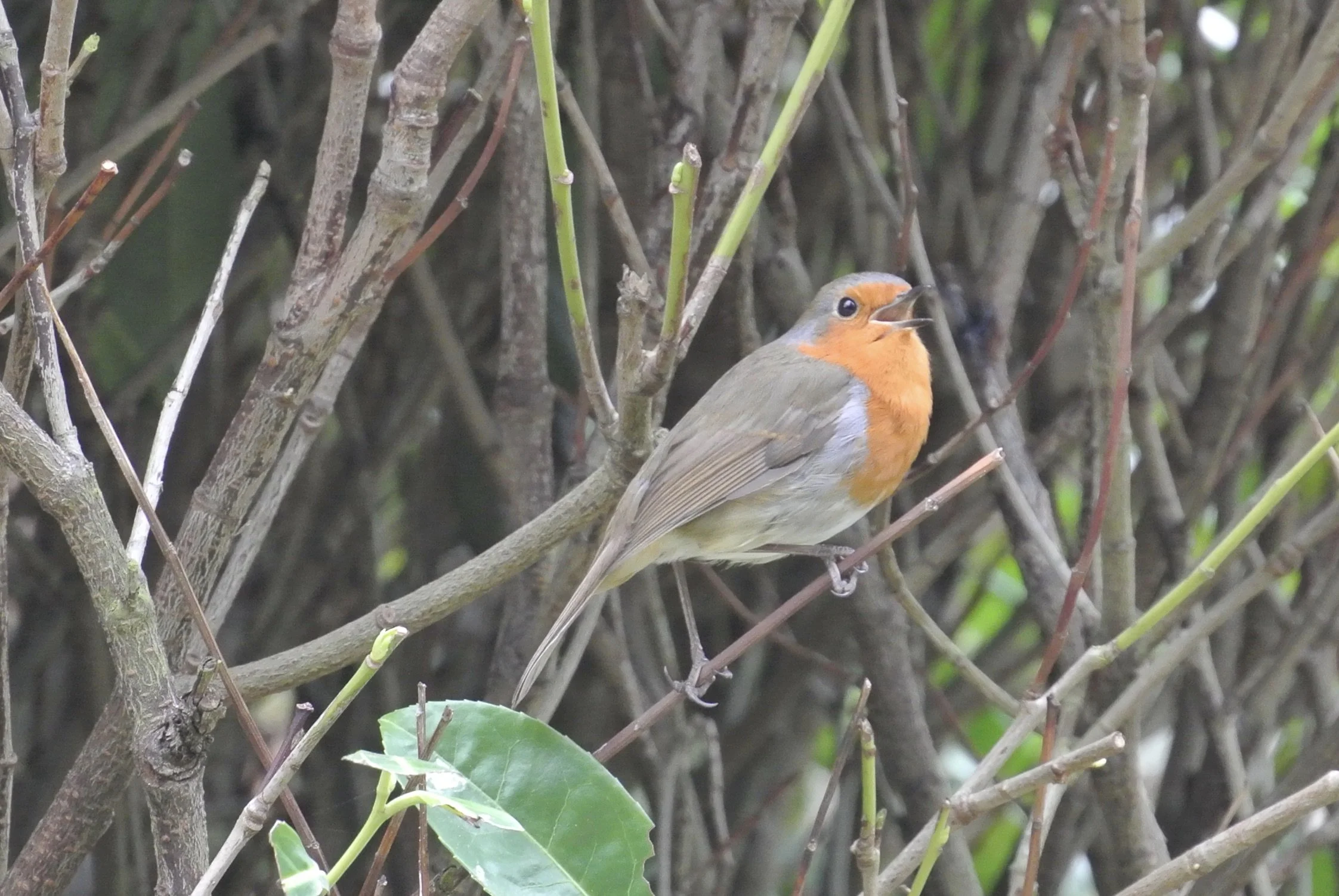
I say goodbye to Carole, and begin the walk home. It’s cold, bright and quiet, and the first thing to break the silence is a jay, calling from high in a tree. I wander on - less attentive for a while, until the unmistakeable call of the greenfinch brings me back into focus. It’s up there! Just the other side of the hedge, a bright green signal in the sun, then it’s off across the fields.
I turn onto the farm tracks, shoulders relaxing, pace slowing. As I approach a bend in the lane - everything happens at once, and in a ten second space of time I see and hear, greenfinch, chaffinch, blackbird, blue tit, kestrel, dunnock, robin, and the familiar laugh of the green woodpecker. I feel like I could stand here forever, sights and sounds to die for, but the moment passes and I carry on.
The tracks are peaceful, just me, the birds, one or two walkers, a van and a car. The van passes considerately, and the car is driven dangerously fast down the narrow lane. It always is - and now I’m familiar with it I can be safely out of the way in good time.
With that done, the peace returns, and I wander on, pigeons and magpies keeping watch. I’m almost at the end of the track when something precious flashes in front of me. A pair of goldfinches stop briefly about a metre away. I marvel at their beauty, and they wonder why on earth is this old man staring at us? Before things get awkward they depart, and I finish my walk, noticing the buds of a magnolia - straining into pink.
Written immediately on arrival back at the house this morning, in the hope I capture something of the essence of the walk.

Weeknote 2025/05
Mind The Gap
Often - things fragment, and work becomes less of a defined path, more a series of spinning plates. Something I notice after 16 years of freelancing, is that often these plates relate to different projects and ideas - they all need a tap, a bit of momentum, but they all spin in slightly different directions. I’ve had a busy week, and it’s been in pursuit of many small things. Important but not particularly noteworthy perhaps? This sense of things shifting, having multiple directions, can feel a bit disconcerting, and it often opens up space and time for something else to appear…
Revisiting : Reappearing
Last Summer I undertook my first artist residency at The Hide, in Gloucestershire. It was a fascinating experience - opening my mind to the artfulness of nature in a location unfamiliar to me, and helping me appreciate our part in the environment in ways I’d not previously considered.
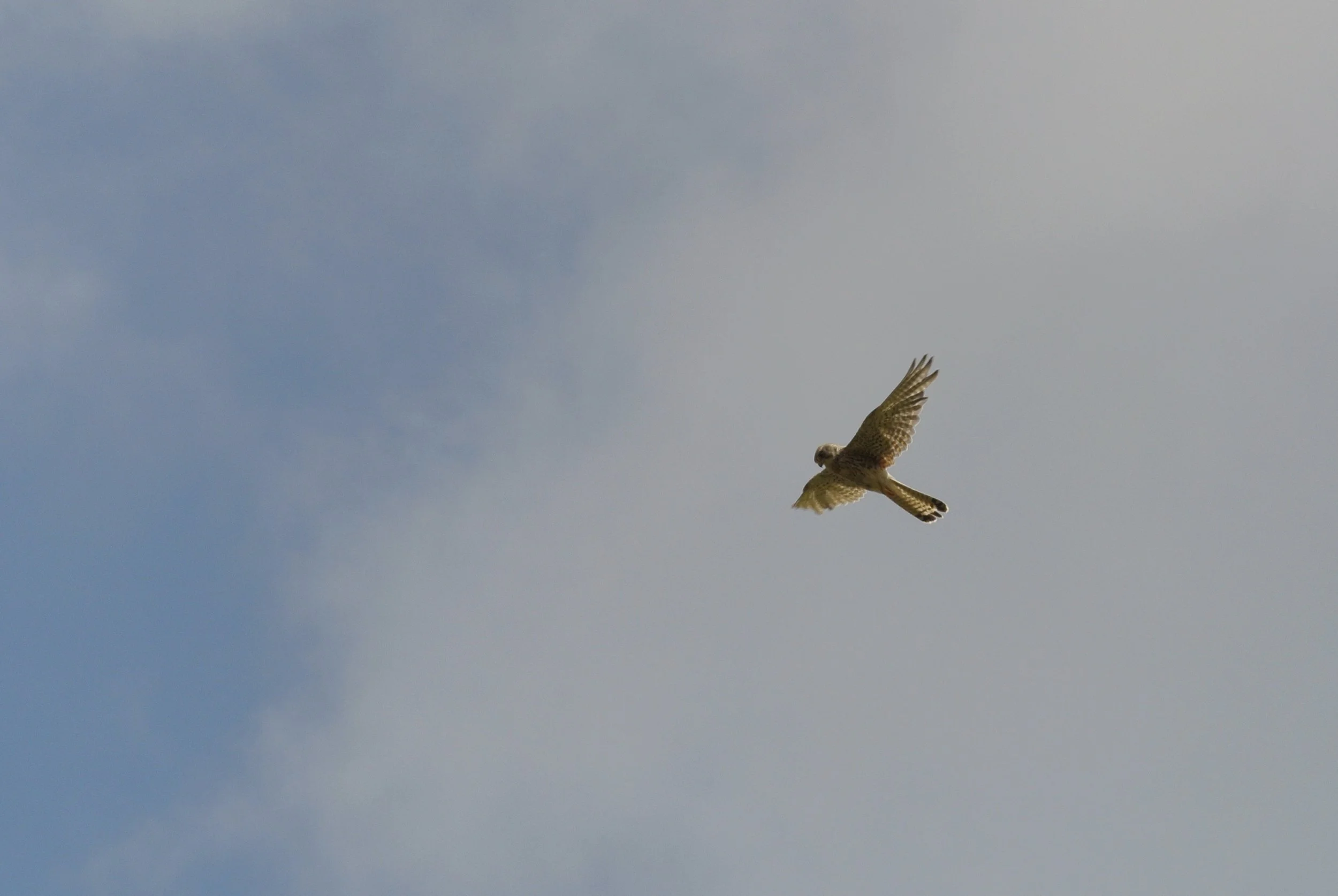
Kestrel hovering over Rodborough Common
I spent my time walking, conversing, writing, photographing, and threw in a bit of very basic print making for good measure. I didn’t use my car once while away - I did as much as I could the slow way, on foot, taking my time. Observing, recording.
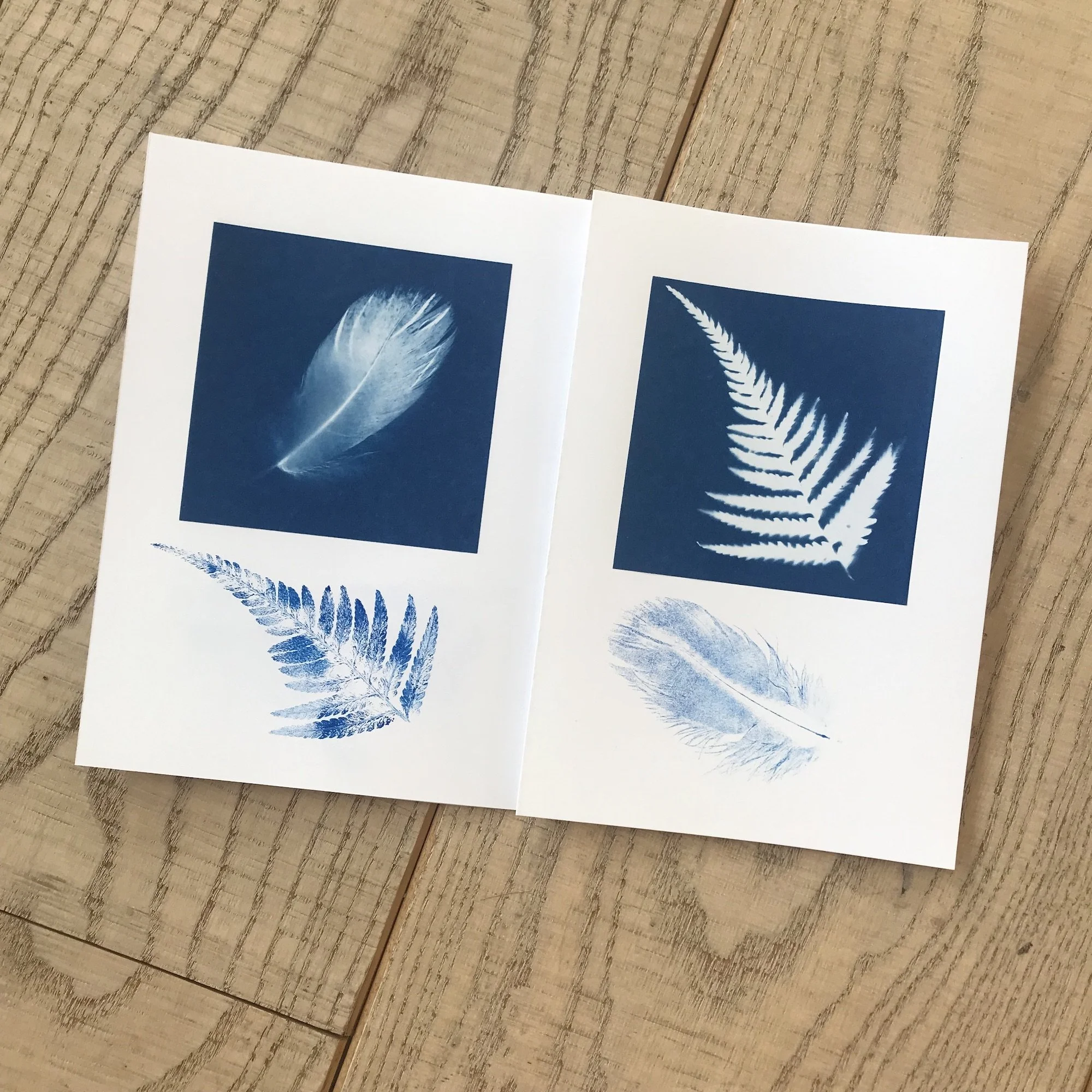
Found Objects : Cyanotype and relief printing.
I wrote about the experience here, and I remember I got very excited about how all this wonderful input was suddenly, even urgently, going to fuel new work. I benefitted from two mentoring sessions while away - and during the second of these, towards the end of my residency, I enthused about how this immersive experience would instantly reveal itself on my arrival home. Exhibitions, books, prints, you name it. I was gently encouraged not to rush, instead to let the experience reverberate, wash over and around me - and see what slowly emerges. And relax.
On my last night away - I stumbled onto the fact that the poet WH Davies lived and died in a house nearby to where I was staying, at the foot of a steep hill in the hamlet of Watledge. I decided to visit the place, and as I left, the rain started, and quickly became a downpour. There are two routes to Watledge from where I was staying. The first is a precipitous path, and having skittered dangerously down it in the rain a couple of times, I decided instead, to take the longer route by road. As I walked the rain became heavier, and as I carefully descended the hill I could see rain pouring from the sky, and flowing past my feet as it rushed relentlessly down the steep hill. I approached the house and as I did so - the rain coming off the hill increased in volume and it literally picked me up under my feet and slid me straight past the house. Somehow I managed to stay upright and clamber back, as the downpour obligingly ceased. I stood outside the house and admired this memorial plaque.
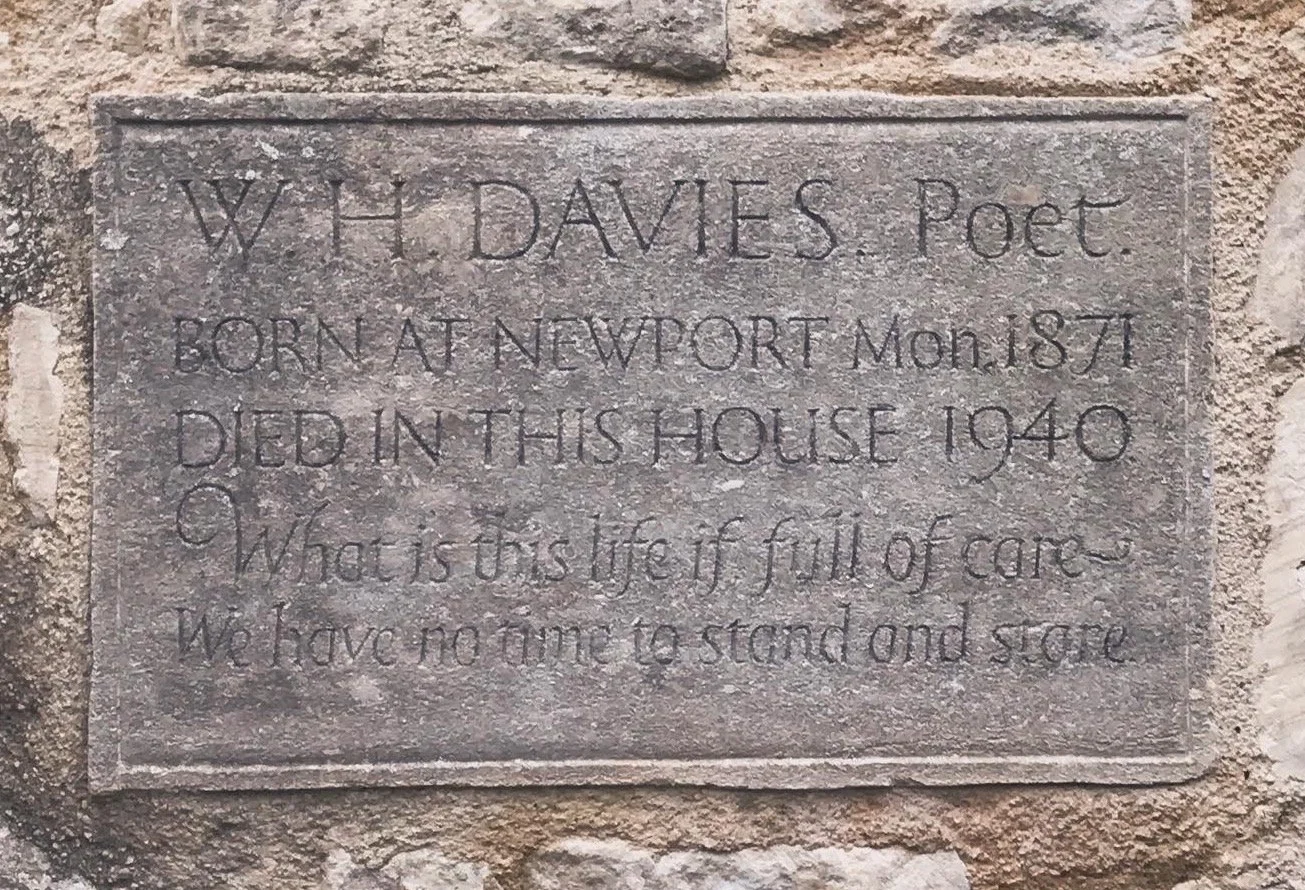
Memorial plaque outside the home of WH Davies, in Watledge
I returned home from my adventures, and sure enough, the exhibition and much of what I enthused about, has yet to materialise. I have continued to work on my bookbinding skills, and my writing and photography too, and in recent days it has dawned on me how I will take some of these discoveries found last summer, on into 2025 and beyond. In the first instance - I will design and bring a new book into the world. A book, partly handmade, partly machine printed. A book which I hope will capture the essence of slowly and carefully observing the beautiful minutiae of life. After all - ‘what is this life if full of care, we have no time to stand and stare’. Thanks go to WH Davies, to Alice, who runs The Hide where I stayed, to all the people who indulged this stranger in conversation, to Carole for kindly agreeing to let me spend our wedding anniversary adventuring miles away, and to Arts Network Sutton for funding this essential adventure.
Current Artful Adventures
Back to the present day - I want to mention three creative things I experienced last week, which I encourage you to check out, if you can.
Art and Mental Health
I popped into Bethlem Gallery to admire the art in their new collection and to pick up a copy of a new zine, a collaborative art project titled MISC. Bethlem Gallery is an important place doing important work at the intersection of art, mental health, and more. It’s based near Beckenham on the edges of South London and I recommend you visit.
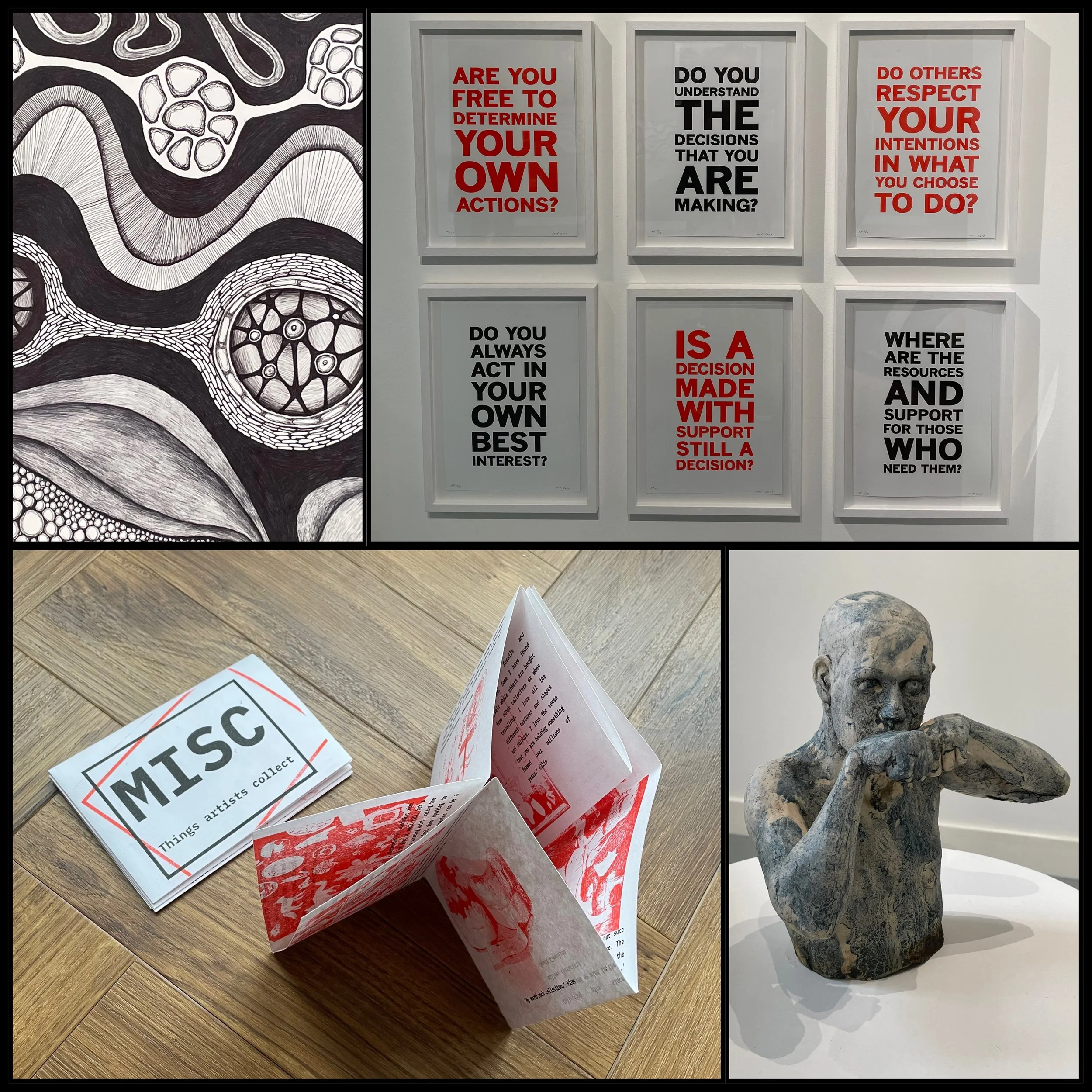
A montage of the art currently on show at Bethlem Gallery
Rock n Roll Public Library (RRPL)
RRPL is an amazing exhibition of punk and pop memorabilia and ephemera, curated from a much larger collection assembled by Mick Jones, guitarist and songwriter par excellence. It’s a visual and sonic feast in a pop up space on Flitcroft Street. It’s free to enter and open until March 22nd - 12pm to 7pm daily. Get your skates on!
Black Is The Color Of My Voice
Wow!! Carole managed to get us seats for this amazing performance at the equally amazing Wilton’s Music Hall. Black Is The Color Of My Voice is inspired by the life of Nina Simone and features many of her most iconic songs performed live by Nicholle Cherrie, in this powerful one woman play, written by Apphia Campbell. Experiencing this performance was one of those rare occasions when time stands still - a completely engrossing experience. The play is currently touring - and I can’t recommend it highly enough.
What next?
I’m starting a new project this week - and first I need to settle down and assess some grant applications. This is tough, careful work, and tomorrow I find out if my submission to the Royal Academy Summer Exhibition has been shortlisted. Watch this space.